
Against the Tide: A North Atlantic Right Whale Baby Boom Offers Fragile Hope Amidst Lingering Peril
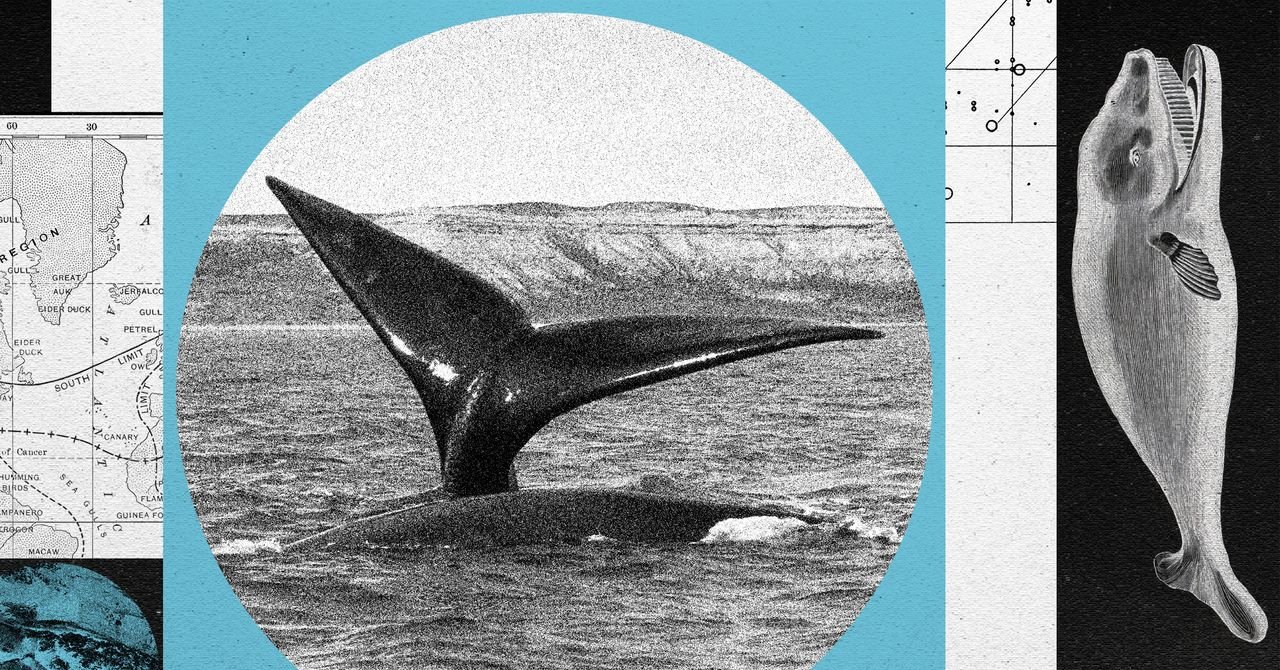
After nearly two decades, a familiar silhouette graced the waters off Florida, not just as a survivor, but as a mother. The North Atlantic right whale known as Callosity Back, first identified as a calf in 2007 by Julie Albert of the Blue World Research Institute, made her triumphant return on New Year’s Eve 2025, accompanied by her own newborn. This reunion, a testament to enduring life, signals a surprising and much-needed surge in births for one of the world’s most critically endangered marine mammals.
A Mother’s Return and a Season of Surprises
Julie Albert remembers Callosity Back vividly. Unlike other right whales, whose distinctive callosities – patches of rough, white tissue – are typically found on their heads, this whale bore them uniquely on her back. “That’s how she got her name,” Albert recounts, “She’s definitely an individual.” The call from the Florida Fish and Wildlife Conservation Commission, reporting an unidentified mother and calf, quickly led Albert and her team to a beachside hotel, where they watched for hours as the pair swam. “I’ve been waiting 19 years to see this mother,” Albert shared, a sentiment echoing the deep personal connection many researchers form with these magnificent creatures.
Callosity Back’s calf is one of an astonishing 21 right whale babies documented so far in the current calving season, which runs from mid-November to mid-April. This early surge is remarkable, especially when contrasted with the mere 11 calves counted last year. It offers a glimmer of hope, a potential turning point for a species teetering on the brink.
The Shadow of Extinction: A Species on the Brink
Despite this encouraging baby boom, the North Atlantic right whale remains in dire straits. An estimate published last October revealed a total wild population of just 384 in 2024. Once numbering in the thousands before commercial whaling decimated them in the 18th and 19th centuries, these whales have never fully recovered. Today, they face a new array of human-induced threats that keep them perilously close to extinction.
The primary dangers are stark: collisions with vessels and entanglement in fishing gear. These incidents can swiftly reverse any population gains, as tragically demonstrated in 2017 when 18 right whales died in just six months. That devastating year also claimed the life of dedicated whale rescuer Joe Howlett, who perished while attempting to free a whale from fishing lines in the Gulf of St. Lawrence.
Conservationists, intimately familiar with the individual stories of these whales, caution that a flurry of new calves, while wonderful, does not guarantee long-term survival. Yet, they universally agree: these whales are worth fighting for, believing their tiny population can still rebound if given the chance.
Unwavering Dedication: The Fight for Survival
Callosity Back herself is a testament to resilience. Her mother was one of only two North Atlantic right whales ever documented to give birth in the colder northeastern waters, far from the species’ traditional calving grounds off the Carolinas, Georgia, and Florida. This unusual birth location highlights the inherent challenges calves face, as they are born without blubber and are highly vulnerable to cold in their early weeks.
Researchers like Phil Hamilton, a senior scientist at the New England Aquarium, are continuously monitoring for new arrivals. The 21 calves have indeed surprised them. “In the 1980s and 1990s we only got over 18 maybe a couple of times,” Hamilton notes, expressing hope that the number will continue to climb. With several females who haven’t calved in recent years now present in the calving grounds, an even higher tally by spring is a real possibility.
However, Hamilton stresses the importance of considering long-term trends. High year-to-year variation is expected in such a small population, and the overall trajectory since 2010 has largely been downwards.
A Glimmer of Progress and Persistent Challenges
Amidst the challenges, there was a piece of good news in 2025: no North Atlantic right whale deaths were recorded, though injuries persisted. In December, a male whale named Division was spotted severely entangled in fishing gear, with lines wrapped around his head, mouth, and even cutting into his blowhole. Rescuers managed to remove some of the gear, but the wounds leave him vulnerable to infection from sea lice. Tonya Wimmer, director of conservation at the Marine Animal Response Society, paints a grim picture: “He’s getting thinner, so it’s not a good picture for him.”
The dedicated network of North Atlantic right whale observers tirelessly monitors individual whale health, tracks their epic journeys along the eastern coast of North America, and meticulously records each new calf. The New England Aquarium North Atlantic Right Whale Catalog, with its millions of records, stands as a testament to the unwavering commitment to understanding and protecting these magnificent, yet vulnerable, giants of the ocean.
For more details, visit our website.
Source: Link