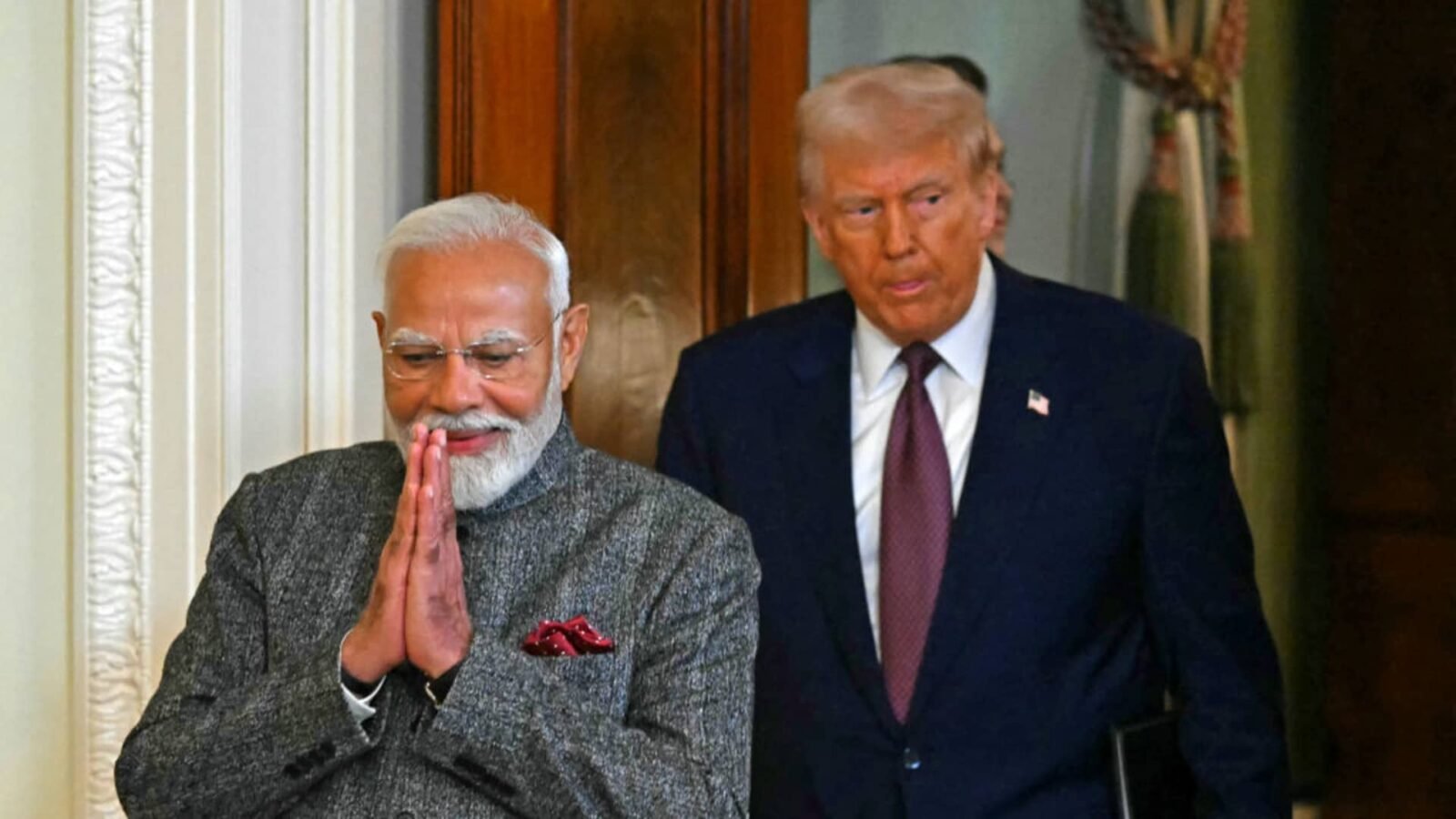

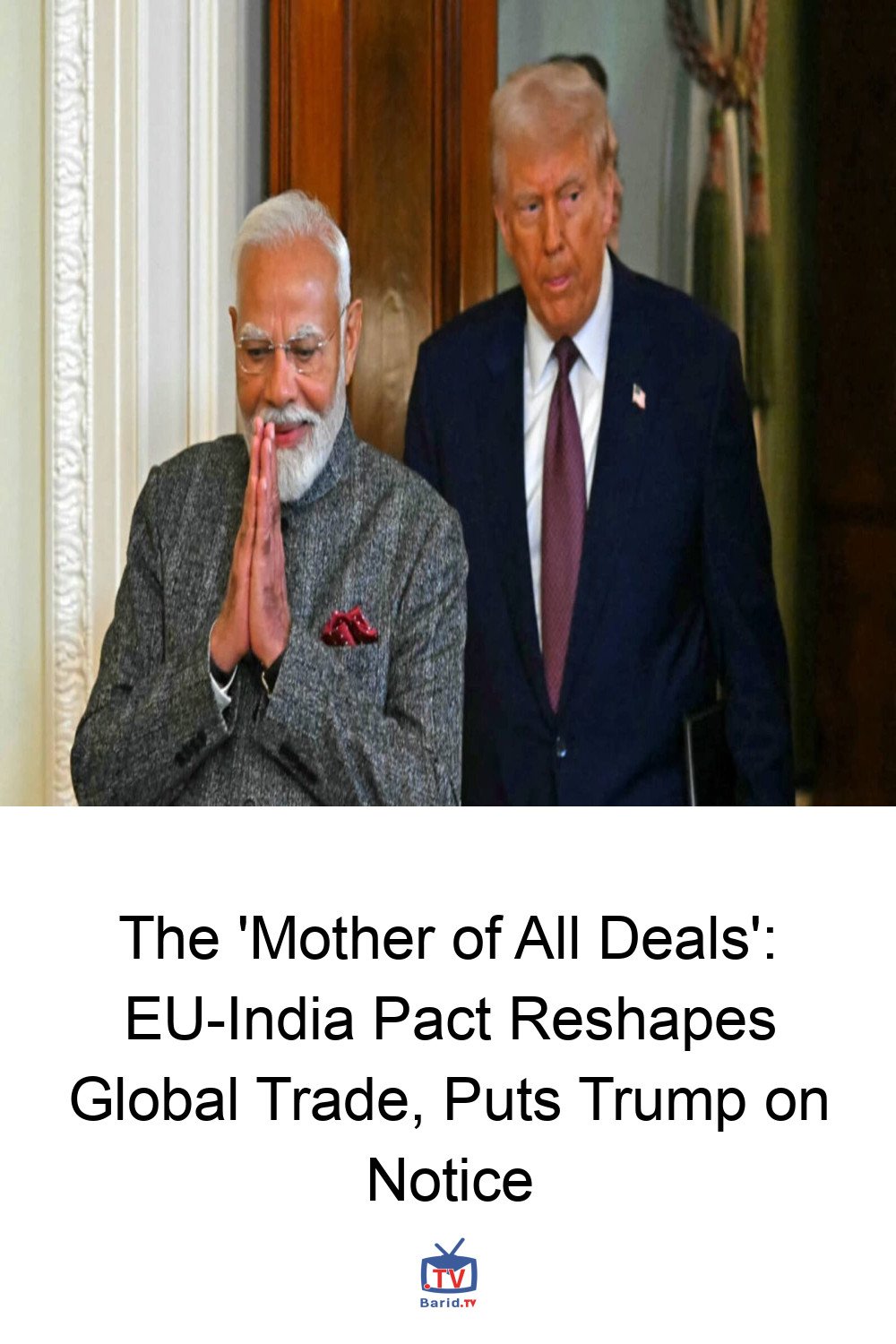
The global trade landscape is undergoing a seismic shift as the European Union and India formally ink what both sides are hailing as the “mother of all deals.” This landmark free trade agreement, nearly two decades in the making, is poised to redefine economic ties between two of the world’s largest markets, but its strategic implications extend far beyond bilateral benefits, serving as a clear counter-move against the unpredictable trade policies emanating from Washington.
A New Era in Global Trade: The EU-India ‘Mother of All Deals’
Confirmed earlier this week, this monumental pact will see the trading behemoths systematically dismantle tariffs, gradually reducing them to zero across the vast majority of their imported goods and sectors. Indian Prime Minister Narendra Modi lauded the agreement as “landmark,” a sentiment echoed by European Commission President Ursula von der Leyen, who emphasized its role in deepening their strategic relationship. This agreement arrives at a critical juncture, offering a crucial lifeline to export-oriented industries in both regions that have recently faced punitive duties from the United States.
Washington’s Wary Eye: Trump’s Looming Reaction
While the ink is still drying, attention has swiftly pivoted to the anticipated reaction from U.S. President Donald Trump. Though he has yet to comment publicly, the White House is unlikely to welcome a deal widely perceived as a strategic buffer against American trade volatility and tariff threats. Indeed, U.S. Treasury Secretary Scott Bessent has already voiced strong criticism, telling ABC News, “The U.S. has made much bigger sacrifices than Europeans have. We have put 25% tariffs on India for buying Russian oil. Guess what happened last week? The Europeans signed a trade deal with India.” This sentiment underscores a growing frustration within parts of the U.S. administration regarding independent European and Indian trade initiatives. Last year, the White House imposed a 15% tariff on EU imports, despite a separate trade agreement, and a more substantial 50% on Indian goods, partly due to its continued purchases of Russian oil.
Navigating the Geopolitical Currents
Despite the potential for friction with Washington, Indian Minister of Petroleum and Natural Gas Hardeep Singh Puri expressed optimism regarding the future of U.S.-India relations. Speaking to CNBC, Puri stated, “The relationship structure [between the U.S. and India] is very strong… everybody needs to chill a bit.” He reaffirmed India’s commitment to the multilateral trading system, citing the EU deal as prime evidence.
Experts concur on the deal’s timely importance. Hosuk Lee-Makiyama, director of the European Centre for International Political Economy, described the EU-India agreement as “one of the best deals they can do at the moment,” particularly given the closed market environments in the U.S. and China for new openings. He highlighted that while India had previously failed to secure a similar deal with the United States, European trade ministers are becoming “a little bit thicker skinned” to the weekly tariff threats emanating from Washington.
Europe’s Balancing Act: Sovereignty Amid Alliances
For Europe, the deal represents a delicate balancing act. While pursuing its own economic interests, there’s an inherent wariness about potentially upsetting the U.S., especially given concerns over America’s commitment to its European allies and the collective defense principles of NATO. David McAllister, a member of the European Parliament and chair of its foreign affairs committee, encapsulated this challenge: “Europe needs to become more sovereign. Europe needs to grow up…” This statement underscores the region’s imperative to forge its own path economically while striving to maintain robust transatlantic relations.
The EU-India trade agreement is more than just an economic pact; it’s a powerful geopolitical statement. As global trade dynamics continue to evolve, this “mother of all deals” signals a clear intent from both India and the EU to assert their economic independence and shape a more diversified, multilateral future, even as they brace for potential repercussions from a protectionist-leaning Washington.
For more details, visit our website.
Source: Link