
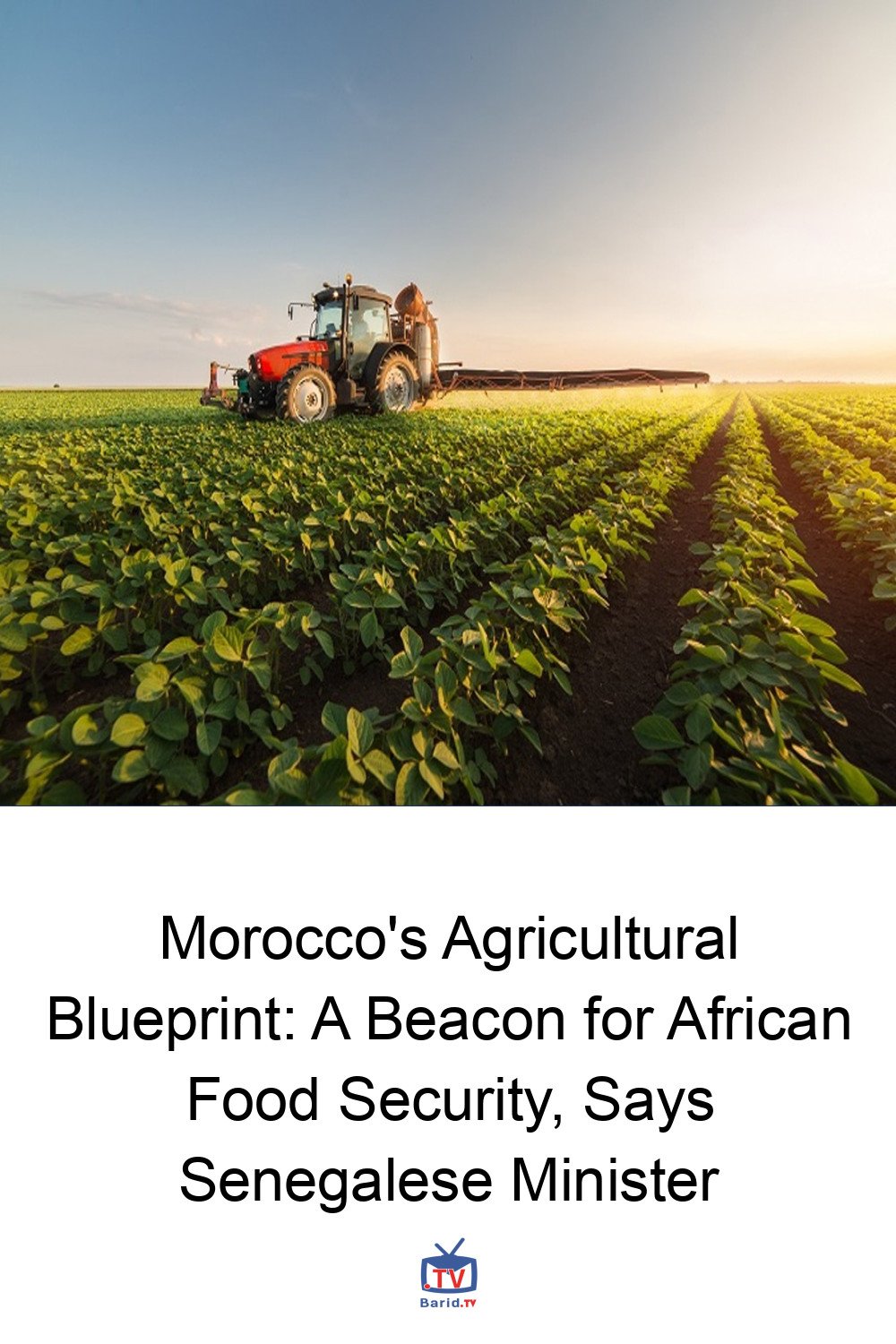
Rabat, Morocco – Morocco’s robust agricultural and agro-industrial sector is rapidly gaining international recognition, particularly across Africa. This sentiment was strongly echoed by Senegal’s Minister of Agriculture, Food Sovereignty and Livestock, Mabouba Diagne, during recent high-level talks in Rabat. Following discussions with his Moroccan counterpart, Ahmed El Bouari, Minister Diagne lauded Morocco’s comprehensive achievements, positioning the Kingdom as a pivotal model for regional cooperation and food security.
Morocco’s Agricultural Prowess: A Regional Benchmark
Minister Diagne’s commendation highlighted Morocco‘s exceptional performance across various facets of its agricultural landscape. He specifically praised the nation’s advancements in agriculture, livestock management, horticulture, and the burgeoning agro-industry. A key takeaway from his observations was the remarkable strength of Morocco’s integrated agricultural value chains, which provide invaluable, concrete lessons for other African nations striving to bolster their own food production capabilities and enhance agro-industrial capacity.
This sectoral progress, Diagne asserted, firmly establishes Morocco as a preferred partner for collaboration and knowledge exchange, especially concerning the entire agricultural value chain – from cultivation to processing and distribution.
Senegal’s Strategic Vision: Turning Challenges into Collaborative Opportunities
During the talks, Minister Diagne candidly addressed Senegal’s current food security landscape, revealing that the nation imports over $1.6 billion worth of food products annually. He framed this substantial figure not merely as a challenge, but as a compelling opportunity for deeper, more impactful collaboration between Morocco and Senegal.
An Open Invitation for Moroccan Investment
To capitalize on this opportunity, the Senegalese minister extended a direct invitation to Moroccan private sector entities, urging them to explore and invest in Senegal. He underscored Senegal’s significant potential, citing its abundant water resources and vast expanses of arable land. Diagne emphasized that Senegal is actively engaging its own private sector to expand national agricultural production, with the overarching goals of fortifying food security and elevating the well-being of its populace.
Furthermore, the presence of established Moroccan banking institutions in Senegal was noted as a strategic advantage. These banks, Diagne suggested, are ideally positioned to provide crucial financial backing for industrial and agricultural ventures, whether spearheaded by Moroccan or Senegalese investors. He stressed that robust financial support would be instrumental in transforming ambitious cooperation goals into tangible production and processing capacities on the ground.
Cultivating a Future of Shared Prosperity
In response, Morocco’s Minister of Agriculture, Maritime Fisheries, Rural Development and Water and Forests, Ahmed El Bouari, reaffirmed his country’s unwavering commitment to supporting Senegal’s agricultural development journey. He articulated Morocco’s readiness to share its extensive expertise and technical know-how, particularly in critical areas such as modern agricultural practices, sophisticated value chain development, and effective agro-industrial structuring.
Both ministers agreed that the path forward lies in a partnership founded on complementarity. This synergistic approach would enable both Morocco and Senegal to strengthen their respective agricultural sectors while collectively addressing shared challenges like food security and sustainable development.
The significant meeting occurred during Minister Diagne’s working visit to Morocco, held concurrently with the 15th session of the Morocco-Senegal Joint High Commission for Cooperation. This visit underscores a broader, concerted effort by both nations to deepen bilateral ties and fortify South-South cooperation, particularly within vital sectors like agriculture and food systems.
For more details, visit our website.
Source: Link