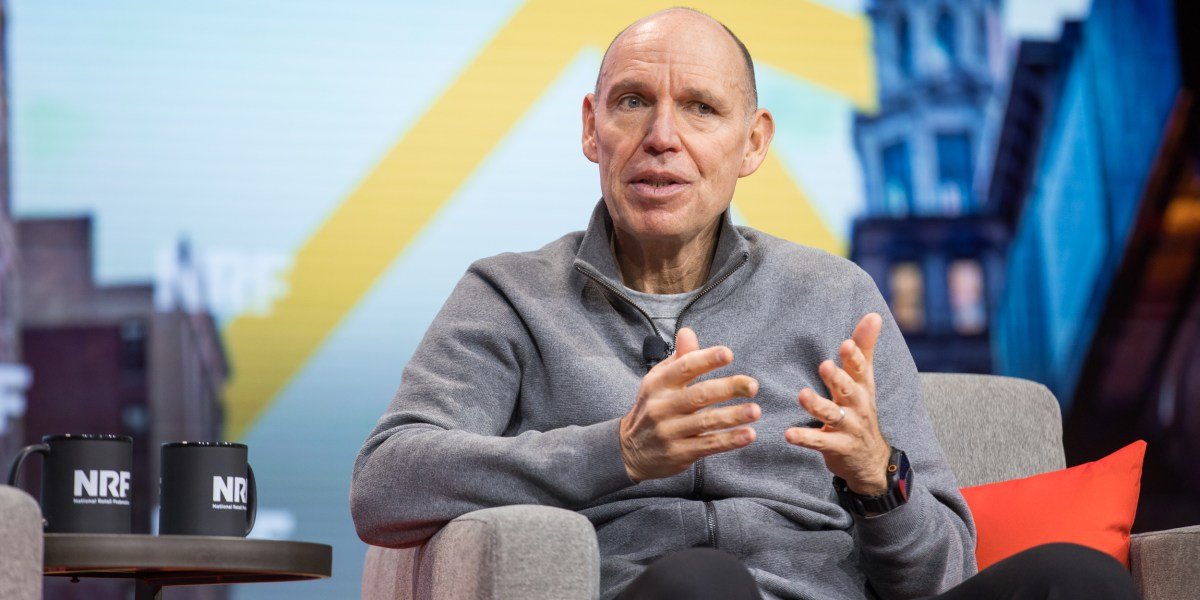

The American sneaker market is not just booming; it’s exploding, and one British retail powerhouse, JD Sports Fashion, is making an aggressive play to dominate a significant slice of this lucrative pie. With nearly 400 stores already established across North America, the Manchester, England-based giant has set an ambitious target: to double its footprint to 800 stores, a strategy fueled by new openings and the ongoing conversion of its acquired Finish Line chain. All told, JD’s diverse chains currently generate nearly $6 billion annually stateside, positioning it as a formidable force in the country’s sports gear retail landscape.
America’s Unstoppable Sneaker Obsession
The numbers speak volumes: the U.S. sneaker market now commands a staggering $24 billion annually, representing a dominant 60% of the entire footwear market – a share that has doubled in just a decade. This seismic shift, driven by the widespread adoption of running shoes over traditional formal wear in offices and daily life, shows no signs of slowing down. JD CEO Régis Schultz encapsulates this trend perfectly: “As soon as you start wearing sneakers, you don’t go back to formal shoes.” This insight, shared at the National Retail Federation conference, underpins JD’s unwavering confidence in the market’s enduring growth.
A Strategic Land Grab Across the U.S.
JD Sports’ expansion isn’t merely about opening new doors; it’s a meticulously planned strategic acquisition spree designed to penetrate diverse regional markets. Since the turn of the decade, the retailer has significantly bolstered its U.S. presence through key purchases:
Targeted Acquisitions Fueling Growth
- Finish Line: A major chain whose stores are being converted to the JD Sports banner.
- Hibbitt: A large sports retailer with a strong focus on the South and smaller retail markets, acquired in 2024.
- Shoe Palace: A West Coast chain strategically targeting the vibrant Hispanic market.
- DLTR: A more urban-focused retailer, further diversifying JD’s demographic reach.
“We see a lot more potential in the U.S.,” Schultz affirmed, highlighting the substantial investments in stores, which he describes as having “a lot of energy and theater.” This emphasis on the U.S. market is clearly validated by recent financial results, which showed North American comparable sales rising by 1.5% over the critical November-December holiday period, a stark contrast to declines experienced in the U.K. and continental Europe. Bolstering this momentum, JD has committed to increasing its marketing initiatives across North America, signaling a deep commitment to brand awareness and market penetration.
Navigating a Shifting Competitive Landscape
JD’s ascent comes at a time when some competitors have faltered, creating opportune voids. The recent struggles of Foot Locker, marked by market share erosion and store closures, presented a clear opening for JD. However, the landscape is evolving. Foot Locker’s acquisition by Dick’s Sporting Goods last year means it’s now backed by a larger, well-managed entity with a more recognized brand in the U.S. This new dynamic underscores that JD’s continued success is not guaranteed and requires sustained strategic effort.
The “Less is More” Philosophy: Investing in Expertise and Focus
To thrive in this intensely competitive environment, Schultz is championing a strategy centered on internal excellence and a clear market focus. Significant investments have been made in store environments and, crucially, in employee training. Buyers are empowered and encouraged to become “tastemakers,” thinking innovatively to curate product selections. “You need to have a point of view,” Schultz stressed, revealing a past “wake-up call” where buyers were deemed “very lazy.”
This deep understanding of the consumer has not gone unnoticed. Schultz recounted a conversation with Nike CEO Elliott Hill, who, upon returning to the company in 2024, sought JD’s insights: “You know the consumer better than we know them… Please give us your insights.” This speaks volumes, especially given that Nike alone accounts for over 40% of JD’s revenue.
For now, JD’s U.S. strategy is sharply defined: a laser focus on running shoes from premier brands like Nike, Hoka, New Balance, Adidas, and On Running, complemented by a select range of apparel. Schultz’s guiding principle, “I’ve learned in my career that less is more. If you try to do too many things, you end up doing nothing,” perfectly encapsulates this disciplined approach to conquering the American sneaker market.
For more details, visit our website.
Source: Link