
The Enduring Mystery of Slippery Ice: Why Science Still Can’t Agree
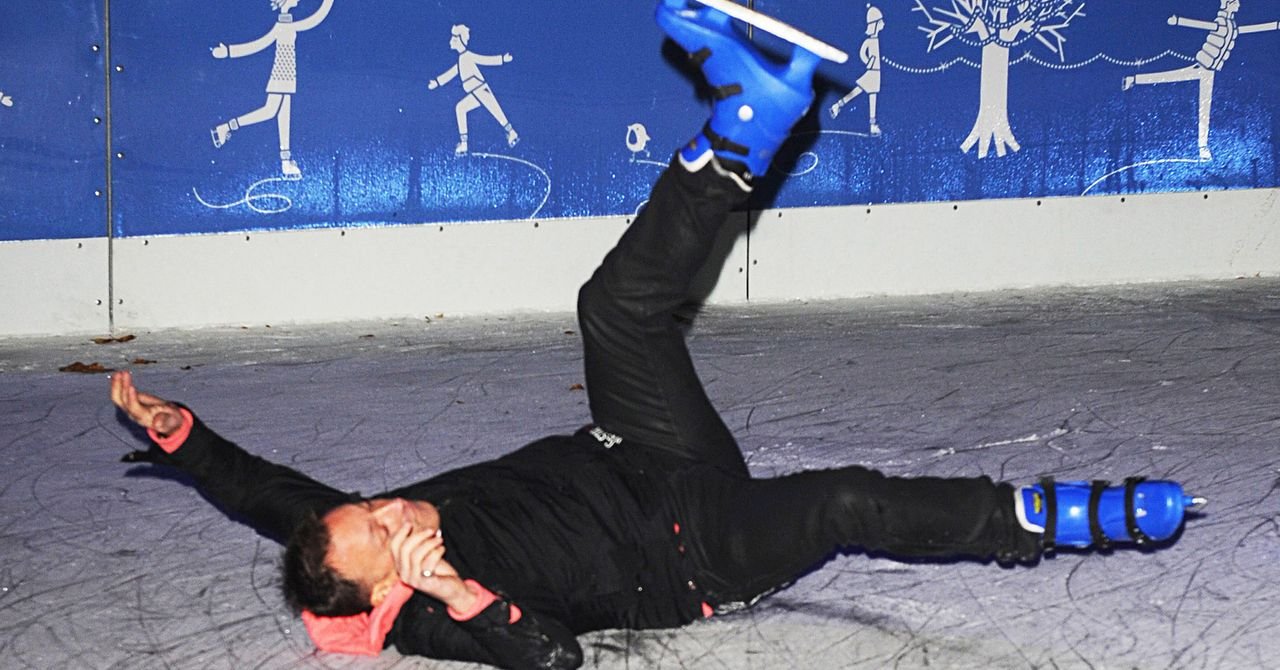
From the graceful glide of an ice skater to the sudden, clumsy slip on a winter sidewalk, the slipperiness of ice is a universal experience. Yet, beneath this seemingly simple phenomenon lies one of science’s most enduring and perplexing mysteries. While scientists largely concur that a thin, watery layer coats the surface of ice, providing its lubricating quality, the fundamental question of why this layer forms remains a subject of fierce debate, spanning centuries of inquiry.
The Elusive Watery Layer: A Century-Old Scientific Debate
For over two hundred years, three primary theories have vied for dominance in explaining ice’s unique properties. Recently, a fourth hypothesis emerged from German researchers, claiming to finally resolve the enigma. However, despite this new contender, a definitive consensus continues to elude the scientific community, leaving the ‘slippery problem’ tantalizingly open.
Hypothesis 1: The Pressure Cooker Effect
Thomson’s Pioneering Idea
The mid-19th century saw English engineer James Thomson propose a compelling explanation: pressure. He suggested that the force exerted upon ice, such as from a foot or a skate, lowers its melting point. This means that even at temperatures below 0 degrees Celsius (32 degrees Fahrenheit), the pressure could cause a thin layer of water to form on the surface, making it slippery. This theoretical relationship was later experimentally validated by his younger brother, William, famously known as Lord Kelvin.
Cracks in the Theory
However, by the 1930s, this elegant theory faced significant challenges. Frank P. Bowden and T. P. Hughes of the University of Cambridge meticulously calculated that the pressure exerted by an average skier, for instance, is far too negligible to significantly alter ice’s melting point. For pressure melting to be the sole cause, a skier would need to weigh thousands of kilograms – a clearly impractical scenario that cast considerable doubt on Thomson’s hypothesis.
Hypothesis 2: The Friction Factor
Bowden and Hughes’s Alternative
In response to the shortcomings of the pressure theory, Bowden and Hughes put forward an alternative: frictional heating. They posited that the heat generated by friction, as an object slides across the ice, is responsible for melting the surface and creating the lubricating water layer. To test this, they conducted experiments in an artificial ice cave in the Swiss Alps, measuring friction between ice and various materials.
Their findings revealed higher friction with good heat conductors like brass, compared to poor conductors such as ebonite. They concluded that when a material readily absorbs heat from the friction, less heat is available to melt the ice, thus reducing its slipperiness. This seemed to bolster their theory that frictional melting was the key.
A Slippery Slope for Friction
Despite its presence in many textbooks, the frictional heating hypothesis has its detractors. Physicist Daniel Bonn of the University of Amsterdam highlights a critical flaw: “The problem with that is you only melt the ice behind you, not the ice you are actually skating on.” Ice can feel slippery the instant one steps on it, before any motion has occurred to generate significant frictional heat.
To further investigate, Bonn and his team engineered a microscopic ice-skating rink. By rotating a metal piece (simulating a skate blade) at varying speeds and measuring the forces involved, they observed that ice slipperiness remained constant, irrespective of speed. This finding directly contradicted the frictional heating theory, which predicts increased slipperiness with higher speeds.
Hypothesis 3: The Premelting Phenomenon
Faraday’s Early Observations
A third compelling possibility suggests that ice’s surface is inherently wet, even before any external contact. As early as 1842, English scientist Michael Faraday noted that two ice cubes would spontaneously freeze together, and a warm hand would stick to ice. He attributed this to a thin, pre-melted layer on the exposed surface of ice, which refroze upon contact.
Molecules in Motion
While Faraday couldn’t explain the mechanism, nearly a century later, scientists like Charles Gurney and Woldemar Weyl proposed the concept of “surface premelting.” They theorized that water molecules at the ice’s surface behave differently from those deep within its crystalline structure. With fewer neighboring molecules to bond with, surface molecules possess greater freedom of movement, forming a disordered, liquid-like layer that is easily displaced by skates, skis, or shoes.
Modern Debates on Premelting’s Role
Today, the existence of this premelted layer is largely accepted, particularly near the melting point. However, its precise contribution to ice’s slipperiness remains a point of contention. Luis MacDowell, a physicist at the Complutense University of Madrid, and his team have utilized computer simulations to delve deeper. “In computer simulations, you can see the atoms move,” MacDowell explained, offering an unprecedented view into the atomic interactions that are impossible to observe in real-world experiments. These simulations allow researchers to meticulously examine the arrangement and movement of molecules, providing crucial insights into which of the three hypotheses—pressure, friction, or premelting—best explains the elusive slipperiness of ice.
The Ongoing Quest for Consensus
Despite advanced simulations and centuries of dedicated research, the definitive answer to why ice is slippery continues to elude us. While a fourth hypothesis has recently emerged, a true scientific consensus is still a distant goal. This enduring mystery serves as a powerful reminder of the complexity hidden within everyday phenomena and the relentless, fascinating pursuit of knowledge at the heart of scientific inquiry.
For more details, visit our website.
Source: Link