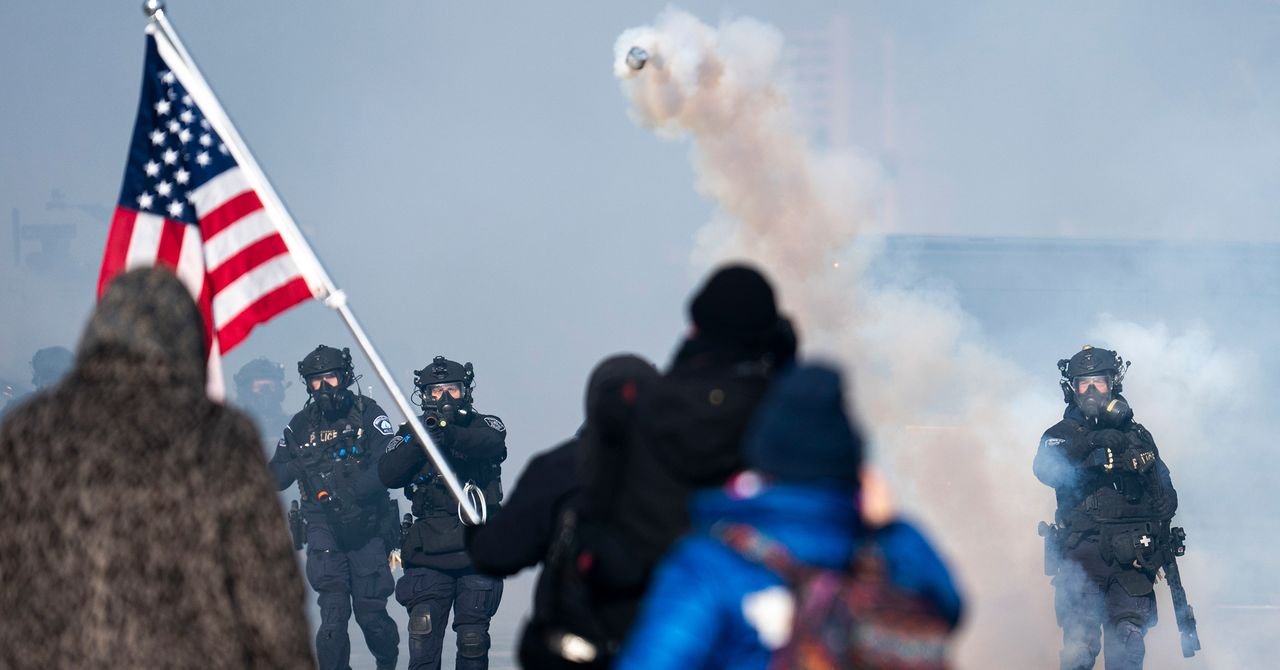

Minneapolis is currently grappling with an unprecedented and deeply unsettling chapter in modern American history: a federal occupation. Thousands of masked federal officers, operating with opaque authority, have descended upon the region. Their presence has been marked by alarming reports of assaults on protestors and innocent civilians, blatant disregard for constitutional safeguards, surveillance of daycares and schools, and the snatching of individuals off streets in unmarked vans, often based on their appearance or accent. This aggressive posture has relentlessly provoked violent confrontations, all while local and state officials vociferously object.
Tragedy Strikes Amidst Federal Presence
The gravity of the situation was tragically underscored by two fatal incidents. On a recent Saturday morning, federal agents, reportedly from the Border Patrol, shot and killed 37-year-old nurse Alex Pretti during a chaotic scuffle outside a renowned Minneapolis donut shop. This occurred after agents initiated an encounter by hassling and shoving him. This marks the second instance this month where federal agents have resorted to deadly force within moments of engaging a Minneapolis civilian who posed no apparent threat. Earlier, on January 7, Renee Nicole Good was also shot and killed by an Immigration and Customs Enforcement (ICE) agent.
Such unnecessary violence begs a critical question: why are elected officials seemingly powerless to intervene more decisively? Beyond legal challenges in the courts, does Minnesota’s government possess any strategic leverage in this battle against what many perceive as a Trump-led occupation? Could the National Guard, for instance, be deployed for a direct confrontation with federal agents?
The Unyielding Grip of Federalism
The concise answer, rooted in the fundamental tenets of American federalism, is largely no. Minneapolis Mayor Jacob Frey and Minnesota Governor Tim Walz have repeatedly appealed to President Donald Trump to recall his operation. On Saturday, they publicly reaffirmed their pleas to the federal government to reconsider and withdraw the estimated 3,000 immigration officers—a force that nearly outnumbers the combined strength of the region’s ten largest state and local police departments.
However, Walz and Frey have refrained from overt acts of state-led resistance. This restraint stems from a core principle of U.S. federalism: a state cannot genuinely resist federal authority or expel federal law enforcement. This principle is designed to ensure the federal government acts as a “protector” of last resort when local and state officials fail to uphold citizens’ rights. What is profoundly alarming and unprecedented is President Trump’s current utilization of this arrangement to target political opponents based on personal whims—an action that many consider deeply un-American and a direct threat to the very fabric of the United States.
Rising Tensions and Local Outcry
The atmosphere in Minnesota is thick with tension, not only between national and state/local elected officials but also between federal forces and local law enforcement. Minneapolis police have been vocal in their condemnation of both the Pretti and Good shootings. They have also reported instances of their own off-duty officers being harassed and even assaulted by immigration agents, with one police chief noting, “Every one of [the off-duty officers stopped by immigration agents] is a person of color.”
Further exacerbating the friction, DHS agents attempted to block local police from the shooting scene on Saturday, necessitating a court order for their access. FBI agents reportedly mirrored this resistance. “We’re in uncharted territory here,” remarked the head of the state’s investigation bureau, highlighting the extraordinary nature of these inter-agency conflicts.
The National Guard: A Buffer, Not a Battle Line
A governor typically commands the state’s National Guard, a force that could hypothetically be deployed to counter federal actions. Following the recent shooting, Governor Tim Walz activated the Guard, a decision made amidst hours of heightened tension that even led the NBA to postpone an evening game in Minneapolis. In a statement whose understated tone belied its profound implications, the governor’s office cited the need for the Guard because “local law enforcement resources are stretched thin because of the disruption to public safety caused by thousands of federal immigration agents in our neighborhoods.”
Walz’s deployment appears to be strategically aimed at creating a buffer between federal forces and Minnesota residents, rather than supplementing street resistance efforts or initiating a direct confrontation. This cautious approach likely reflects a desire to avoid further escalation.
Seeking Relief Through the Courts
For now, state and local officials, much like those in Los Angeles, Chicago, and other areas that experienced similar heavy-handed immigration deployments last year, are primarily seeking redress through federal courts. Overnight, a federal judge issued a temporary restraining order to prevent federal officials from destroying or altering evidence related to Saturday’s shooting. More broadly, Minnesota has an ongoing lawsuit designed to block the immigration deployments entirely.
This measured legal strategy is almost certainly intended to prevent an even more dangerous escalation. President Trump has shown an apparent eagerness to declare Minnesota in a state of “insurrection,” a move that would grant him authority to activate and deploy federal troops against its residents, a prospect that looms large over the state.
For more details, visit our website.
Source: Link