




Unleashing Intelligence at the Edge: Top Development Boards for AI Projects
The landscape of Artificial Intelligence is rapidly expanding, moving beyond the cloud and into the realm of ‘Edge AI’ – where processing happens directly on devices. This shift demands powerful yet efficient hardware capable of handling complex machine learning models locally. For makers, engineers, and developers embarking on edge AI projects, selecting the right development board is paramount. This article, originally featured in Make: Vol. 95, dives into the leading contenders for 2026, from versatile single-board computers to specialized microcontrollers, ensuring your next AI endeavor is powered by the best.
The Contenders: Powering Your Edge AI Vision
Raspberry Pi 5: The Enduring Flagship
Released in 2023, the Raspberry Pi 5 continues to prove its mettle as a formidable single-board computer (SBC) for a wide array of AI applications. Its robust processing capabilities are well-suited for crunching numbers, even supporting lightweight large language models (LLMs). For vision-based tasks like image classification or object detection, simply integrate a Raspberry Pi Camera Module or a standard USB webcam.
What truly elevates the Pi 5 for AI is the option to add an official AI HAT+. These accelerators significantly boost performance, offering up to 13 Tera Operations Per Second (TOPS) with the Hailo-8L variant, or an impressive 26 TOPS with the Hailo-8, enabling faster processing of larger machine learning models without taxing the main CPU.
Nvidia Jetson Orin Nano Super: A New Benchmark for Performance
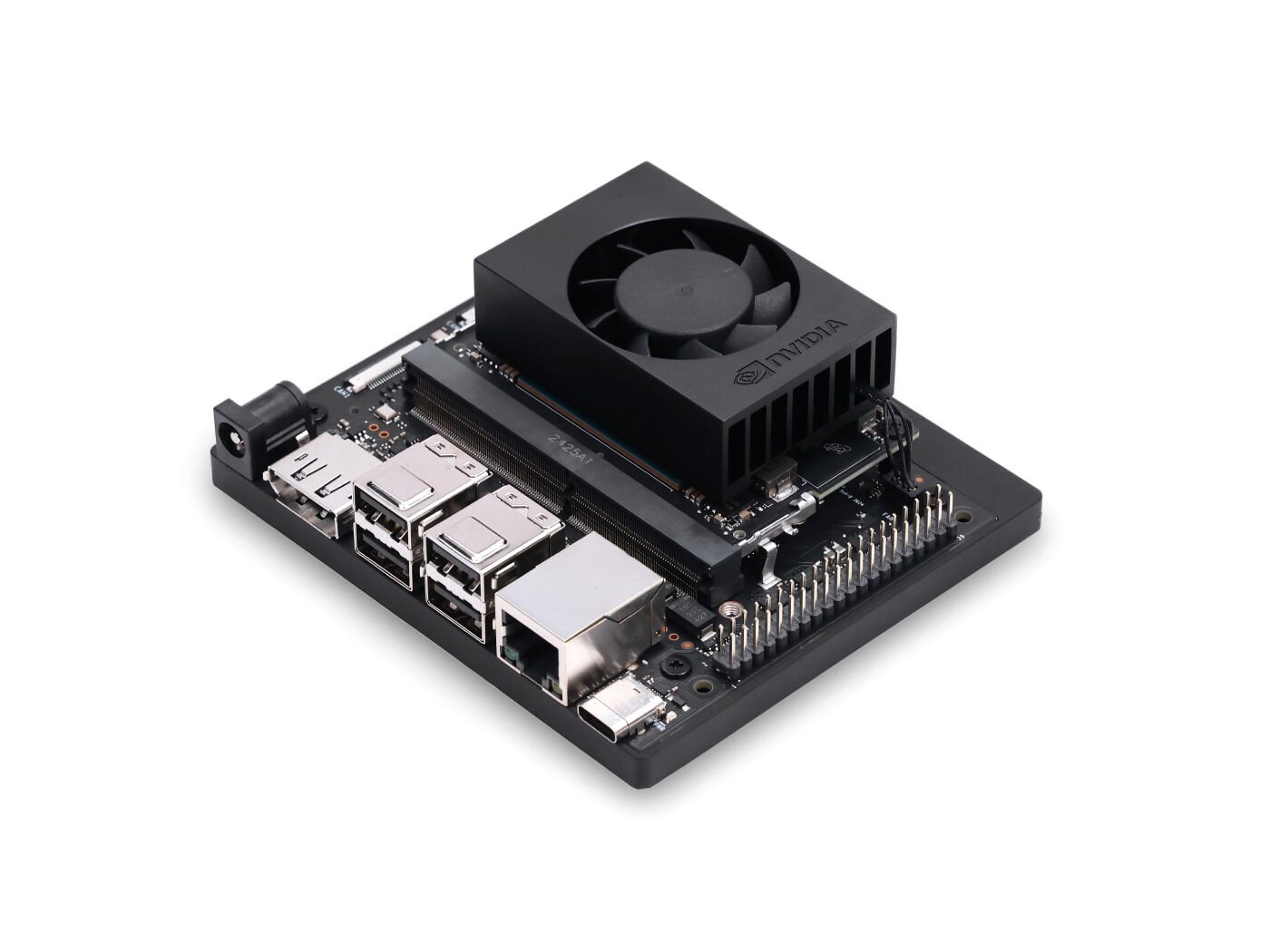
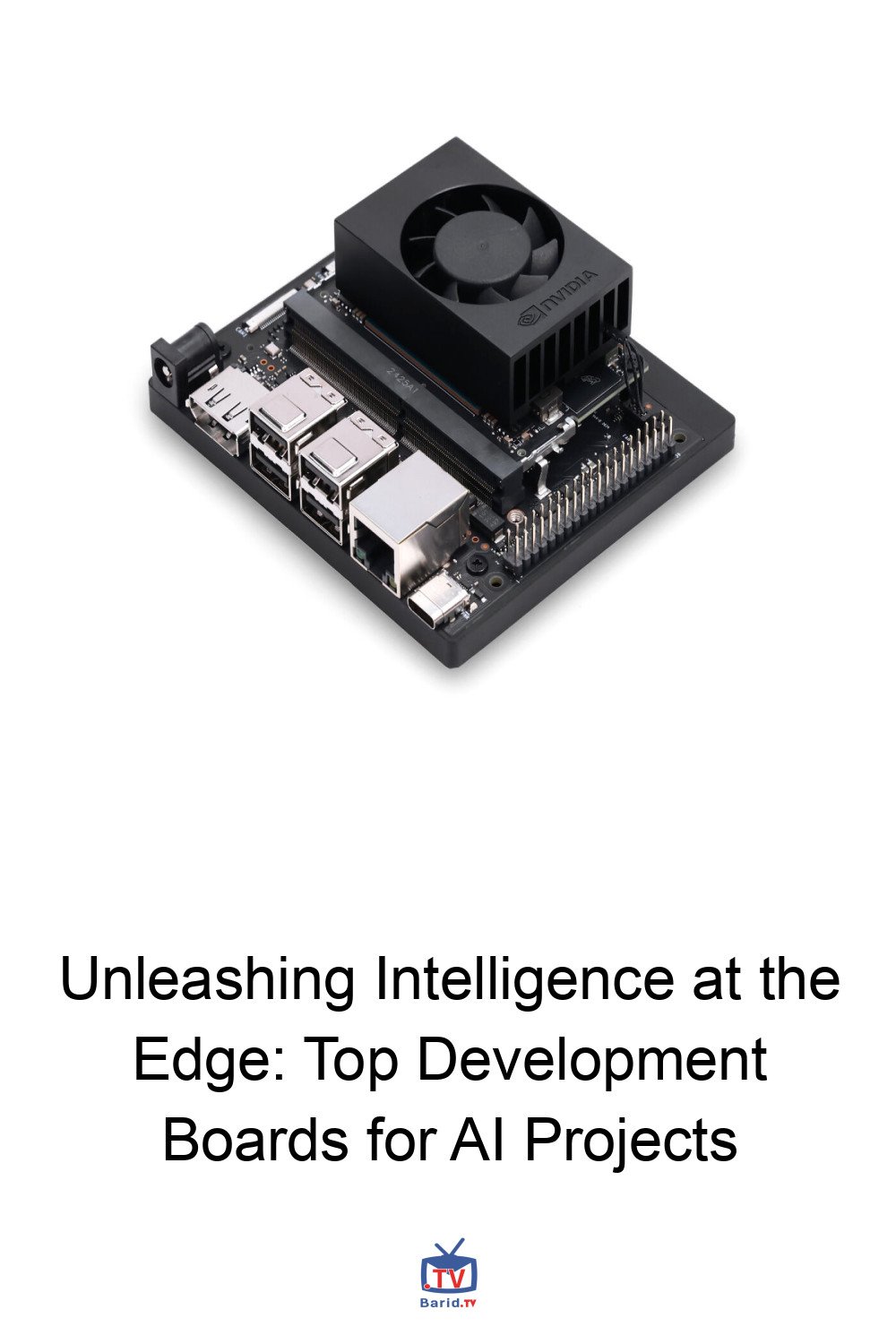
Nvidia’s Jetson series has long been synonymous with powerful edge AI, and the Jetson Orin Nano Super is a compelling evolution. This updated and more affordable iteration of the Jetson Orin Nano boasts an Nvidia Ampere GPU, featuring 1024 CUDA cores and 32 Tensor cores. This potent combination allows it to achieve an impressive 67 TOPS, setting a new standard for performance in its class.
While also an SBC, the Jetson experience, particularly around operating system and driver installation, can be slightly more involved than with the Raspberry Pi. However, its Manufacturer’s Suggested Retail Price (MSRP) of $249 – roughly half the cost of the original Jetson Orin Nano – makes it an incredibly strong competitor in the high-performance edge AI SBC market. Existing owners of the Nvidia Jetson Orin Nano 8GB model can even upgrade to the Super version via a simple software patch, extending the life and capability of their current hardware.
OpenMV N6 and AE3: Vision-Centric Solutions for Low-Power Applications
For projects demanding small form factors and ultra-low power consumption, particularly for vision processing, OpenMV’s MicroPython-based offerings are exceptionally competitive. These boards are designed from the ground up for embedded machine vision tasks.
- OpenMV N6: The flagship N6 is built around the STM32N6 Arm Cortex-M55 microcontroller, enhanced with the ST Neural-ART accelerator. It delivers 0.6 TOPS at a mere 0.75W, capable of performing full object detection (using the YOLOv8 model) at a smooth 30 frames per second (FPS) with a 256×256 color image resolution.
- OpenMV AE3: A compact, production-ready module, the AE3 leverages the Alif Ensemble E3 microcontroller. This features a dual-core Arm Cortex-M55 alongside a dual-core Ethos-U55 AI accelerator. It achieves approximately 0.2 TOPS at an incredibly efficient 0.25W, handling full object detection (YOLOv8) at 13 FPS with a 256×256 color image resolution.
Microcontroller Options: Deep Dive for Custom Solutions
For those comfortable with designing custom PCBs or navigating intricate low-level vendor libraries, several microcontrollers offer promising edge AI features, providing ultimate control and optimization for specialized applications.
- Renesas RA8P1: This powerful new microcontroller integrates an ARM Cortex-M85 core with an Ethos-U55 accelerator, achieving up to 0.26 TOPS. Renesas’ e² studio, an Eclipse-based development environment, provides hardware libraries via a hardware abstraction layer (HAL), offering a familiar experience for many embedded developers.
- Ensemble E3 (Alif): Alif’s microcontroller line, based on the Cortex-M55 core with Ethos-U55 and U85 accelerators, presents enticing options. The Ensemble E3 (the same microcontroller found in the OpenMV AE3) hits a sweet spot, reaching up to 0.2 TOPS. Alif provides a Software Development Kit (SDK) with HAL libraries that require manual integration. Notably, Alif began adding support for Zephyr in 2024, significantly simplifying the development of professional, cross-platform applications.
Choosing Your Edge AI Champion
The world of edge AI development boards is rich with innovation, offering solutions tailored to every project’s unique demands. Whether you require the raw processing power of an Nvidia Jetson, the versatile ecosystem of a Raspberry Pi, the specialized vision capabilities of OpenMV, or the deep customization offered by advanced microcontrollers like Renesas and Alif, the options for 2026 are robust. Consider your project’s specific needs for performance, power consumption, form factor, and development complexity to select the ideal platform for bringing your intelligent devices to life.
For more details, visit our website.
Source: Link





Leave a comment