

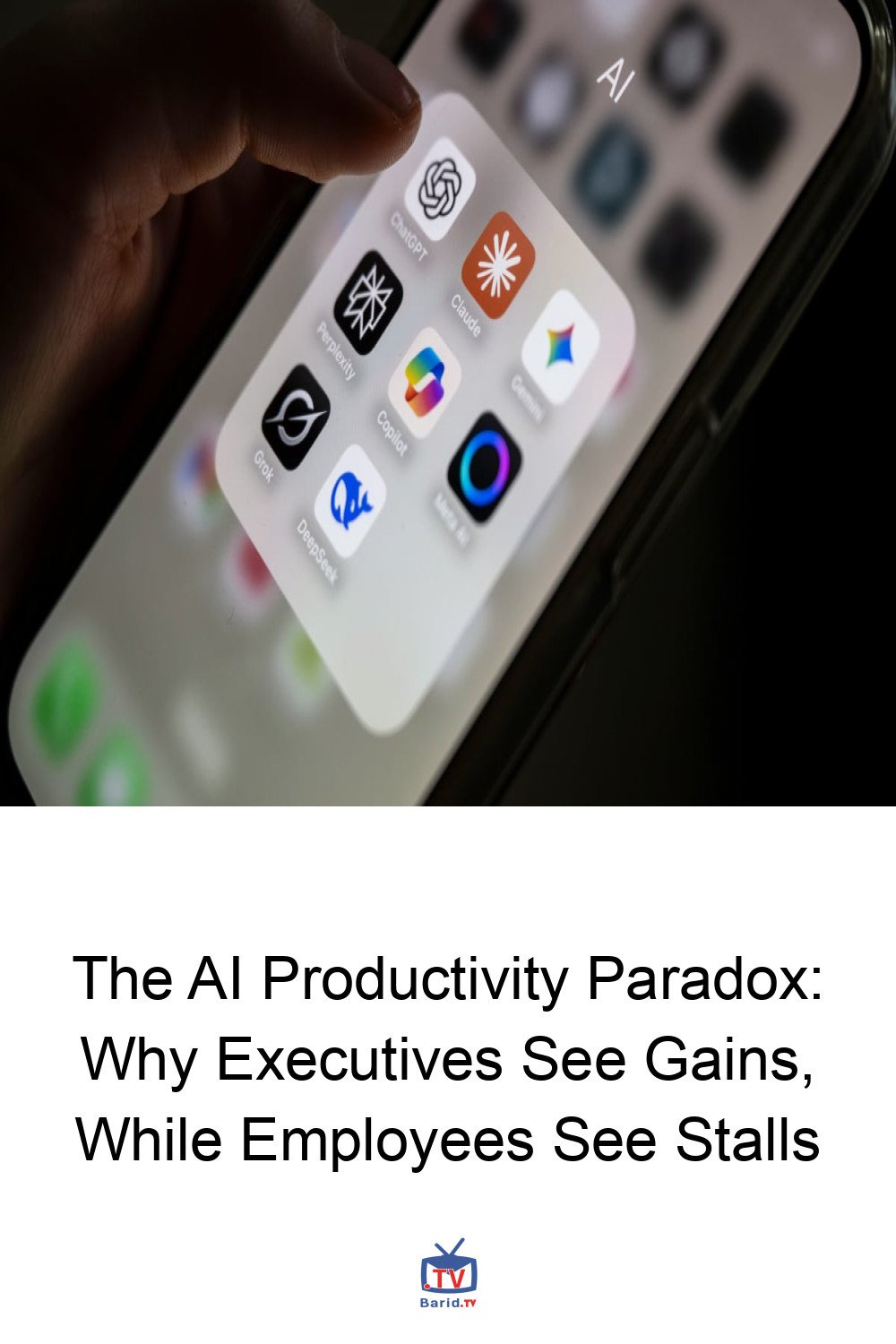
In the bustling landscape of modern enterprise, Artificial Intelligence is often lauded as the ultimate harbinger of efficiency. Yet, a striking disconnect is emerging between the C-suite’s perception of AI’s time-saving prowess and the day-to-day reality faced by the very employees meant to benefit from it. Are you, like many, nodding along to your boss’s AI evangelism while secretly wondering where these promised productivity gains are in your own workflow? You’re far from alone.
The Great Divide: Executive Optimism vs. Employee Reality
A recent deep dive by AI consulting firm Section, surveying 5,000 white-collar professionals, has unearthed a significant chasm in how AI’s impact on productivity is perceived across organizational hierarchies. The findings paint a picture of stark contrast.
For company executives, AI appears to be a veritable time machine. A remarkable 33 percent reported saving 4 to 8 hours weekly, with an additional 19 percent claiming over 12 hours of reclaimed time each week. Only a mere 2 percent of leaders felt AI offered no time-saving benefits at all.
However, descend to the non-managerial ranks, and the narrative flips dramatically. A substantial 40 percent of employees stated unequivocally that AI integration saved them no time whatsoever. Another 27 percent saw minimal gains, less than 2 hours per week, and a paltry 2 percent echoed their executive counterparts with savings exceeding 12 hours. It seems the AI dividend is not trickling down evenly.
Beyond the Hype: AI’s Hidden Costs and Corrections
Adding another layer of complexity to this unfolding story, a separate report from software giant Workday suggests that even the modest time-saving estimates from employees might be overly optimistic. The Wall Street Journal highlighted Workday’s finding that a staggering 85 percent of employees who reported saving time with AI actually spent that ‘saved’ time correcting errors generated by the very AI systems they were using. This points to a significant, often overlooked, hidden cost of AI adoption.
While AI undoubtedly holds promise as a productivity enhancer in specific domains, its implementation is far from a universal panacea. The technology sector, particularly software development, has shown the most significant embrace, with some developers leveraging AI to streamline monotonous coding tasks – albeit sometimes at the risk of introducing “vibe coding mistakes” that require human oversight and correction.
In stark contrast, other industries have yet to experience similar boons. Retail, for instance, languished at the bottom of Section’s study for AI benefits. Overall, the report revealed that 85 percent of respondents either had no work-related AI use cases or were only at a beginner level of engagement.
The Fading Social License: A Warning from Davos
Perhaps most tellingly, Section’s report also uncovered that a significant 40 percent of workers would be perfectly content to never use AI again. This sentiment resonates powerfully with a recent warning issued by Microsoft CEO Satya Nadella at the World Economic Forum in Davos.
Nadella urged the industry to critically examine whether AI’s benefits are truly filtering down to average users. He cautioned that if AI systems “are not improving health outcomes, education outcomes, public sector efficiency, private sector competitiveness across all sectors, small and large,” the industry risks losing “even the social permission to actually take something like energy, which is a scarce resource.”
These collective insights from Section and Workday suggest that this crucial “social permission” for AI is not only fragile but potentially eroding rapidly. For the myriad companies pouring vast resources into AI development and integration, this growing disparity between executive perception and employee reality, coupled with the tangible costs of error correction and a lack of perceived user benefit, should serve as a profound wake-up call. The future of AI in the workplace hinges not just on technological advancement, but on demonstrable, equitable value for everyone.
For more details, visit our website.
Source: Link