
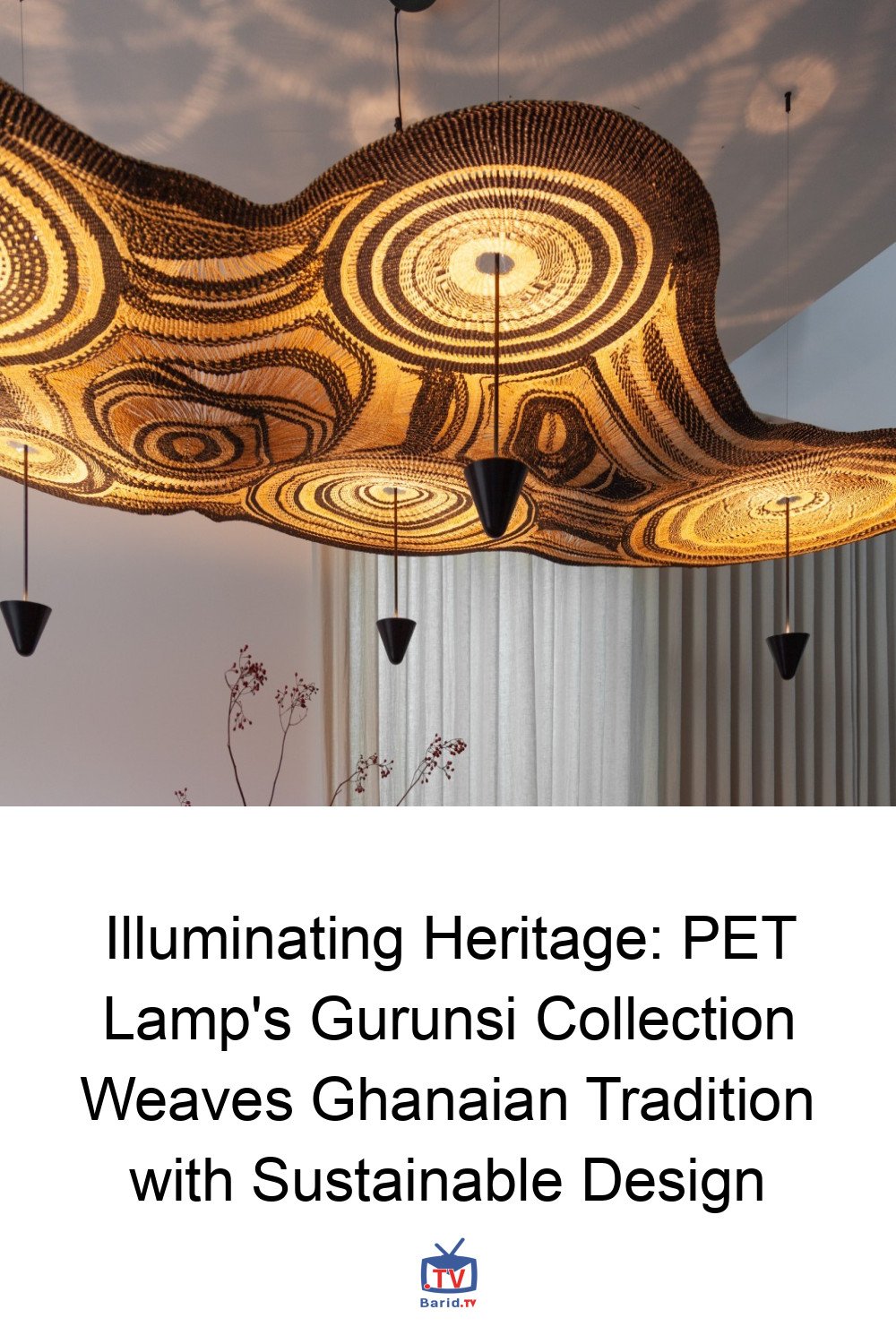
In the vibrant heart of northern Ghana, where the rhythmic art of basket weaving has long shaped daily life and local economies, a remarkable innovation is illuminating the path forward. Bolgatanga, affectionately known as the “city of baskets,” is now a crucible for a design revolution spearheaded by PET Lamp, a visionary project founded by Spanish designer Álvaro Catalán de Ocón. This initiative masterfully fuses ancient Frafra weaving traditions with contemporary design, transforming recycled PET bottles into breathtaking, functional art: the Gurunsi collection.
A Heritage Woven into Light
For generations, the skilled hands of Ghanaian artisans have crafted baskets that are not merely utilitarian objects but embodiments of cultural heritage and economic resilience. PET Lamp’s collaboration with these communities is a testament to the enduring power of craft. Álvaro Catalán de Ocón articulates the project’s deep respect for its roots: “We work intensively with the environment, the artisans, the architecture, and local materials to abstract our own language. All of this applied to our language of plastic bottle reuse, developing a collection around the expressive power of local textiles.” This philosophy underpins the Gurunsi collection, a project spanning over 14 years, which draws profound inspiration from the Frafra people’s weaving techniques and distinctive architectural forms.
Inspired by Earth and Sky: The Gurunsi Aesthetic
Named in homage to the Gurunsi people, the collection’s aesthetic is a direct echo of the adobe-and-branch structures that define Frafra family compounds. The organic, rounded enclosures and rhythmic construction of these traditional homes are beautifully translated into the lamps’ undulating forms. Each piece, meticulously woven by master artisans from The Baba Tree, is a unique narrative. Subtle variations in pattern, curve, and tension speak volumes of the individual maker’s hand and the inherent organic beauty of basketry, ensuring no two lamps are exactly alike.
The Ingenious Core: A PET Bottle Transformed
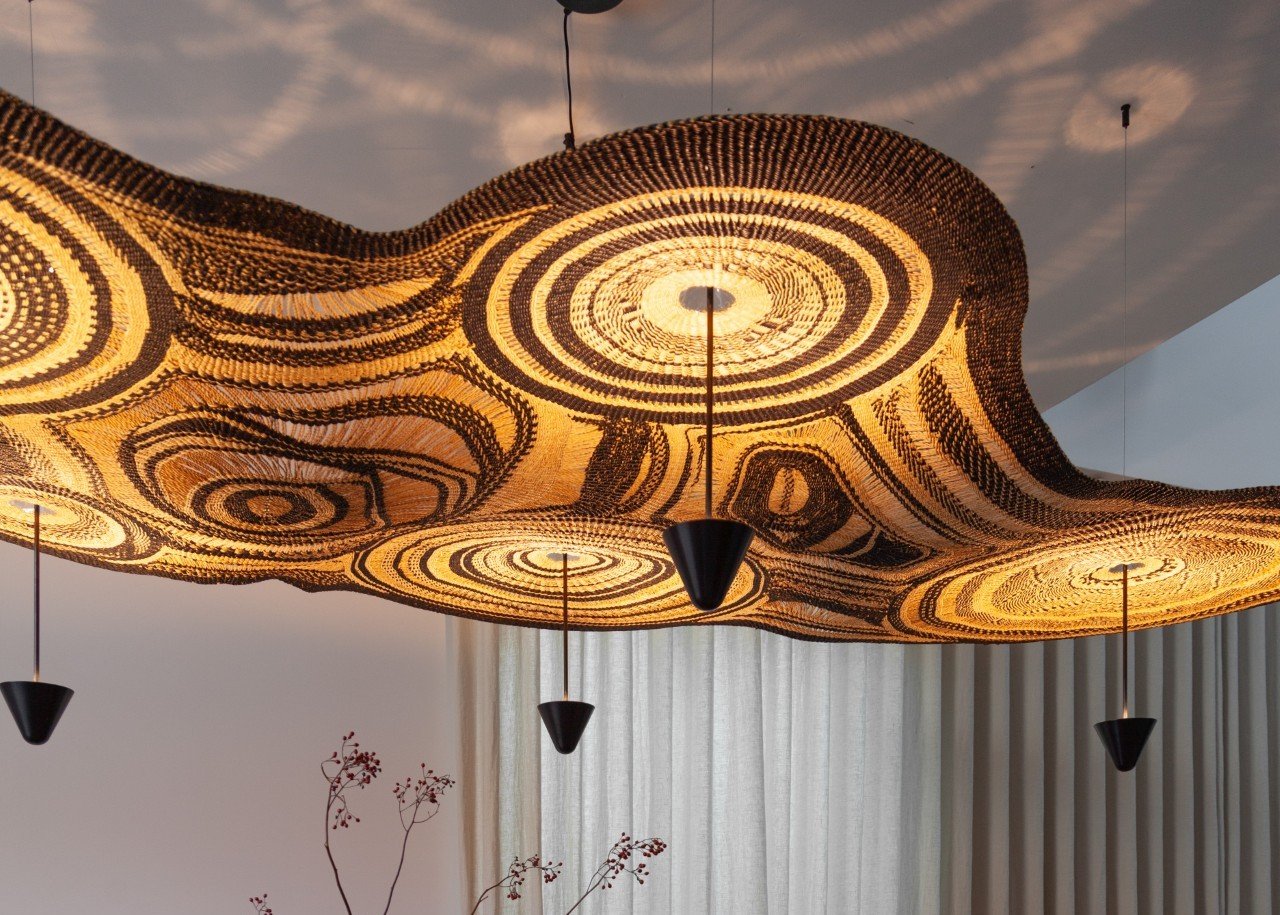
At the heart of each intricately woven round lies a recycled PET bottle, not as a mere symbolic nod to sustainability, but as an indispensable structural component. This ingenious integration allows electrical wiring to seamlessly pass through the woven surface, positioning the light source beneath the tapestry-like form. The result is a captivating interplay of light and shadow. When illuminated, light doesn’t simply emanate; it filters upward and outward through the weave, accentuating the rich textures and casting evocative shadows, rather than drawing attention to the fixture itself.
Illuminating New Typologies
Catalán de Ocón explains the groundbreaking nature of the Gurunsi collection: “Gurunsi opens the way to a typology that hasn’t been seen in the market, one that works with both light and shadow. We float a large fabric in the air that projects shadows on the ceiling.” This innovative approach transforms a pressing environmental concern—plastic waste—into a practical, elegant solution, all while upholding the integrity and essence of traditional weaving techniques. The PET bottle acts as a vital connector, harmonizing material, structure, and light without compromising the ancestral craft.
Far from being conventional light fixtures, Gurunsi lamps function as dynamic, woven surfaces that cradle and diffuse light. They exist in a fascinating space between object and textile, bridging traditional basket weaving with a contemporary design language. Yet, they remain deeply rooted in inherited knowledge, established traditions, and the unparalleled skill of Ghanaian craftsmanship. To delve deeper into the Gurunsi collection by PET Lamp, visit petlamp.org. Photography courtesy of PET Lamp.
For more details, visit our website.
Source: Link