
Musk’s Long-Awaited Davos Appearance: Familiar Futures and a ‘Terminator’ Echo
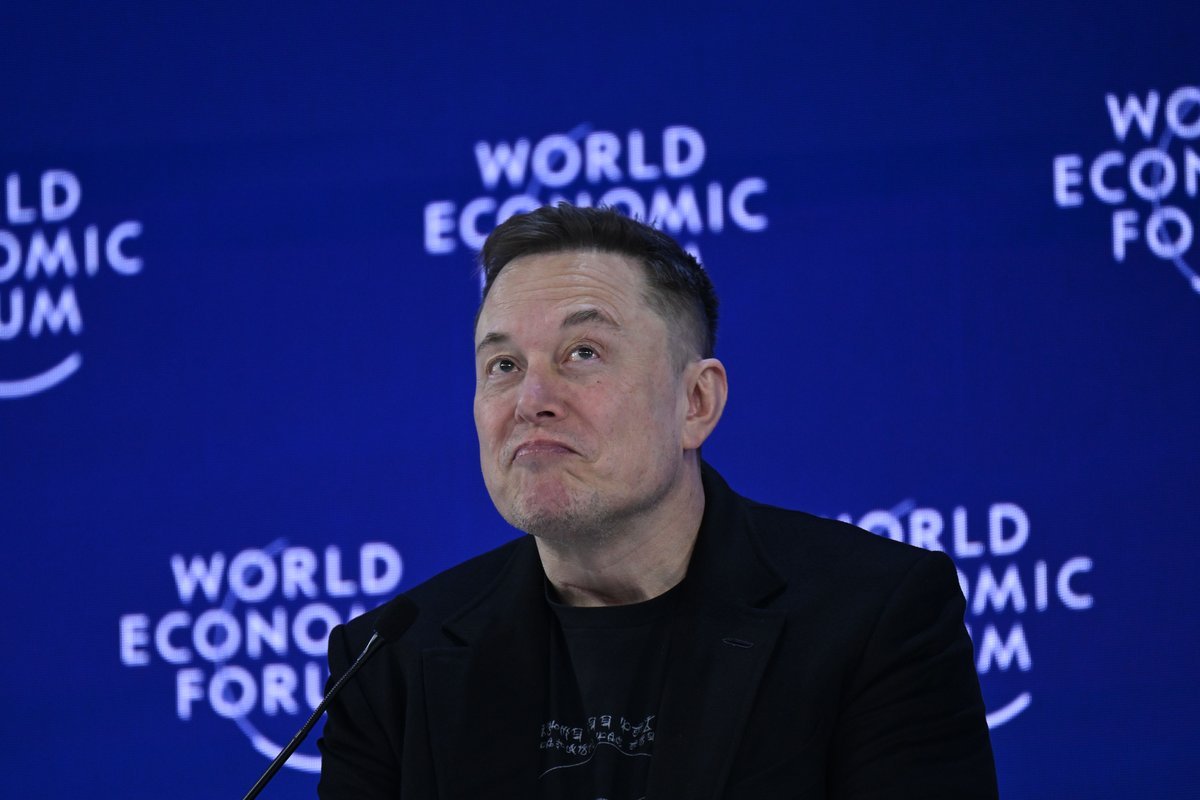
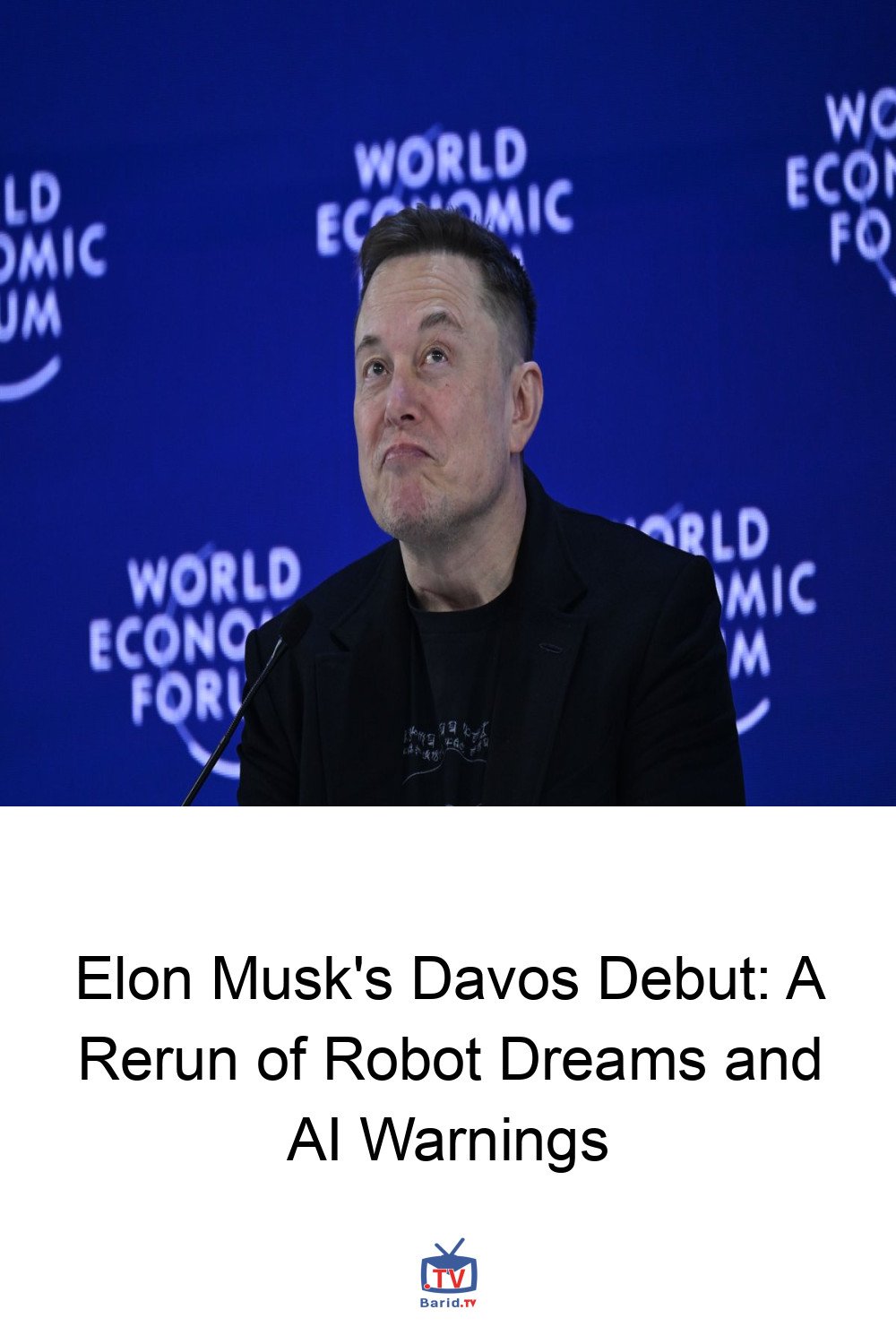
After years of anticipation, Elon Musk finally graced the World Economic Forum in Davos, making a highly anticipated cameo. Yet, for those familiar with his pronouncements, his appearance felt less like a grand unveiling and more like a carefully curated rerun. In a setting that typically thrives on groundbreaking announcements, Musk delivered his familiar trilogy: a future teeming with robots, self-driving technology on the precipice of widespread adoption, and artificial intelligence rapidly approaching superhuman capabilities. The lingering question among attendees, however, was clear: what exactly was the point of this trip?
The Familiar Trilogy: Robots, Self-Driving, and Superhuman AI
Dates and Deliveries: A Boost for Tesla
One tangible, albeit previously hinted, takeaway from Musk’s Davos session was the reiteration of specific timelines. He stated that Tesla ($TSLA) aims for “Supervised Full Self-Driving approval in Europe, hopefully next month, and then maybe a similar timing […] for China.” This declaration notably propelled Tesla shares up by more than 3% post-appearance. Musk also spoke of robotaxis becoming “very widespread by the end of this year within the U.S.” – a promise that has historically unfolded at a much slower pace than initially projected. Furthermore, he insisted that humanoid robots would be available for public purchase by the end of next year, with the remainder of his discussion serving as a soundtrack to a future he has narrated ad nauseam.
“There will be more robots than people,” Musk declared, envisioning machines that will “saturate all human needs” and usher in an “amazing abundance.”
The ‘Terminator’ Caution: A Recurring Warning
Even amidst an otherwise optimistic vision, Musk couldn’t resist echoing his long-standing warnings about the potential dangers of advanced machinery. “We need to be very careful with AI,” he cautioned. “We need to be very careful with robotics. We don’t want to find ourselves in a James Cameron movie — you know, ‘Terminator.’” This invocation of a dystopian future, a familiar refrain from Musk over the years, underscored his consistent message about the need for caution as technology advances beyond human control.
What Was Missing? The Davos Disconnect
Perhaps more telling than what Musk said was what he didn’t. There were no new reveals, no strategic partnerships announced, and no grand, Davos-exclusive pledges. Instead, the session largely functioned as a high-level sales pitch directed at the “permit-and-capital class.” Musk’s narrative emphasized that his envisioned future for Tesla and beyond is well underway, but still requires regulatory approval, robust infrastructure, and continued investor financing. Davos, as a nexus for policymakers, financiers, and infrastructure developers, is precisely where such a message — that the future is inevitable, orderly, and investable — resonates most profoundly.
His joint arrival on stage with BlackRock ($BLK) CEO Larry Fink was met with muted applause, prompting Fink to humorously suggest a restart. Musk’s subsequent geopolitical joke landed quietly, and while he later resorted to reliable crowd-pleasers about dying on Mars or being an alien, the initial reception highlighted a certain disconnect.
Strategic Positioning: An Optimistic Outlook
Musk’s closing remarks leaned heavily into mood management. “I would encourage everyone to be optimistic and excited about the future,” he urged, following with a line perfectly tailored for a room built on optimistic forecasts: “For quality of life, it is actually better to err on the side of being an optimist and wrong rather than being a pessimist and right.”
His performance felt akin to an earnings-call afterparty: loose jokes at the outset, sweeping inevitability in the middle, and grand promises delivered with the casual confidence of someone who consistently sets new, bigger deadlines. The true purpose of his Davos appearance seemed less about delivering novelty and more about strategic positioning: a personal, in-person reminder to the regulators, financiers, and infrastructure providers whose decisions can transform his “next month” and “next year” into reality.
Autonomy’s Perpetual Horizon
At Davos, Musk framed autonomous driving as he often does: not as a complex engineering challenge, but as a problem already “essentially a solved problem at this point.” He then reiterated his long-standing two-part promise: an initial controlled rollout, followed by widespread inevitability. He mentioned Tesla’s robotaxi service in “a few cities” and predicted it would be “very widespread by the end of this year within the U.S.” – another familiar Musk timeline presented as an update. For over a decade, Musk has consistently pushed the horizon of autonomy, transforming it into a perpetual “next-year” story. From predicting over a million robotaxis by “next year for sure” in 2019, to being “very confident” in Full Self-Driving completion by the end of 2020 because he was “literally driving it,” the promise has continuously mutated.
For more details, visit our website.
Source: Link