

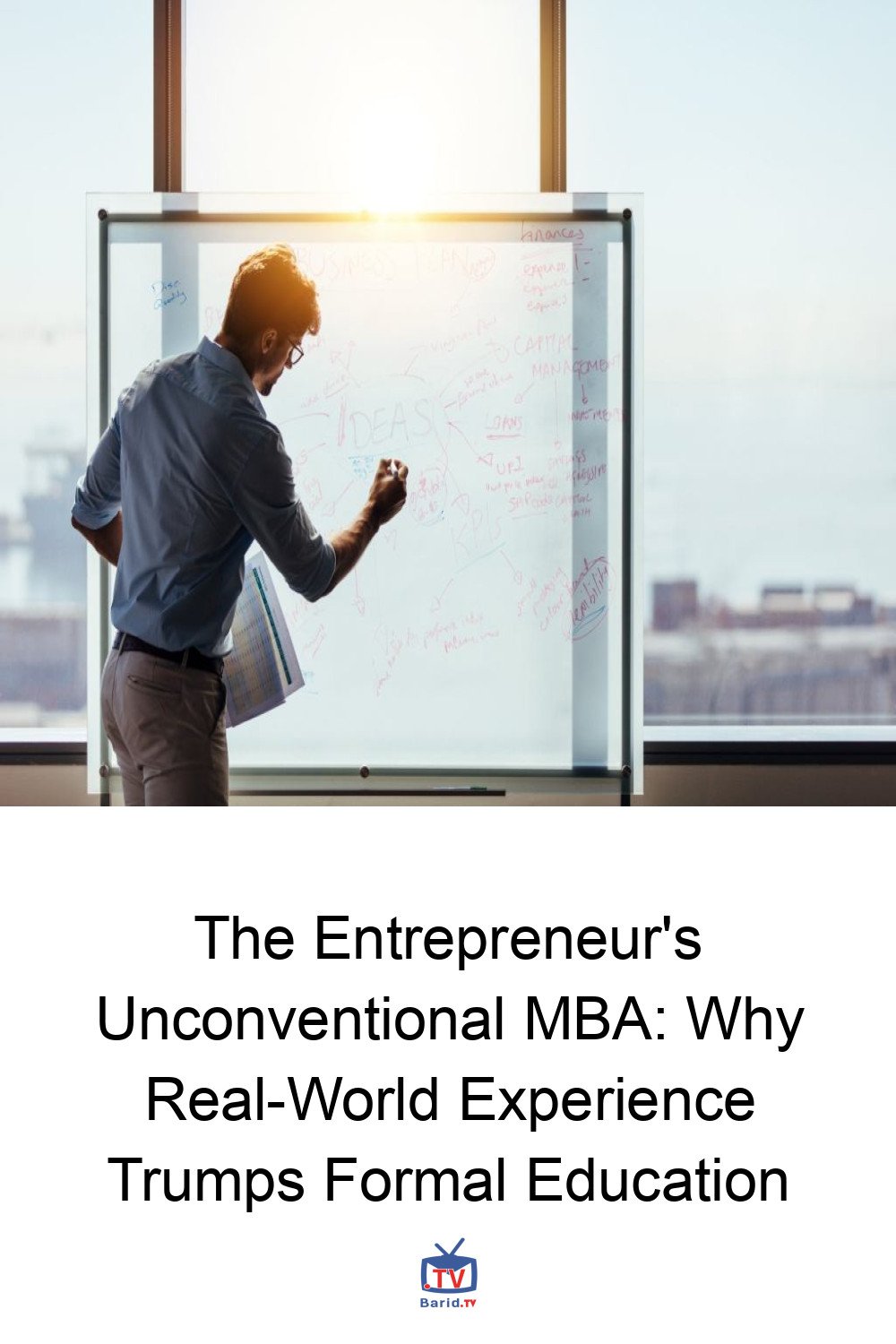
In a world increasingly obsessed with credentials, it’s easy to assume that a traditional education is the bedrock of entrepreneurial success. Yet, for many of the most impactful innovators and business builders, the classroom that truly mattered wasn’t found within ivy-covered walls, but in the gritty, unpredictable arena of real life. This isn’t to diminish the value of academic pursuits, but rather to champion a different kind of learning – one forged in the crucible of experience, where mistakes are lessons and survival is the ultimate qualification.
The Classroom of Life: Where True Judgment is Forged
Beyond Textbooks: Situations, Not Syllabi
Traditional education often presents problems with clear parameters and definitive answers. Life, and especially entrepreneurship, offers no such luxury. Instead, it throws you into a maelstrom of incomplete information, conflicting opinions, tight deadlines, and immense pressure. There’s no syllabus, no ‘right answer’ to memorize. You’re forced to make calls, live with the repercussions, and adapt on the fly. This iterative process of decision-making, adjustment, and learning is where genuine understanding takes root.
The Weight of Decision: Cultivating Entrepreneurial Judgment
Judgment isn’t taught; it’s earned. It crystallizes when decisions carry real weight, when outcomes directly impact people, and when the cost of being wrong is tangible. No simulation, no case study, can replicate the visceral feeling of having everything on the line. This profound sense of responsibility, the constant need to weigh risks and rewards in real-time, is the ultimate training ground for an entrepreneur’s intuition. It’s built through countless ‘reps’ – being in the hot seat when the critical call must be made.
Embracing the Stumble: Failure as a Catalyst for Growth
Redefining Failure: A Stepping Stone, Not a Setback
Many view failure as a sign of unreadiness, a detour from the path to success. The truth, however, is far more empowering: failure is learning in its most potent form. Every misstep, every setback, offers insights that success rarely can. It teaches you to read a room, to spot red flags before they unfurl, to temper emotions under pressure, and to maintain composure when chaos erupts. These are the invaluable, hard-won lessons that sharpen instincts and build resilience.
The Sting of Learning: Sharpening Instincts Through Adversity
The most enduring lessons often come with a price – be it time, money, pride, or comfort. This ‘sting’ ensures they are etched into your memory. Without experiencing failure, an entrepreneur remains untested, their range limited, their mettle unproven. It’s through navigating and surviving these challenging moments that one truly builds the capacity to handle anything the entrepreneurial journey throws their way.
The Art of Timing: An Intuition Born of Repetition
Beyond Market Analysis: The Feel for the Moment
You can pore over market analyses, dissect trends, and memorize past successes all day long, but none of it will teach you timing like being immersed in the fray. Experience instills an innate ‘feel’ – knowing when to push forward, when to hold back, when to speak, when to listen, when to double down, and when to walk away. Timing is not a theoretical concept; it’s an intuitive sense cultivated through repeated exposure and active participation.
Riding the Waves: Learning to Stand Up After Being Knocked Down
Just as a surfer learns to master the waves not by reading about them, but by getting knocked over repeatedly and learning when to stand back up, an entrepreneur learns timing by navigating the unpredictable currents of business. This repetitive engagement, this cycle of action and reaction, hones an instinct that no textbook can impart.
The Quiet Strength: Confidence Forged in Survival
From Panic to Poise: The Resilience of the Experienced Entrepreneur
True confidence doesn’t stem from theoretical knowledge; it comes from the deep-seated assurance that you’ve faced similar challenges before and emerged stronger. Experience cultivates a quiet, unwavering confidence – not loud or performative, but steady and reliable. You stop panicking at problems because you’ve solved worse ones. You trust your judgment, no longer constantly seeking external validation.
Trusting Your Gut: The End of Chasing External Validation
While preparation and diligence remain crucial, the experienced entrepreneur no longer crumbles when plans go awry. This belief in one’s own capacity to survive and adapt is the bedrock of genuine entrepreneurial self-belief, allowing for decisive action even in the face of uncertainty.
Mentors and Moments: The Synergy of Guidance and Action
The Limits of Advice: Stepping Onto the Field
Mentors are invaluable. They offer wisdom, guidance, and warnings gleaned from their own journeys. However, no mentor can live the moment for you. Their advice, however profound, remains theoretical until you step onto the field and make the call under pressure. Growth demands participation; experience transforms wisdom into instinct through active engagement.
Outcomes Over Effort: The Real World’s Unflinching Grade
While academic settings often reward effort, the real world, particularly in entrepreneurship, is singularly focused on outcomes. You can work tirelessly, prepare exhaustively, and still fall short. This isn’t unfair; it’s honest. Experience instills accountability, ownership, and responsibility. There are no extensions, no retakes, no curves – only results, which serve as the only true transcript that matters.
The Human Element: Mastering the Art of Interaction
Beyond Theory: People Under Pressure
Textbooks can outline theories of human behavior, but they cannot teach you how people truly act under pressure. Experience reveals who rises to the occasion, who falters, and who tells the truth even when it’s costly. It’s through real-world interactions that you learn to communicate clearly, listen empathetically, and navigate conflict without burning essential bridges. People skills are not learned in isolation; they are forged in the crucible of human interaction.
The Path Revealed: Finding Your True Calling Through Doing
From Idea to Reality: Testing Your Entrepreneurial Spirit
You can harbor entrepreneurial aspirations for years, but only experience will reveal if you truly possess the fortitude for it. Some are drawn to the idea of entrepreneurship until they confront daily uncertainty; others find their deepest sense of purpose within it. Experience strips away fantasy, replacing it with clarity. You don’t discover your true calling by thinking harder; you discover it by moving, by doing, by engaging with the world.
The Compounding Advantage: Experience as Your Greatest Credential
Degrees are static milestones; experience is a dynamic, compounding asset. Every challenge overcome, every lesson learned, every decision made, builds upon the last, creating an ever-growing reservoir of practical wisdom and capability. For the entrepreneur, this continuous accumulation of experience is not just an advantage – it’s the ultimate, irreplaceable credential.
For more details, visit our website.
Source: Link