
Beyond the Dialogue: Unpacking the Real Conversations at Davos
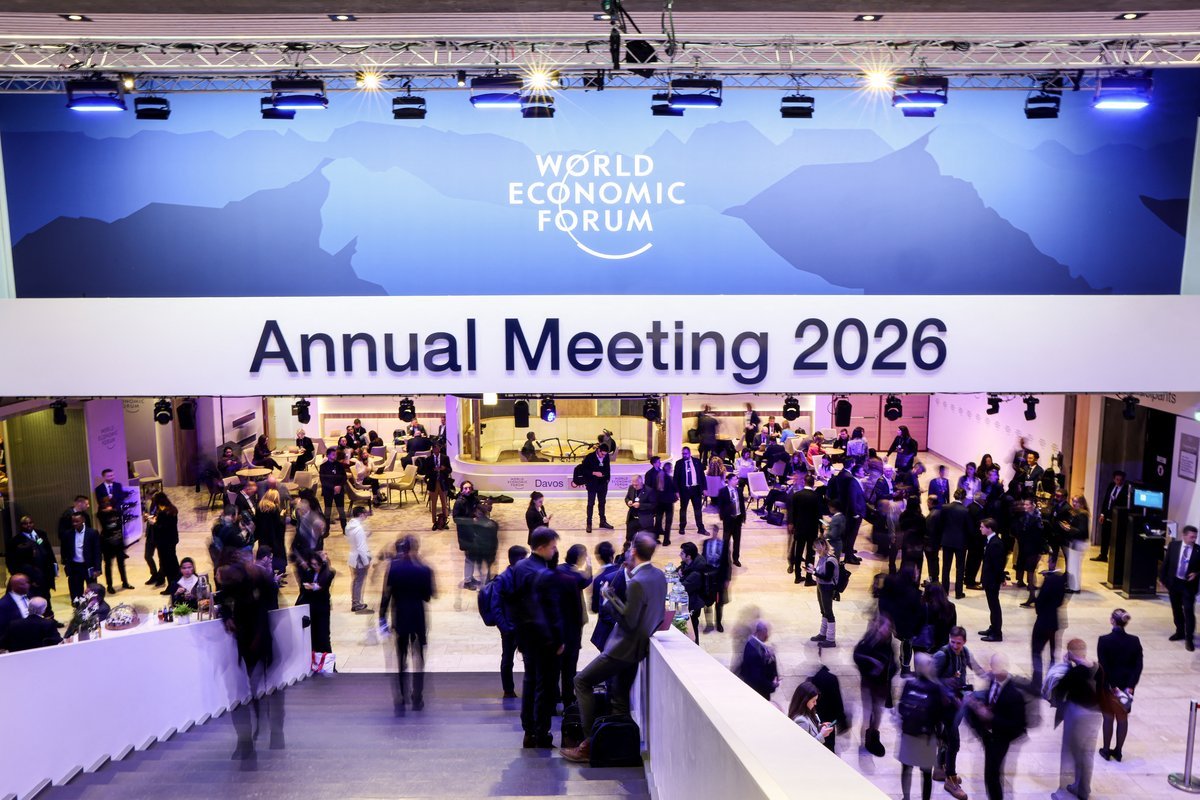
As the World Economic Forum convened in Davos, Switzerland, the official theme of “a spirit of dialogue” belied a more candid, albeit still polite, undercurrent of anxiety among global leaders and business titans. While the formal agenda promised collaboration, the true discussions revolved around pressing economic challenges, from the tangible impact of trade policies to the transformative, and potentially disruptive, power of artificial intelligence.
Amazon CEO Andy Jassy on Tariffs and Consumer Behavior
Among the hundreds of influential figures present was Andy Jassy, CEO of Amazon, a company whose staggering market capitalization of $2.5 trillion and annual revenue of $700 billion dwarfs many national economies. Speaking to CNBC, Jassy offered a nuanced perspective on the ripple effects of President Donald Trump’s trade policies, particularly tariffs.
The Creeping Cost of Trade Policy
Jassy acknowledged that tariffs are “creeping into some of the prices,” a significant concern for low-margin businesses like retail. He described the pressure as a “structural challenge more than a temporary squeeze,” highlighting that tariffs are not abstract concepts but forces capable of impacting prices across millions of items and affecting countless sellers. To mitigate this, Amazon and its third-party sellers had “pre-bought” inventory early in 2025, strategically staging goods to cushion the blow of impending tariffs.
Consumers Tighten Belts
Despite continued spending, Jassy observed a noticeable shift in consumer behavior: shoppers are “trading down, hunting for bargains, and a little more hesitant on higher-priced discretionary items.” This indicates a cautious consumer landscape, directly influenced by the economic uncertainties stemming from trade disputes.
The AI Revolution: A Looming Labor Shift
Beyond immediate economic mechanics, Jassy also shed light on a longer-term transformation poised to reshape the global labor market: generative artificial intelligence. While AI has yet to “significantly” displace workers, its growing capabilities in coding, analytics, and customer service tasks suggest a future where fewer human hands may be needed for these roles.
Fewer People, More Code
“In the next couple of years, I could see us having fewer people than we had before,” Jassy stated, emphasizing that “jobs are going to be impacted by what’s happening with AI over time.” This impact, he clarified, extends beyond routine tasks to encompass “thinking work,” signaling a profound shift across various professional domains.
Europe’s Call for Independence Amidst Global Shocks
Complementing Jassy’s economic insights, European Commission President Ursula von der Leyen painted a broader geopolitical picture. In her Davos address, she evoked the “Nixon shock” of 1971, when the collapse of the Bretton-Woods system fundamentally altered the post-war global order. This historical parallel served as a potent reminder of the dangers of over-dependence, a lesson she argued is acutely relevant today, implicitly referencing the White House’s current retreat from established trade and diplomatic norms.
Echoes of the “Nixon Shock”
Von der Leyen’s warnings last year were met with skepticism, but this year, she noted a “real consensus” emerging within Europe. The continent, she asserted, must actively reduce its dependencies and vigorously pursue economic independence to safeguard its future stability.
The Peril of “Whimsical” Disruption
Davos, often perceived as a fount of fresh insights, more accurately serves as a platform where the prevailing status quo is articulated with a degree of candor. Yet, this year’s politeness felt particularly strained. Executives spoke of effects without directly naming their political causes, and European leaders anchored their remarks in past American-led shocks. Systemic disruption was discussed almost as if it were an uncontrollable force of nature, rather than the direct consequence of deliberate decisions and policies.
Beyond Innovation: The Cost of Unpredictability
While disruption is an inherent part of economic evolution, the discussions at Davos highlighted a widespread recognition that disruption driven by “whims”—rather than genuine innovation or necessity—carries a heavy cost. Such unpredictability tends to inflate prices, complicate political problem-solving, and restrict choices for market participants. The prevailing sentiment was clear: this current wave of disruption is not being perceived as generative or productive, but rather as a source of instability and economic friction.
For more details, visit our website.
Source: Link