
The Silent Revolution: Redefining User Experience in the Digital Age
In the rapidly evolving landscape of digital products, a profound transformation is underway. User Interface (UI) and User Experience (UX) design are no longer merely about aesthetics or superficial polish. We are witnessing a fundamental shift, where the discipline moves beyond making things look good to crafting systems that are inherently understandable, ethical, and profoundly humane. This isn’t a subtle tweak; it’s a seismic shift that impacts everything from enterprise platforms to the apps in our pockets, demanding a closer look at what truly works, what falls short, and why this evolution is critical for every digital interaction.
From Layer to Infrastructure: UX as the Foundation
For years, UX was often treated as an afterthought—a decorative layer applied once core engineering, branding, or product decisions had already been cemented. That outdated approach is now obsolete. Today, UX has ascended to the status of infrastructure, a foundational element that dictates how a system behaves, influences user decision-making, and determines the cognitive load required to accomplish tasks. When UX falters, the consequences are far from cosmetic; they manifest as abandoned workflows, eroded trust in data, a surge in support tickets, compliance headaches, and internal resistance to change.
This is particularly evident in complex environments. Enterprise platforms, healthcare systems, financial tools, and internal dashboards are increasingly judged not by their exhaustive feature lists, but by the reliability and ease with which users can navigate them, especially under pressure. The contemporary state of UX design reflects this reality, with an unwavering focus on predictability, consistency, and the crucial reduction of mental effort.
The Quiet Revolution: UI’s Evolution Towards Restraint
There’s a critical distinction between simplicity and restraint, and modern UI design embodies the latter. Today’s interfaces are often quieter than their predecessors, yet this doesn’t imply an easier design process. On the contrary, contemporary UIs are meticulously crafted, relying heavily on precise spacing, clear hierarchy, sophisticated typography, and subtle interaction cues. Color is employed with deliberate intent, motion serves functional purposes rather than mere decoration, and components are expected to exhibit consistent behavior across diverse contexts, devices, and states.
This elevated standard means a quiet interface leaves no room for imperfection. Poor hierarchy, weak contrast, or inconsistent logic immediately become glaring flaws. The most effective UI today doesn’t clamor for attention; instead, it seamlessly supports user orientation, instills confidence, and gracefully recedes into the background. Design systems play an instrumental role here, not as static libraries, but as dynamic frameworks that encapsulate crucial decisions about behavior, accessibility, and scalability. UI has evolved beyond individual screens to encompass the holistic behavior of a system over time.
Designing for Humanity: Ethics, Accessibility, and Agency
Accessibility as a Benchmark of Design Excellence
Accessibility was once relegated to a compliance checklist: contrast ratios, keyboard navigation, alt text, and so forth. While these elements remain vital, the conversation has matured significantly. The current paradigm of UI/UX views accessibility as a direct measure of design competence, transcending mere regulatory obligation. Designers and teams are increasingly recognizing that truly accessible interfaces benefit everyone. They eliminate ambiguity, enhance comprehension, and fortify systems to be more resilient across an array of devices, environments, and user conditions.
This shift in mindset is pivotal. When accessibility is integrated from the outset, it influences every facet of design, from layout and copy to how users recover from errors. It ceases to be an afterthought and instead becomes a guiding principle, shaping the very core of the design process.
Reclaiming Control: The User’s Pushback Against Over-Automation
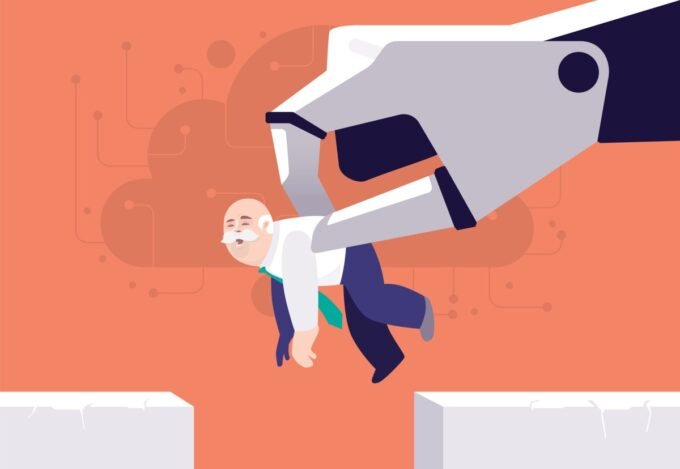
One of the most compelling tensions in modern UX lies in the delicate balance between automation and user agency. What is intended to assist often subtly morphs into direction. Interfaces suggest, choose, and in the realm of AI-driven products, even act on behalf of users—frequently without sufficient transparency to foster trust. The insidious result is a quiet erosion of confidence. Users lose their grasp on how systems operate, follow prompts with dwindling assurance, and are left bewildered when things inevitably go awry.
The current state of UX reflects a necessary correction. There’s a burgeoning emphasis on explainability, reversibility, and visible system logic. Good UX today consciously creates space for critical thinking, empowering users to remain oriented rather than passively herding them towards predetermined outcomes.
The Perpetual Loop: Why Research Never Ends
Another significant evolution is the integration of research into the very fabric of product development. It’s no longer a discrete activity performed at the project’s inception or a final check before launch. Instead, research has become a continuous, interwoven thread throughout product cycles, drawing insights from real usage data and everyday feedback. Teams are meticulously observing how interfaces perform over time—identifying points of hesitation, abandonment, and the emergence of user-created workarounds. These signals are no longer just metrics; they are invaluable design inputs.
This ongoing approach mirrors the dynamic reality of products in the real world. They are never truly ‘finished.’ Interfaces must adapt as organizations evolve, rules shift, and user expectations continuously grow. The hallmark of mature UX is reflected in the agility with which teams respond to these ever-changing demands, ensuring products remain relevant, effective, and truly user-centric.
For more details, visit our website.
Source: Link