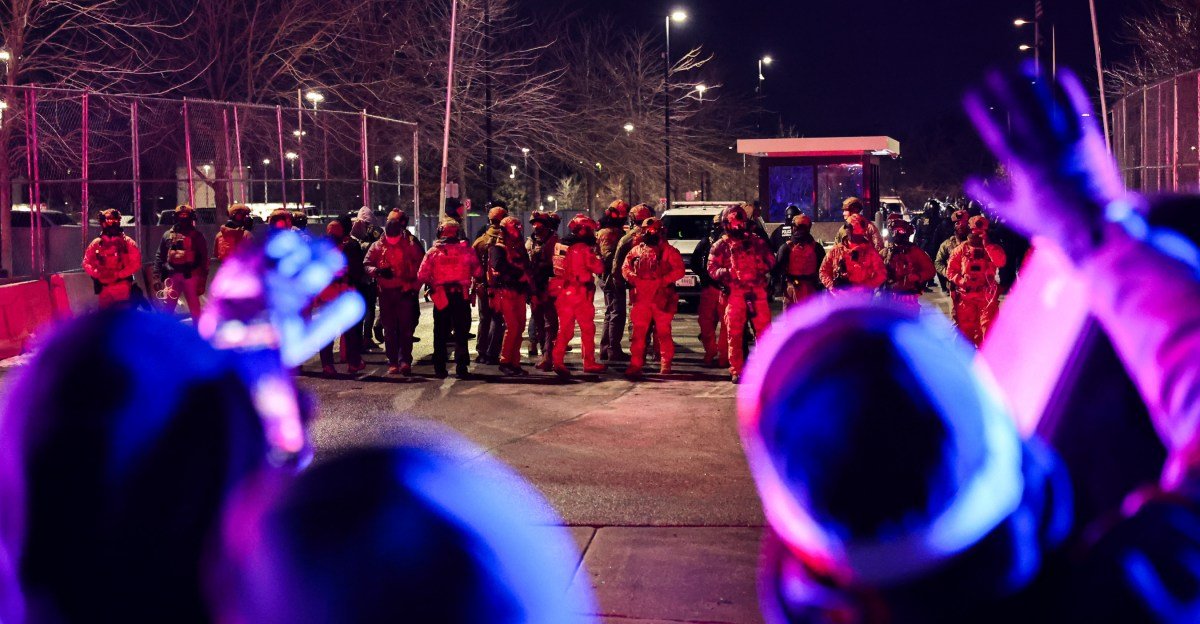

As Homeland Security’s presence in Minneapolis stretches into its third week, the city finds itself gripped by an unsettling reality. What began as an immigration enforcement operation has evolved into a full-scale occupation, transforming the daily lives of residents and sparking widespread alarm. Locals are not merely observing; they are actively volunteering for patrol shifts, protesting in the streets, and maintaining vital communication networks through group texts, all while grappling with a profound sense of disruption.
Minneapolis Under Siege: A Local’s Perspective
Living in Minneapolis, a city I’ve called home for years after growing up nearby in a St. Paul suburb, I’ve witnessed firsthand the escalating tension. My wife and I chose this “freezing state” for its warmth and welcoming spirit, a stark contrast to the current climate. As over 3,000 ICE agents continue their indefinite occupation, a steady stream of messages from concerned friends nationwide echoes a singular question: “Is it really as bad as it looks from the outside?”
My unequivocal answer is: it’s worse. The rupture to daily life is unlike anything I’ve experienced since the pandemic. Yet, even during that global crisis, there was a shared understanding, a common enemy. With ICE, there is no such comfort. This is not about safety; it is, quite literally, a hostile, heavily armed, and masked police force violently occupying our city. The pretense of making Minneapolis safer has been abandoned, revealing what many here perceive as a calculated campaign of retribution.
A Tragic Loss and Unchecked Authority
The tragic killing of Renee Good by an immigration enforcement agent on January 7, 2026, served as a grim turning point. This incident, coupled with the blatant fabrications from DHS Secretary Kristi Noem and the FBI’s refusal to release evidence, sent a chilling message: ICE agents would operate with impunity, at least under the current administration. This lack of accountability has emboldened agents, many of whom are reportedly under-trained and wear masks to evade identification, to act with increasing aggression.
The administration’s open encouragement of violence, and the President’s contemplation of invoking the Insurrection Act to deploy additional paratroopers, only amplifies the fear. The question of personal safety, particularly for those who oppose these tactics, has become paramount. The very act of writing this article prompted a serious consideration of anonymity, a testament to the palpable threat looming over the city.
The Human Cost: Life Under Occupation
The presence of ICE is not an abstract concept here; it’s a constant, tangible threat demanding unceasing vigilance. Public schools have closed, as the state government cannot guarantee student safety. A significant portion of local businesses, including 80 percent of immigrant-owned establishments, remain shuttered, protecting staff and patrons from potential raids. Many non-white Minnesotans, regardless of citizenship status, are effectively sheltering in place, foregoing essential errands like grocery runs and doctors’ appointments to remain in their homes, where ICE theoretically requires a judicial warrant to intervene.
The right-wing narrative that those who resist ICE are “paid protestors” is a cynical distortion. The reality is that ordinary citizens—with families, jobs, and bills—are dedicating countless unpaid hours to protect their community. As a white U.S. citizen, I acknowledge my relative privilege; while I could still face detention, I am less likely to be actively targeted. My luck, so far, has also extended to avoiding dangerous encounters with my young children present. Yet, this sense of fortune feels increasingly precarious.
Community Mobilization and Personal Stakes
In response to the crisis, community bonds have strengthened. Over the past two weeks, I’ve joined the ranks of volunteer drivers, providing vital transportation for non-white residents between their homes and workplaces. My passengers, often pulling up their winter coat hoods before entering the car, embody the quiet determination and apprehension that defines life in Minneapolis right now.
The emotional toll is undeniable. When friends ask, “Are YOU okay?”, the honest answer is no. Despite a long-standing awareness of the administration’s capacity for cynicism, I was unprepared for the sheer scale of chaos and violence unleashed upon my city. Minneapolis stands as a testament to resilience, but also as a stark reminder of how quickly a sense of security can unravel under the weight of an unchecked federal presence.
For more details, visit our website.
Source: Link