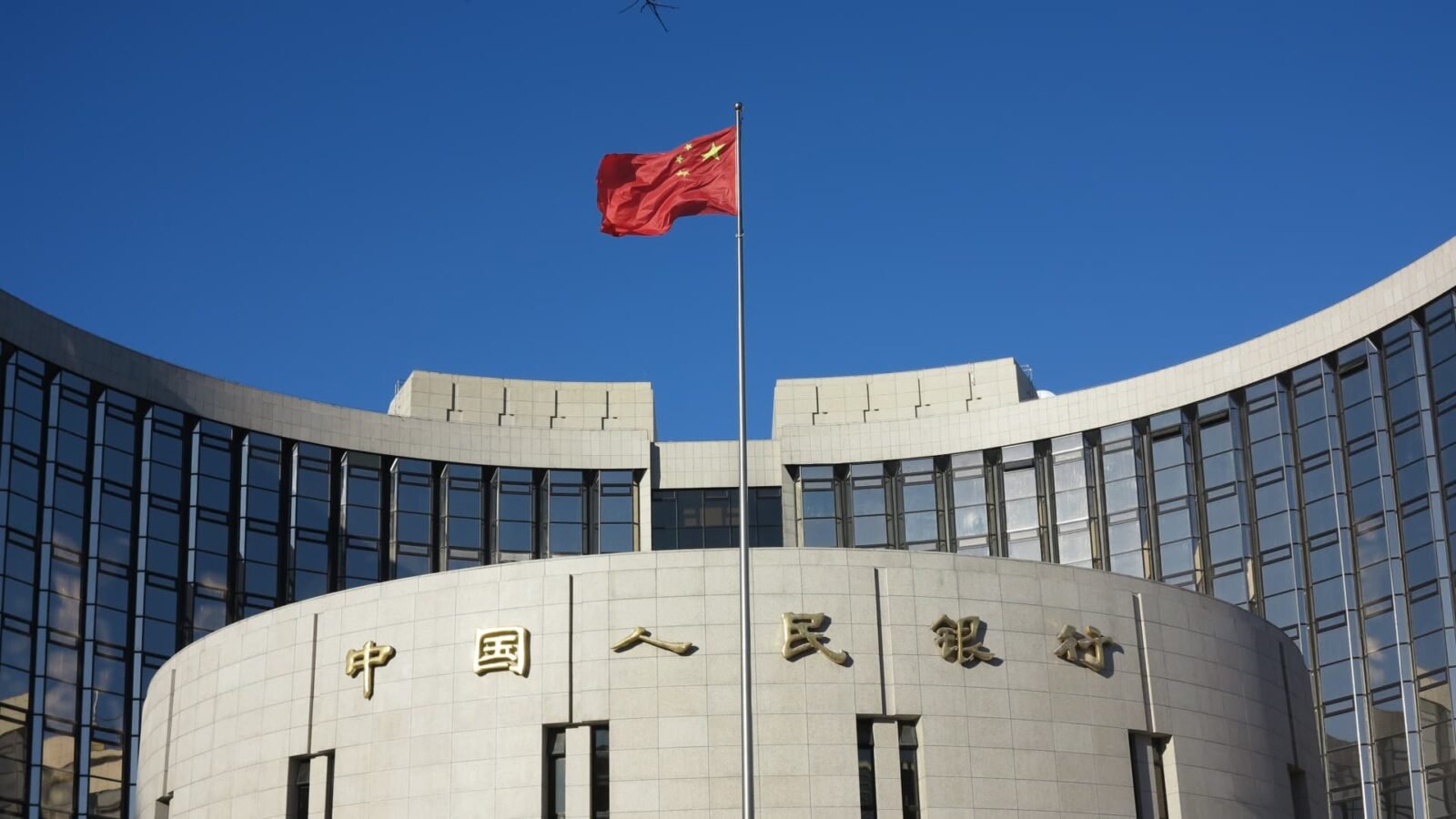

In a move that underscores a delicate balancing act between stimulating growth and maintaining financial stability, China’s central bank, the People’s Bank of China (PBOC), has opted to keep its benchmark lending rates unchanged. This decision comes despite mounting evidence of a significant economic slowdown, prompting questions about Beijing’s strategy to navigate what some economists are calling one of the worst domestic demand slumps in a century.
Stagnation Signals and Deflationary Fears
For the eighth consecutive month, the PBOC held its 1-year Loan Prime Rate (LPR) at 3% and its 5-year LPR, which influences mortgage rates, at 3.5%. This steadfastness in policy rates stands in stark contrast to a backdrop of weakening economic indicators.
A Slowing Giant
The world’s second-largest economy expanded by a mere 4.5% year-on-year in the final quarter of 2025, marking its slowest growth since the post-Covid reopening in late 2022. More concerning, perhaps, is the nominal GDP, a crucial gauge of corporate profitability and household incomes, which has languished below 4% for three straight years, hitting a 50-year low of 3.8% in Q4 2025 (excluding the pandemic-hit 2020).
The Shadow of Deflation
Deflationary pressures are proving persistent, with the GDP deflator — a key measure of price changes — remaining negative for an alarming 11th consecutive quarter. Analysts at Barclays anticipate this trend to continue throughout the current year. Compounding this, retail sales growth plummeted to a three-year low of 0.9% in December, a clear symptom of battered household confidence stemming from a prolonged housing slump, a challenging job market, and entrenched deflation.
Nomura economists succinctly captured the mood, noting, “Beijing has become increasingly concerned about one of the worst domestic demand slowdowns in this century.”
Targeted Interventions Over Broad Easing
Rather than a broad-brush rate cut, Chinese authorities appear to be favoring a more surgical approach, focusing on specific sectors to inject vitality into the economy. This strategy was highlighted by China’s state planner, which affirmed a commitment to “more proactive fiscal policies” and “moderately loose monetary policy” aimed at price recovery.
Precision-Guided Stimulus
Last week, the central bank subtly lowered interest rates on its structural monetary policy tools by 0.25 percentage points. This included reducing the 1-year rate on relending facilities for agricultural and small businesses to 1.25%. By cutting the cost of central bank funding to financial institutions, the PBOC aims to encourage banks to extend credit to targeted sectors at more favorable rates, bypassing a direct policy rate cut.
Further demonstrating this targeted focus, the PBOC plans to establish a dedicated relending program for private firms and boost quotas for tech innovation loans, specifically supporting small and medium-sized private companies. In a bid to address the beleaguered real estate sector, the minimum down-payment ratio for commercial property mortgages will also be lowered to 30%, aiming to reduce inventory.
The urgency for stimulus is underscored by new bank loans shrinking to a seven-year low of 16.27 trillion yuan ($2.33 trillion) in 2025, reflecting sluggish borrowing demand across the economy.
Glimmers of Future Easing?
Despite the current hold on benchmark rates, hints of future monetary easing have emerged. Deputy Governor Zou Lan recently indicated “still room” to reduce both the reserve requirement ratio (RRR) and policy rates this year. Zou also pointed to an improved environment for such moves, citing signs of stabilizing banks’ net interest margins (NIMs) after years of contraction.
The Yuan’s Unexpected Strength
Adding another layer of complexity, the yuan’s recent appreciation has also opened up space for potential policy rate cuts, according to Zou. The Chinese offshore yuan has gained over 1% against the dollar in the past month, even breaching the key 7-per-dollar threshold for the first time since May 2023. Policymakers attribute this strength to a weakening dollar and easing U.S.-China geopolitical tensions, rather than a domestic monetary policy shift, with the PBOC committed to maintaining the yuan in a “reasonable and balanced equilibrium.”
Looking ahead, economists at Goldman Sachs anticipate the PBOC to cut the RRR by 50 basis points and the policy rate by 10 basis points in the first quarter, suggesting that while broad easing is on hold for now, it may not be off the table entirely.
While China’s manufacturing and exports have shown resilience amidst global trade barriers, the core challenge remains stimulating domestic demand and combating deflation without destabilizing the financial system. Beijing’s current strategy is a careful tightrope walk, prioritizing precision over blunt force in its quest for economic recovery.
For more details, visit our website.
Source: Link