
All You Need Is Kill: The Dazzling Animated Roguelike Epic
Hollywood has often struggled to translate the unique narratives of Japanese manga and light novels to the big screen. Yet, some adaptations transcend expectations, much like Warner Bros.’ 2014 live-action film Edge of Tomorrow, based on Hiroshi Sakurazaka’s sci-fi light novel All You Need Is Kill. While Edge of Tomorrow
took liberties with its source material, it masterfully captured the essence of tenacity in the face of insurmountable odds. Now, Warner Bros. Japan and Studio 4°C present a new animated adaptation, directed by Kenichiro Akimoto, that not only reworks key elements but also dives headfirst into the exhilarating, frustrating madness of video games, delivering a visually stunning and deeply engaging cinematic experience.
A Fresh Take on a Familiar Loop
Like its literary predecessor, this new All You Need Is Kill plunges viewers into a mind-bending time loop. However, this iteration shifts its narrative lens, telling the story from the perspective of Rita Vrataski (voiced by Ai Mikami in Japanese, Stephanie Sheh in English). Rita is a disaffected young woman working at a Darol research facility, unaware of the true menace lurking within the towering, flower-like alien that fell from space. When Darol blossoms, unleashing its monstrous progeny, Rita experiences firsthand the brutal reality of the alien invasion.
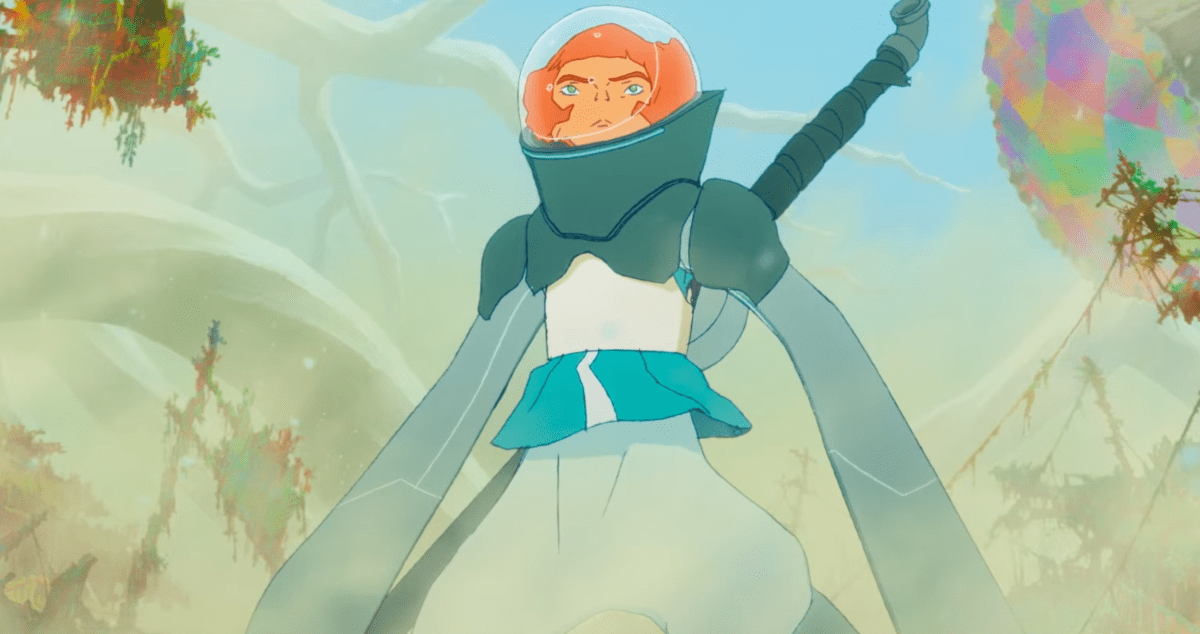
Despite her advanced exoskeleton power armor, Rita is quickly overwhelmed. Yet, a shocking twist awaits her: upon death, she is transported back to the beginning of the very same day. This ‘Groundhog Day’ scenario initially feels like an inescapable nightmare. Rita repeatedly faces death, each time trying to alter her fate. The turning point arrives when she encounters Keiji (Natsuki Hanae / Jadon Muniz), a nervous gamer who shares her bizarre predicament. Together, they begin to view each loop not as a curse, but as an opportunity – a chance to study Darol, refine their combat skills, and upgrade their weaponry.
Embracing the Roguelike Spirit
Where Edge of Tomorrow offered subtle nods to its video game-like premise, the new All You Need Is Kill explicitly embraces the roguelike genre. Rita and Keiji are not just reliving a day; they are in a high-stakes game where every death is a reset, and every restart is a chance to learn, adapt, and grow stronger. This iterative process, central to roguelike games, is vividly portrayed. The duo evolves into a formidable alien-slaying team, their progress measured in upgraded gear and honed tactics. Yet, the brutal cycle of death and resurrection takes its toll, raising profound questions about morality, perseverance, and the true cost of endless struggle.
A Visual Spectacle: Art Direction Reimagined
Perhaps the most striking departure from previous adaptations is the film’s wholly unique art direction, spearheaded by Tomotaka Kubo (known for Promare and Mary and the Witch’s Flower) and character designer Izumi Murakami. This world is presented as a lush, vibrant wonderland, its beauty intensified even as Darol’s menacing drones dominate the screen. The power suits, once hulking and cumbersome in earlier versions, are reimagined by mechanical designer Junji Okubo (Star Wars: Visions’ “Lop & Ochō”) as sleek, almost organic extensions of their pilots. These visual innovations imbue this iteration of All You Need Is Kill with a distinct personality, elevating its action sequences into a dazzling, unforgettable spectacle.
The animated All You Need Is Kill is more than just another adaptation; it’s a testament to the power of reimagination. By embracing its video game soul and delivering a fresh, visually stunning narrative, it proves just how much fun cinema can be when it dares to explore the thrilling, frustrating, and ultimately rewarding journey of the roguelike loop.
For more details, visit our website.
Source: Link