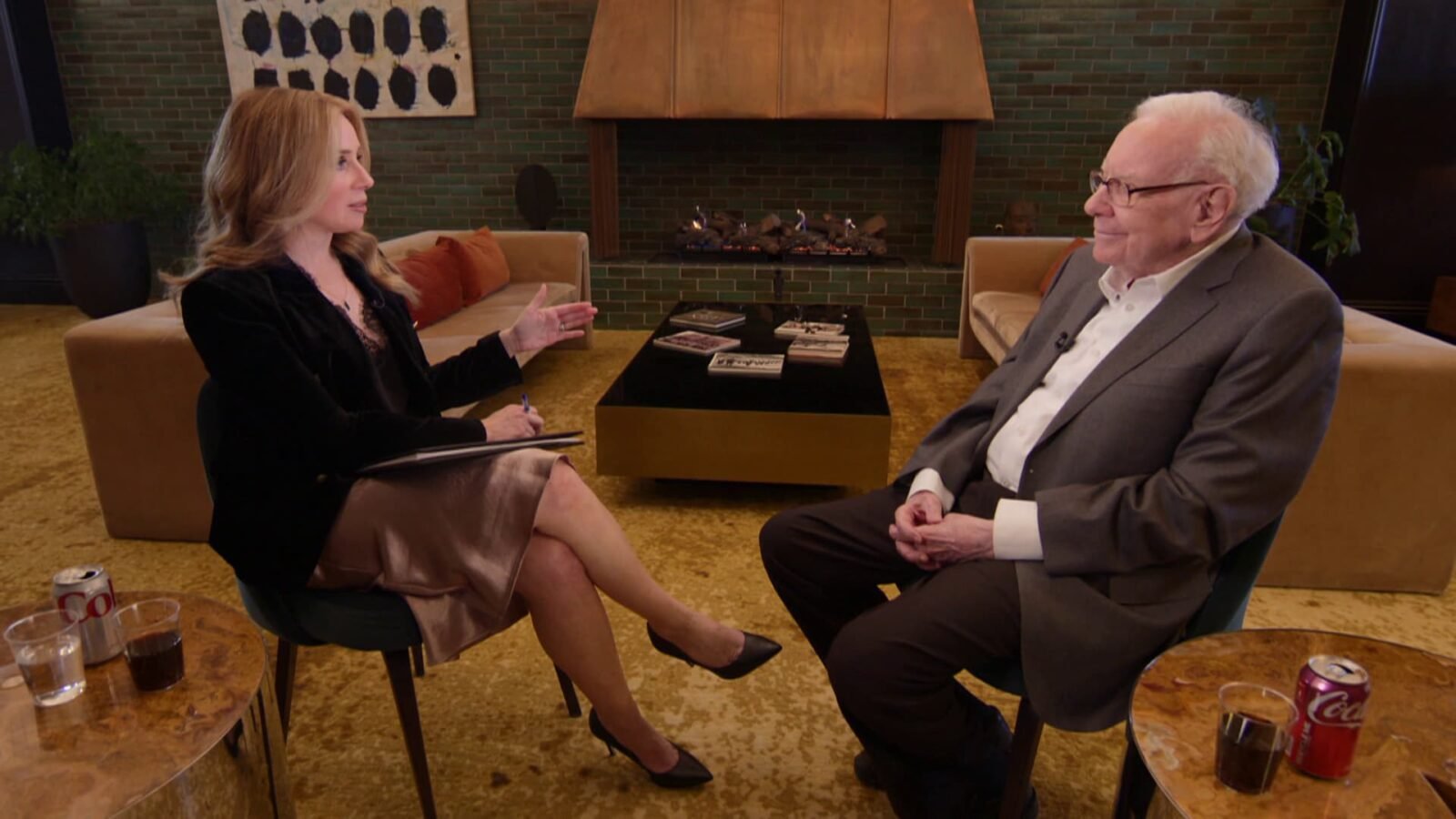

In a rare and expansive two-hour special on CNBC, “Warren Buffett: A Life and Legacy,” the legendary investor offered a candid glimpse into his mind, touching upon an astonishing array of topics far beyond the usual financial headlines. From the future of Berkshire Hathaway to the nuances of parenting and the personal philosophy that guides his life, Buffett’s insights were as diverse as they were profound. While a comprehensive summary would be a Herculean task, several key takeaways and memorable quotes stood out, revealing the enduring wisdom of the Oracle of Omaha.
The Business Acumen: Simplicity and Succession
Buffett’s approach to business remains refreshingly straightforward, emphasizing clarity over complexity. He reiterated his belief that understanding a business’s true worth requires no advanced degrees or convoluted formulas.
“It doesn’t take a genius, and it sure doesn’t take any Greek symbols or anything like that to figure out what a business is worth… If (Greg Abel) quit at high school like some of our managers have, he’d still be as smart as he is.”
The discussion also delved into the future leadership of Berkshire Hathaway, with the spotlight firmly on Greg Abel. Buffett recounted the decisive board meeting where Abel’s succession was confirmed, highlighting the board’s confidence and swift decision-making.
“(Director) Steve Burke finally said, you know, ‘We don’t need to sit around for three months and peer at our navel or anything on this. This is the right decision.’ And so they voted to do it.”
Looking ahead, Buffett painted a picture of Berkshire’s enduring adaptability and growth, even as some ventures inevitably fade.
“It’ll always be moving somewhat, but it’ll be mostly expanding. Occasionally, there will be things that disappear … We will have companies that 50 or 100 years from now will not be viable in the economy of that world. But we’ll have a whole lot more that developed over the years. And we can go wherever the country goes, and we can go with capital.”
Beyond the Balance Sheet: Life Lessons from the Oracle
The “Best Job in the World” and a Costly Bet
Buffett’s observations extended to the surprisingly lucrative and pleasant world of corporate directorships, which he humorously dubbed “the best job in the world.”
“Being a director. I mean, it’s the best job in the world. You get 250, 300, even up to 500 thousand dollars a year for doing something that’s quite pleasant. Usually they give you the transportation, and they have cars waiting to take you around everything. And everybody’s polite. And everybody’d love that job. I mean, who wouldn’t?”
He also shared a formative anecdote from his youth, explaining why he abandoned horse betting after a single, costly lesson.
“One of the first things you learn in horse racing is you can beat a race, but you can’t beat the races… I had a couple of horses in mind, but I lost the money on the first race. And then I did the dumbest thing you can imagine… I just kept betting every race. And when I went home, I was $50 poorer, which was all I’d taken with me… I went to the Howard Johnson’s, and I had a couple of dollars left. I bought myself a fancy meal and just sat there and thought about it and thought about it on the train. And that was the end of horse racing.”
The Joys of Teaching and the Power of Kindness
Buffett revealed his passion for teaching, a pursuit that brought him immense satisfaction.
“I loved it. It appealed to my didactic style, and I liked my own ideas… I just had fun teaching. And I still do, except I ran out of gas a few years ago.”
His advice for new parents was particularly poignant, warning against the subtle harm of sarcasm:
“The only piece of advice I give to newlyweds is don’t ever use sarcasm with your children. I mean, it may be sarcasm to you, but it’s a lash across the back to them they’ll never forget.”
Buffett underscored the importance of continuous personal growth and the profound impact of kindness.
“You should be wiser in the second half of your life than the first half. And if you’ve — if things have worked well for you, you should be a better person in the second half of your life.”
“I would just ask anybody to challenge me on whether being kind could hurt them in any way, and whether the happiness of the world wouldn’t be better if … every morning they said to themselves, ‘I’ll have things that are good and bad happen to me today, but I can be kind to anybody.'”
Why the Oracle Stays Silent on Politics
An exclusive clip from the interview shed light on Buffett’s recent reticence regarding political commentary. When asked by Becky Quick why he largely reserves his political thoughts for the annual shareholders’ meeting, Buffett explained his reasoning:
BECKY QUICK: You haven’t commented as much publicly lately, either. You basically save it for the annual meeting when all the shareholders come into town.
WARREN BUFFETT: Right.
BECKY QUICK: Why is that?
WARREN BUFFETT: Well, for one thing, I made the statement a few years ago — maybe, I don’t know, five or six years ago — somebody asked about taking a political stance. And I said that you don’t put your citizenship in a blind trust. But —
The interview segment, though cut short, implies a shift in his public approach, perhaps to maintain focus on Berkshire’s business or to avoid politicizing his influential position, while still acknowledging his personal civic duty.
For more details, visit our website.
Source: Link