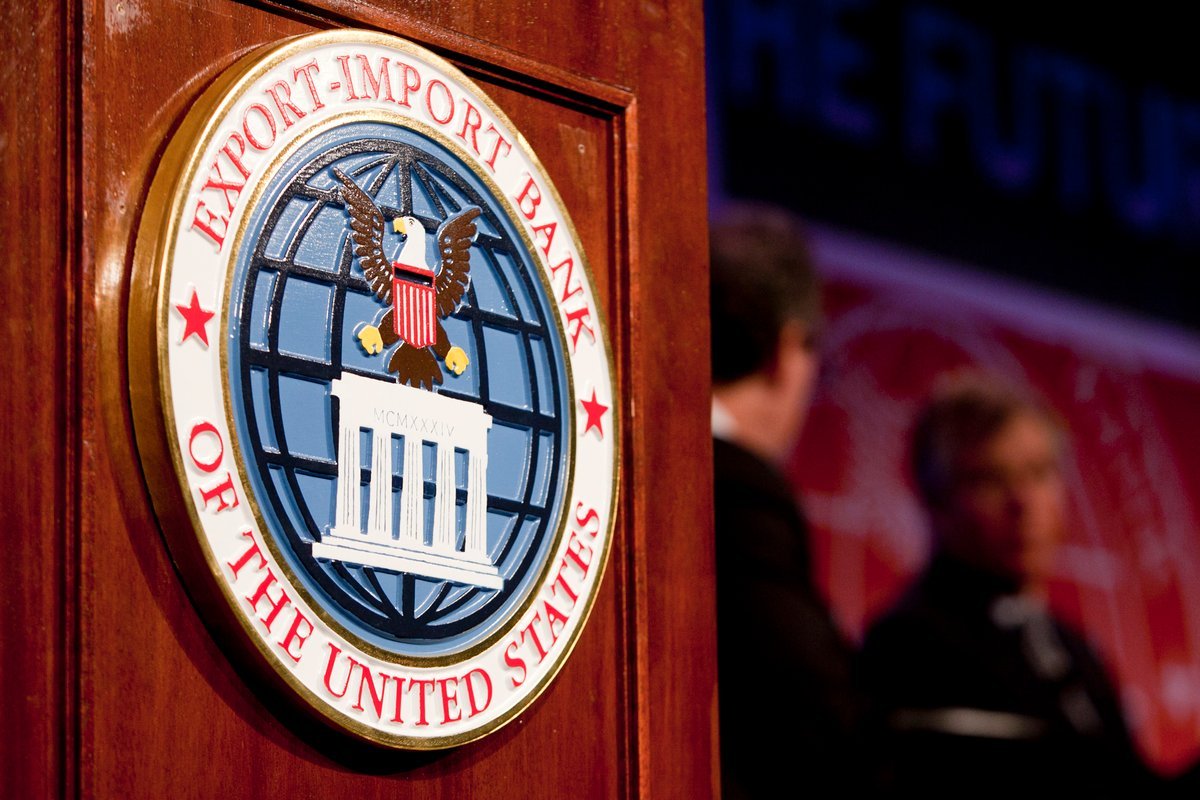

In a dramatic twist of political irony, the Export-Import Bank of the United States (Ex-Im), an institution once targeted for abolition by then-candidate Donald Trump, is now being eyed as a pivotal tool in his administration’s ambitious push to revitalize Venezuela’s beleaguered oil industry. This government-owned financier, previously dismissed as a “one-way street” for the privileged, could become the unlikely linchpin for private-sector investment in a nation grappling with profound economic and political instability.
A Pragmatic Pivot: From Scorn to Strategy
Back in 2015, Donald Trump’s rhetoric against the Ex-Im Bank was unequivocal: he vowed to dismantle it, decrying it as a crony capitalist mechanism. Fast forward a decade, and the narrative has undergone a significant transformation. Administration officials, including Treasury Secretary Scott Bessent and Energy Secretary Chris Wright, have recently floated the idea of leveraging Ex-Im to provide crucial credit support for oil and gas firms willing to venture into Venezuela.
At its core, Ex-Im functions as a vital safety net, underwriting affordable loans for U.S. companies seeking to sell their products abroad, particularly when conventional private capital is hesitant or unavailable. Its charter, set for reauthorization by December 2026, empowers it to facilitate international trade and support American jobs. As Wright articulated in a Fox Business interview, “We might use the Export-Import Bank as credit support for large projects down there. That’s a real possibility.” This statement underscores a profound pragmatic shift, acknowledging the bank’s utility despite past ideological opposition.
Venezuela’s Oil Gamble: High Stakes, Higher Risk
The allure of Venezuela’s vast oil reserves is undeniable, yet the risks associated with investing in the nation are equally formidable. Major U.S. oil players like ExxonMobil and ConocoPhillips have, to date, largely shied away from restarting operations, citing a critical lack of financial and security assurances. The political landscape remains volatile, and the human cost of the ongoing crisis is tragically high, with Venezuela’s interior minister reporting 100 lives lost in Trump’s endeavor, alongside a potential economic burden exceeding $100 billion.
A significant hurdle for Ex-Im’s involvement lies within its own stringent regulations. The bank’s charter mandates “reasonable assurance of repayment” for any authorized transaction. Venezuela, however, has been mired in default since 2017, burdened by an estimated $150 billion in outstanding public debt and ranking among the lowest globally in sovereign creditworthiness. These conditions present a direct conflict with Ex-Im’s foundational principle, raising serious questions about the feasibility of its intervention without significant policy adjustments or guarantees.
The Resurgence of a Maligned Institution
The Ex-Im Bank’s journey has been anything but smooth. Throughout the 2010s, it faced relentless attacks from conservative factions who viewed it as a vehicle for corporate welfare, primarily benefiting giants like Boeing and General Electric. This opposition led to a period between 2015 and 2019 where the bank was severely hampered, unable to approve loans exceeding $10 million due to a lack of a board quorum, causing numerous export deals to languish.
However, the political winds shifted. Trump’s initial staunch opposition softened by April 2017, when he conceded to the Wall Street Journal that Ex-Im was “actually a very good thing and it actually makes money.” Subsequently, his economic advisors began to champion the bank as an effective instrument in the broader strategy to reduce the U.S. trade deficit, particularly with China. The recent confirmation of former investment banker John Jovanovic as Ex-Im Director, coupled with a growing portfolio, signals a renewed vigor for the institution.
Evidence of this resurgence is clear in its recent activities: a $2.2 billion project in Australia to fortify critical mineral supply chains, and a record-breaking $4.7 billion loan to French petroleum firm TotalEnergies for a gas drilling venture in Mozambique, albeit drawing environmental criticism. Furthermore, Ex-Im is currently considering a loan exceeding $100 million to facilitate the sale of Boeing aircraft to an Ethiopian airline. As Jovanovic stated, the bank aims “to really be on standby — be a powerful economic tool for the president and be available to U.S. companies large and small as they want to do more business abroad, whether it’s in Venezuela or countless markets around the world.”
The potential deployment of the Export-Import Bank in Venezuela represents a fascinating convergence of political expediency, economic necessity, and the enduring irony of a once-scorned institution finding itself at the heart of a high-stakes foreign policy gambit. Trump’s pragmatic embrace of Ex-Im underscores a willingness to leverage all available tools in pursuit of his objectives, even those he once vowed to dismantle.
For more details, visit our website.
Source: Link