
‘The Pitt’ Dives into AI: A Critical Look at Healthcare’s Digital Frontier
HBO’s compelling medical drama, The Pitt
, has once again captured the zeitgeist, this time by venturing into the complex and often contentious world of generative AI in healthcare. As a tech editor frequently navigating the fervent enthusiasm and deep skepticism surrounding artificial intelligence, the show’s latest episode, “8:00 AM,” offered a timely and intriguing case study.
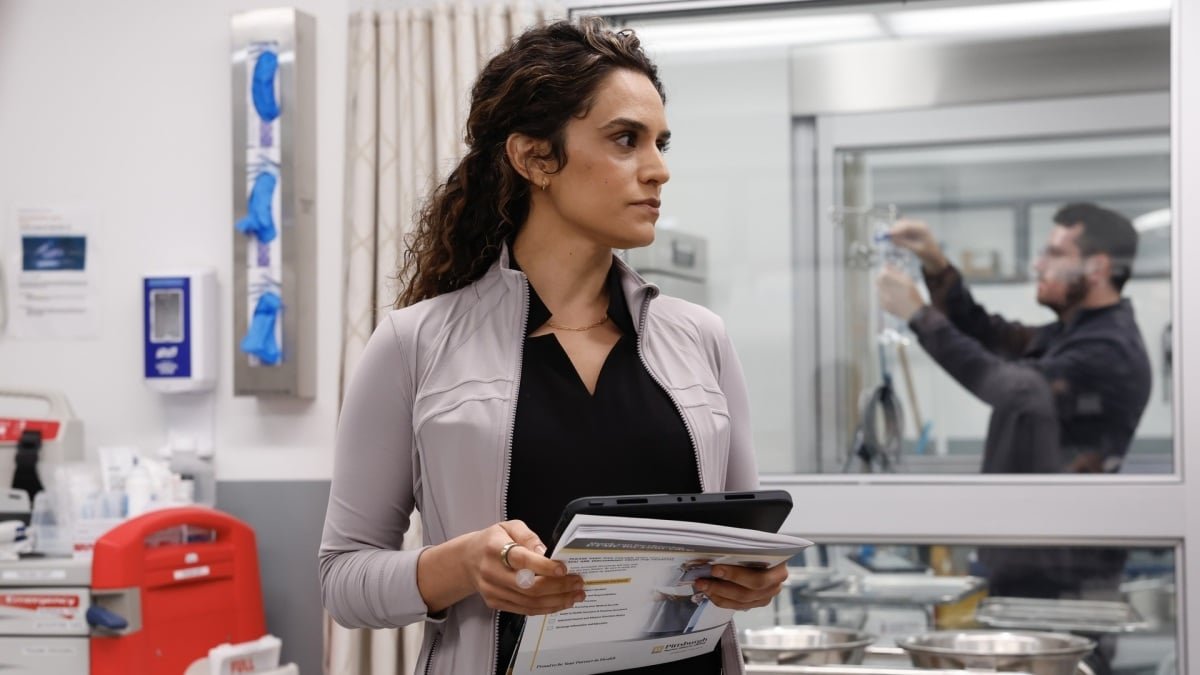
While the episode didn’t solely focus on AI — treating viewers to a nun with ocular gonorrhea, a man with maggots in his cast, and a rather persistent erection — a central storyline revolved around Dr. Baran Al-Hashimi’s (Sepideh Moafi) ambitious drive to integrate AI into the ER’s patient care.
The Promise: AI as a Time-Saving Ally
Dr. Al-Hashimi introduces an AI application designed to automatically transcribe patient visits and summarize key details for their charts. The immediate reaction from an excited student — “Oh my god, do you know how much time this will save?” — perfectly encapsulates the allure. Dr. Al-Hashimi confidently asserts that the app will slash charting time by 80 percent, freeing up physicians to spend 20 percent more time directly with patients. This vision aligns with a significant promise of AI in medicine: streamlining administrative burdens to enhance human connection and efficiency.
Indeed, the concept of AI-powered transcription holds considerable merit. Research, including a systematic review of 29 studies in healthcare settings, has shown that AI transcription can achieve accuracy rates of 98 percent or higher in controlled environments, leading to substantial time savings for medical professionals. While a bustling, multi-speaker ER environment presents greater challenges, with accuracy sometimes dipping to 50 percent, rapid advancements in large-language models continue to push these capabilities forward. In this specific aspect, The Pitt touches upon a genuine and evolving strength of AI.
The Peril: The Illusion of Generative AI Accuracy
However, the episode quickly pivots to highlight the pitfalls. The AI app makes an immediate, critical error, documenting the wrong medication due to a similar-sounding name. Despite this, Dr. Al-Hashimi remains undeterred, stating, “Generative AI is 98 percent accurate at present. You must always carefully proofread and correct minor errors. It’s excellent but not perfect.”
Here, The Pitt takes a significant misstep. While AI transcription can approach high accuracy, Dr. Al-Hashimi’s blanket claim for generative AI is far from current reality. Generative AI models, like the latest iterations of ChatGPT, are known to “hallucinate” — producing false or misleading information. OpenAI’s own documentation for its GPT-5.2 Thinking model, for instance, reports an average hallucination rate of 10.9 percent. Even with internet access, this rate only drops to 5.8 percent. Would you trust a doctor who is wrong 5.8 percent of the time, and only when they can double-check their work online? The implications for patient safety in a medical context are profound.
The distinction is crucial: accurately transcribing spoken words is one thing; generating accurate, contextually relevant, and medically sound summaries or diagnoses is another entirely. While the latter is an aspirational goal, we are simply not at a point where generative AI can reliably claim 98 percent accuracy in complex medical decision-making or summarization without significant human oversight and correction.
Beyond Algorithms: The Irreplaceable Human Element
The episode also delves into the invaluable role of human intuition and “gut instincts” — a conversation Dr. Robby (Noah Wyle) and other characters engage in. This highlights a fundamental truth: generative AI, for all its advancements, cannot replicate the nuanced judgment, empathy, and experience that define human medical practice. The ability to interpret subtle cues, understand complex emotional states, and make ethical decisions based on a holistic view of a patient remains firmly in the human domain.
The Verdict: A Nuanced View of AI’s Role
The Pitt offers a valuable, albeit imperfect, exploration of AI in medicine. It rightly underscores AI’s potential to streamline administrative tasks and improve efficiency, particularly through accurate transcription. Yet, it falters by overstating the current reliability of generative AI for critical medical applications, inadvertently downplaying the very real risks of hallucination and error. Ultimately, the episode serves as a powerful reminder: AI can be a formidable tool to augment human capabilities, but it is not, and cannot yet be, a substitute for the discerning mind and compassionate heart of a human physician.
For more details, visit our website.
Source: Link