

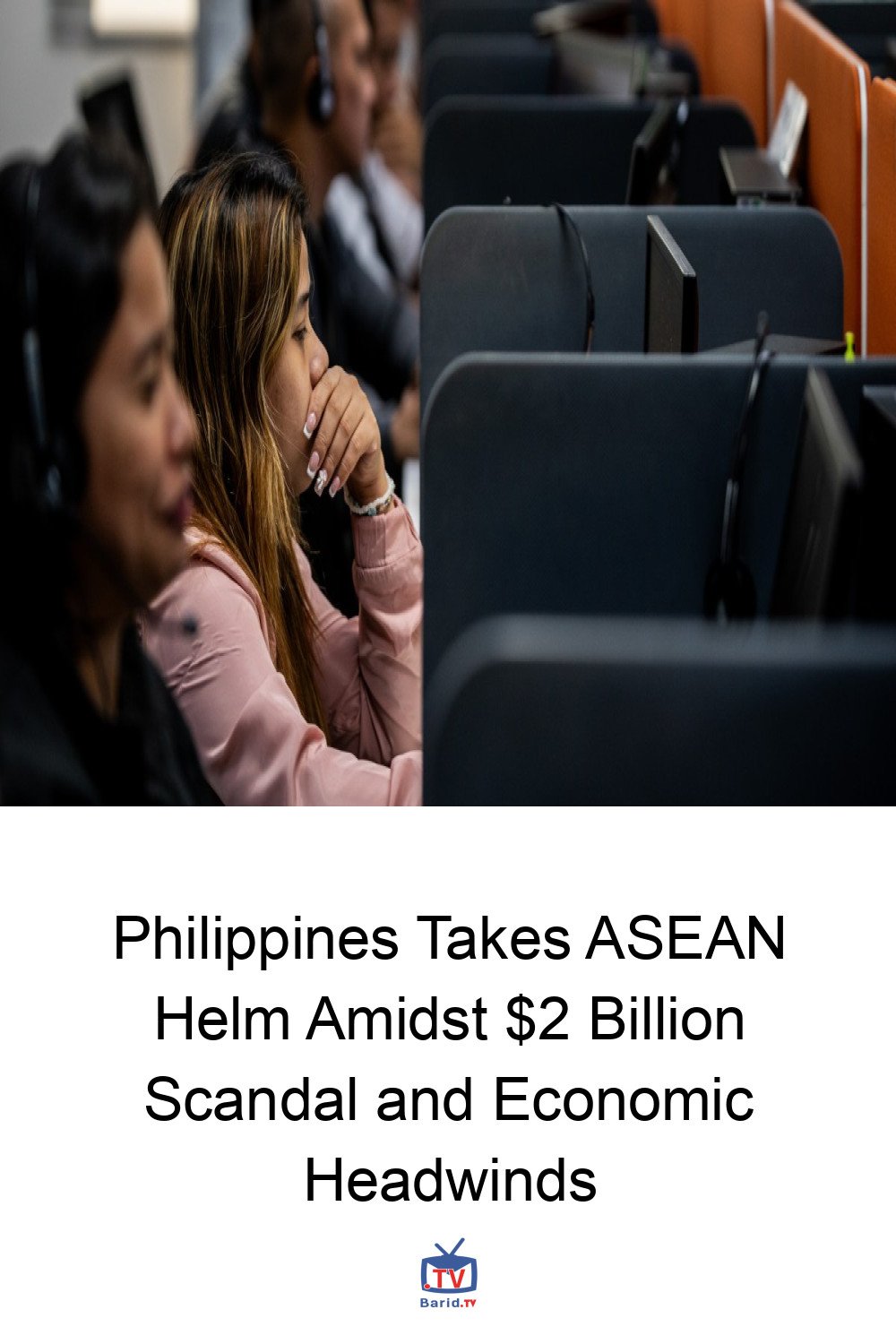
The year 2026 dawns with the Philippines assuming the prestigious chairmanship of the Association of Southeast Asian Nations (ASEAN), a pivotal moment for President Ferdinand “Bongbong” Marcos Jr. Yet, this regional leadership role arrives at a challenging juncture, with the nation grappling with a formidable $2 billion corruption scandal and a complex, often turbulent, global trade environment. The confluence of these domestic and international pressures places the Philippines on a “weaker footing,” testing Marcos Jr.’s resolve and strategic acumen.
A Troubled Ascent to Regional Leadership
The $2 Billion Scandal: A Crisis of Confidence
Investor confidence in the Philippines has been severely eroded by a sprawling corruption scandal that has unveiled the disappearance of an estimated $2 billion in government funding earmarked for crucial flood management projects. Since September, a series of investigations have exposed a web of misallocated funds, questionable ties between politicians and contractors, the use of substandard materials, and the existence of “ghost projects.” This financial malfeasance has directly impacted President Marcos Jr.’s approval ratings, casting a long shadow over his administration.
Nature’s Fury and Public Outcry
The public outrage ignited by the scandal is particularly acute given the Philippines’ perennial vulnerability to devastating tropical storms and widespread flooding. The memory of November’s Typhoon Kalmaegi, which claimed over 200 lives and inflicted more than $60 million in agricultural damage in the central Philippines, underscores the critical need for effective flood management. The revelation that funds intended for such vital infrastructure vanished has deepened public distrust and highlighted the tangible cost of corruption. Lavanya Venkateswaran, senior ASEAN economist at OCBC Bank, notes that these developments have undeniably placed the Philippine economy on a “weaker footing,” contributing to a four-year low in third-quarter GDP growth at 4% and prompting Manila to revise down its growth targets for 2026 through 2028. Venkateswaran stresses the urgency for authorities to “prioritize addressing administrative and bureaucratic challenges to restore confidence in public administration,” citing persistent inefficiencies like corruption, uneven digitalization, and excessive red tape as significant impediments to economic progress.
Navigating a Complex Global Trade Landscape
The Shifting Sands of U.S. Trade Relations
Beyond domestic woes, the Philippines occupies a nuanced position in the global trade arena. While Manila has cultivated closer security ties with the U.S., often presenting this relationship as an asset in an era of “friendshoring,” economists remain skeptical about the direct trade advantages. A trade deal signed last July saw the U.S. impose a 19% tariff on Philippine exports, in exchange for Manila removing tariffs on key U.S. agricultural and pharmaceutical products. This dynamic highlights the complexities of leveraging geopolitical alliances for economic gain.
Regional Rivals and Supply Chain Struggles
Closer to home, the Philippines faces intense competition from its ASEAN peers—Singapore, Malaysia, Indonesia, and Vietnam—in the race to attract foreign investment and integrate into global supply chains. Initial hopes that a relatively lower U.S. import duty following “Liberation Day” (when the U.S. imposed steep tariffs globally) would give the Philippines a competitive edge have largely dissipated. Recent U.S. trade deals with other major Asian partners have narrowed this gap, with Vietnam and Malaysia now facing comparable tariffs of 20% and 19% respectively, against the Philippines’ 19%.
Geopolitical Tensions in the South China Sea
Adding another layer of complexity is the Philippines’ long-running territorial dispute with China in the South China Sea. With over $5 trillion worth of trade traversing these waters annually, any escalation of conflict poses a significant threat to critical shipping lanes and regional stability, with severe implications for global commerce.
The Manufacturing Conundrum
Andrew Tsang, senior economist at the ASEAN+3 Macroeconomic Research Office (AMRO), identifies the country’s limited manufacturing depth as its most pressing economic challenge. Unlike industrial powerhouses such as Vietnam, the Philippines remains heavily reliant on imported intermediate goods for its manufacturing sector, hindering its ability to fully integrate into regional supply chains. Tsang warns, “Without faster investment execution and industrial upgrading, the Philippines risks missing the next wave of supply-chain reconfiguration.”
ASEAN Chairmanship: A Strategic Opportunity
Despite these formidable challenges, experts remain cautiously optimistic that the Philippines can strategically leverage its ASEAN chairmanship to rehabilitate its international standing and bolster investor confidence. Tsang of AMRO emphasizes that this new role provides a “valuable convening role to advance regional priorities on connectivity, resilience, the digital economy, and supply chains.”
Forging a Digital Future: The DEFA Promise
A key opportunity lies in multilateral accords like the ASEAN Digital Economy Framework Agreement (DEFA), slated for signing in 2026. This landmark agreement, poised to become the world’s first regional digital economy pact, could be instrumental in securing the Philippines’ future. By setting broader goals that benefit all member states, DEFA promises to not only invigorate the Philippines’ robust business process outsourcing (BPO) industry but also to forge a unified $2 trillion digital market across Southeast Asia. This strategic leadership could be the catalyst needed to transform the nation’s economic trajectory and restore faith in its governance.
For more details, visit our website.
Source: Link