
Meta’s Metaverse Retreat: Workrooms Shut Down as VR Strategy Pivots to Mobile
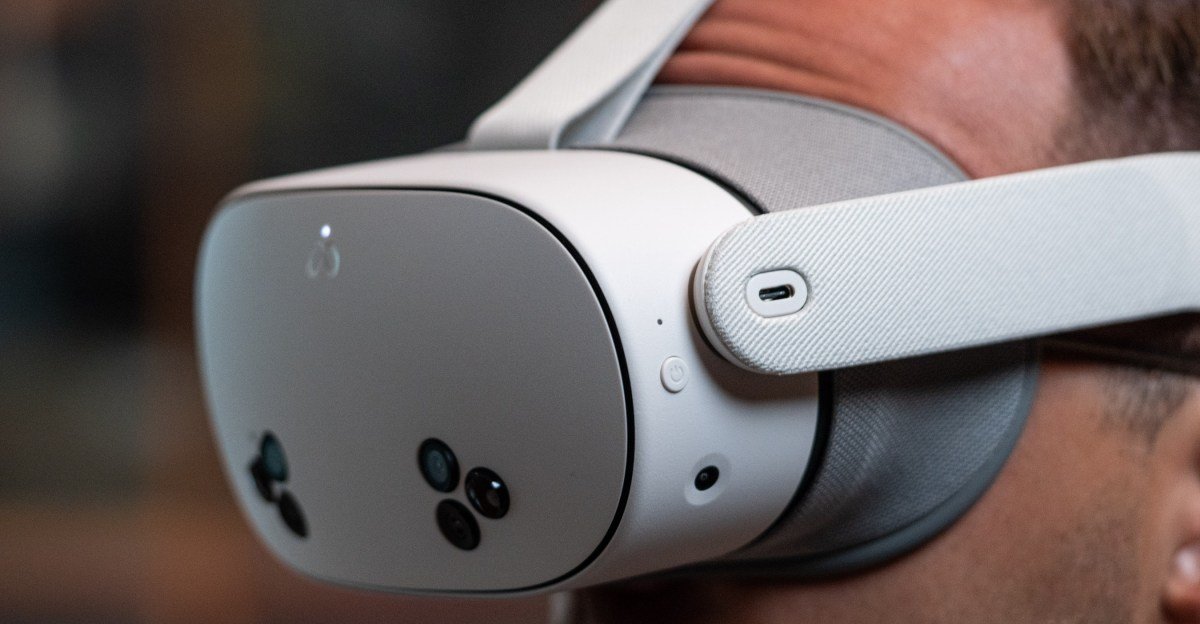
In a series of moves signaling a significant re-evaluation of its ambitious metaverse vision, Meta has announced the discontinuation of Horizon Workrooms, its dedicated virtual reality platform for workplace collaboration. This decision, effective February 16, 2026, marks a clear shift away from enterprise-focused immersive VR, further underscored by the cessation of sales for Meta Horizon managed services and commercial Meta Quest SKUs just days later, on February 20, 2026.
The Unraveling of an Enterprise Vision
Introduced by Mark Zuckerberg himself two months before Facebook rebranded as Meta, Horizon Workrooms was touted as a groundbreaking virtual space designed to revolutionize remote work and collaboration. It was a cornerstone of Meta’s initial push into the enterprise metaverse. However, a quiet note on a help page now confirms its demise as a standalone application, with all associated data slated for deletion.
This isn’t an isolated incident. The company’s retreat from business-to-business VR extends to its hardware and software services. Existing customers of Meta Horizon managed services will retain access until January 4, 2030, with licenses becoming free after February 16 of the current year, but new sales are halted. For businesses seeking virtual monitor solutions, the Meta Quest Remote Desktop app will remain available, and alternatives like Arthur, Microsoft Teams, and Zoom Workplace are now being recommended.
Reality Labs in Flux: Layoffs and Studio Closures
The discontinuation of Workrooms arrives amidst a turbulent period for Meta’s Reality Labs division. Recent layoffs saw approximately 10 percent of the division’s workforce—over 1,000 jobs—eliminated. This restructuring has had a profound impact on Meta’s VR content ecosystem.
Shuttering VR Game Studios and Abandoning Key Apps
- Three hard-won VR game studios have been completely shut down, adding to another closure in 2024.
Future development for Supernatural, Meta’s acclaimed VR fitness app, is reportedly being abandoned.
- The studio behind the highly anticipated Batman: Arkham Shadow has also faced significant cuts.
These actions paint a picture of a company recalibrating its investments, seemingly pulling back from areas that haven’t yielded the anticipated returns or strategic alignment.
The Metaverse Redefined: A Mobile-First Future?
Mark Zuckerberg’s evolving definition of the ‘metaverse’ appears to be at the heart of these strategic shifts. While smart glasses remain a focus, the emphasis on fully immersive VR headsets seems to be waning in favor of mobile experiences.
Meta CTO Andrew Bosworth’s internal memo, obtained by Bloomberg, reveals that the Horizon team will now “double down on bringing the best Horizon experiences and AI creator tools to mobile.” This aligns with Bloomberg’s report that Meta will “continue to develop the metaverse, but with a focus on mobile phones instead of the fully immersive VR headsets that the company initially imagined.”
This pivot raises questions for ‘true believers’ in Oculus VR and those who envisioned a future dominated by dedicated virtual reality hardware. While the term ‘metaverse’ was originally coined by Neal Stephenson to describe a fully immersive shared VR world, Meta’s current trajectory suggests a broader, more accessible interpretation—one where experiences like Fortnite, available on mobile, could fit the bill without requiring full immersion.
What This Means for the Future of VR
The clear implication is that Meta’s primary audience for VR headsets has shifted towards younger demographics, particularly teens and kids. This demographic shift naturally reallocates resources away from niche business-to-business VR applications. The dream of a corporate VR revolution, at least as envisioned by Meta’s Workrooms, appears to be on hold, if not entirely abandoned.
As Meta navigates this complex transition, the industry watches closely to see how its mobile-centric metaverse strategy will unfold and what it means for the broader landscape of virtual and augmented reality.
For more details, visit our website.
Source: Link