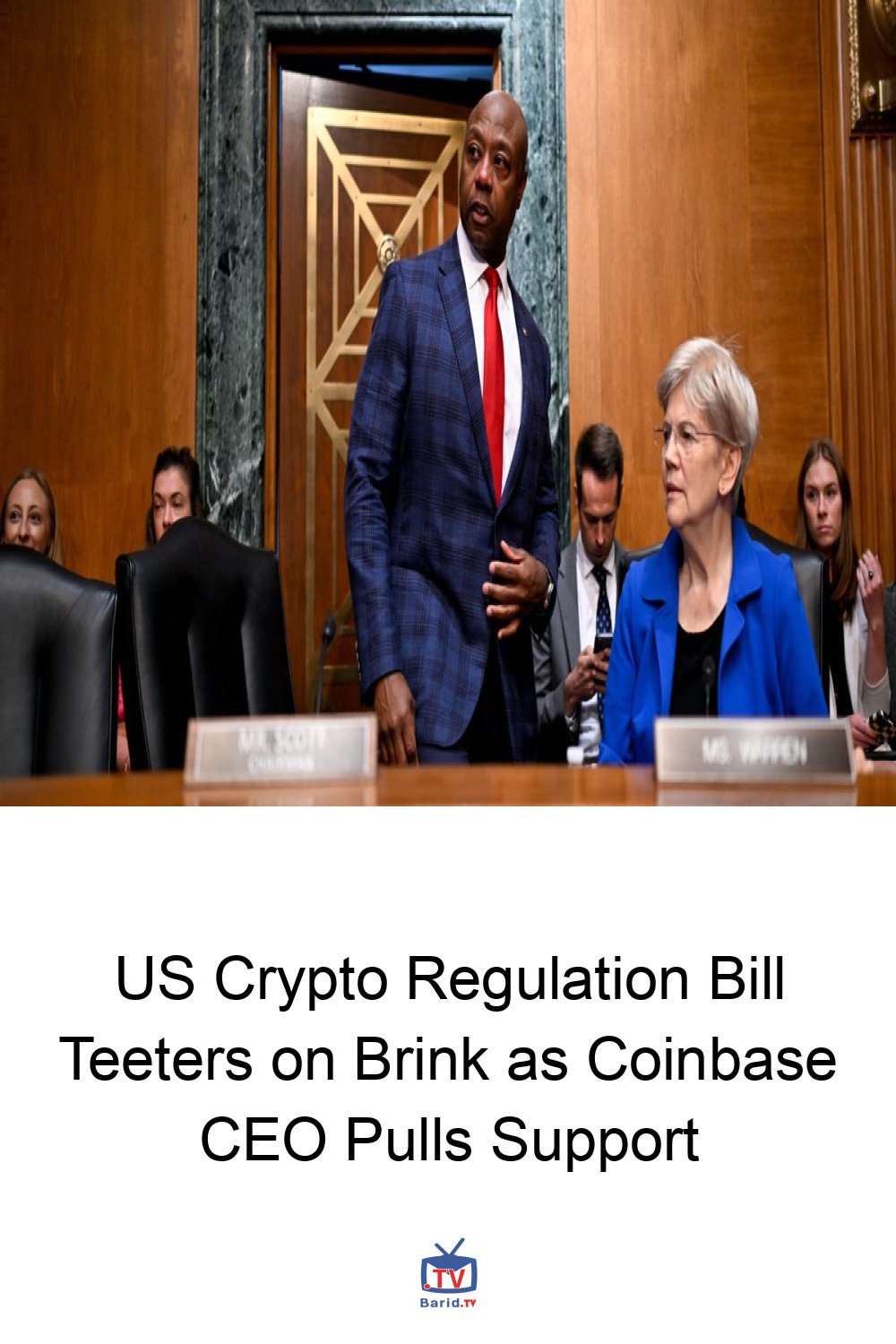
As the U.S. Senate Banking Committee braces for a critical debate on a landmark cryptocurrency regulation bill, the legislative landscape has been dramatically reshaped by a single, powerful voice: Brian Armstrong, CEO of Coinbase. In a late Wednesday post on X, Armstrong unequivocally withdrew his support, declaring, “We’d rather have no bill than a bad bill.” This bold stance, articulating several sharp critiques of the proposed legislation, particularly its handling of stablecoin rewards, has thrown the bill’s future into profound uncertainty.
The Battle for Market Structure: A Long-Awaited Priority
For years, the crypto industry has championed comprehensive market structure legislation, seeing it as the key to mainstream legitimacy and stability. This bill aims to untangle complex supervisory divisions among federal agencies and provide much-needed clarity on the classification and regulation of diverse cryptocurrencies – issues that have previously led to costly legal battles and regulatory ambiguity.
From “Genius” to Gridlock: The Stablecoin Saga
The industry celebrated a significant victory last summer with the passage of the Genius Act, which established a regulatory framework for stablecoins, dollar-backed cryptocurrencies designed for stability. However, the subsequent push for broader market structure legislation has proven far more contentious. A major sticking point emerged when the powerful banking lobby successfully pushed back against provisions in the Genius Act that would have allowed crypto companies to offer yields on stablecoin holdings, akin to traditional savings accounts. This resistance has now spilled over into the current debate.
The Yield Conundrum: A Clash of Financial Titans
The most significant point of contention ahead of Thursday’s Senate Banking Committee markup remains the battle over stablecoin yields. The banking industry argues that the Genius Act inadvertently created a loophole: while it prevents stablecoin issuers from directly offering yields, it permits third-party partners to do so. Programs like Coinbase’s, which reported a substantial $355 million in stablecoin-related revenue in Q3 2025 and offers yields on its USDC stablecoin, are central to this dispute. Bank lobbyists contend that these offerings could divert significant funds from traditional bank deposits, potentially destabilizing the U.S. financial system.
A Bipartisan Attempt at Compromise
In an effort to bridge this divide, a bipartisan group of senators has proposed a compromise within the Clarity Act. This revised framework would permit crypto companies to offer yields for stablecoin-related transactions, drawing parallels to credit card rewards and other financial activities. Yet, the critical question remains: will industry giants like Coinbase, a formidable presence in Washington, accept this middle ground? Armstrong’s recent post suggests a firm, uncompromising stance, indicating that the path to agreement is far from clear.
Ethics Under Scrutiny: Political Conflicts of Interest
Adding another layer of complexity, Democrats are pushing for provisions that would prohibit politicians, including the President, from profiting from crypto holdings or related interests. This issue has gained significant traction due to the Trump family’s extensive involvement in the crypto space, notably through their digital asset platform, World Liberty Financial, which recently sought a federal bank license. Republicans, led by Senate Banking Committee Chair Tim Scott (R-S.C.), have vehemently opposed these ethics clauses, arguing they are extraneous to the Clarity Act’s core purpose.
“Red Lines” and Committee Crossroads
Watchdog groups have voiced “deep concern” over the proposed bill’s lack of governmental conflict-of-interest provisions, as highlighted in a letter sent to Senators Scott and Elizabeth Warren (D-Mass.). Should key Democrats, such as Ruben Gallego (D-Ariz.), who has labeled an ethics provision a “red line,” withdraw their support, the bill could face an insurmountable hurdle in committee. Despite a Republican majority, the need for a simple majority vote means bipartisan consensus is crucial, and the current divisions could easily lead to the bill’s demise. As one anonymous crypto lobbyist observed, “There’s a real chance this could blow up in committee… People are pretty fired up here.” The legislative journey, once promising, now appears to be navigating a minefield of entrenched interests and political brinkmanship.
For more details, visit our website.
Source: Link