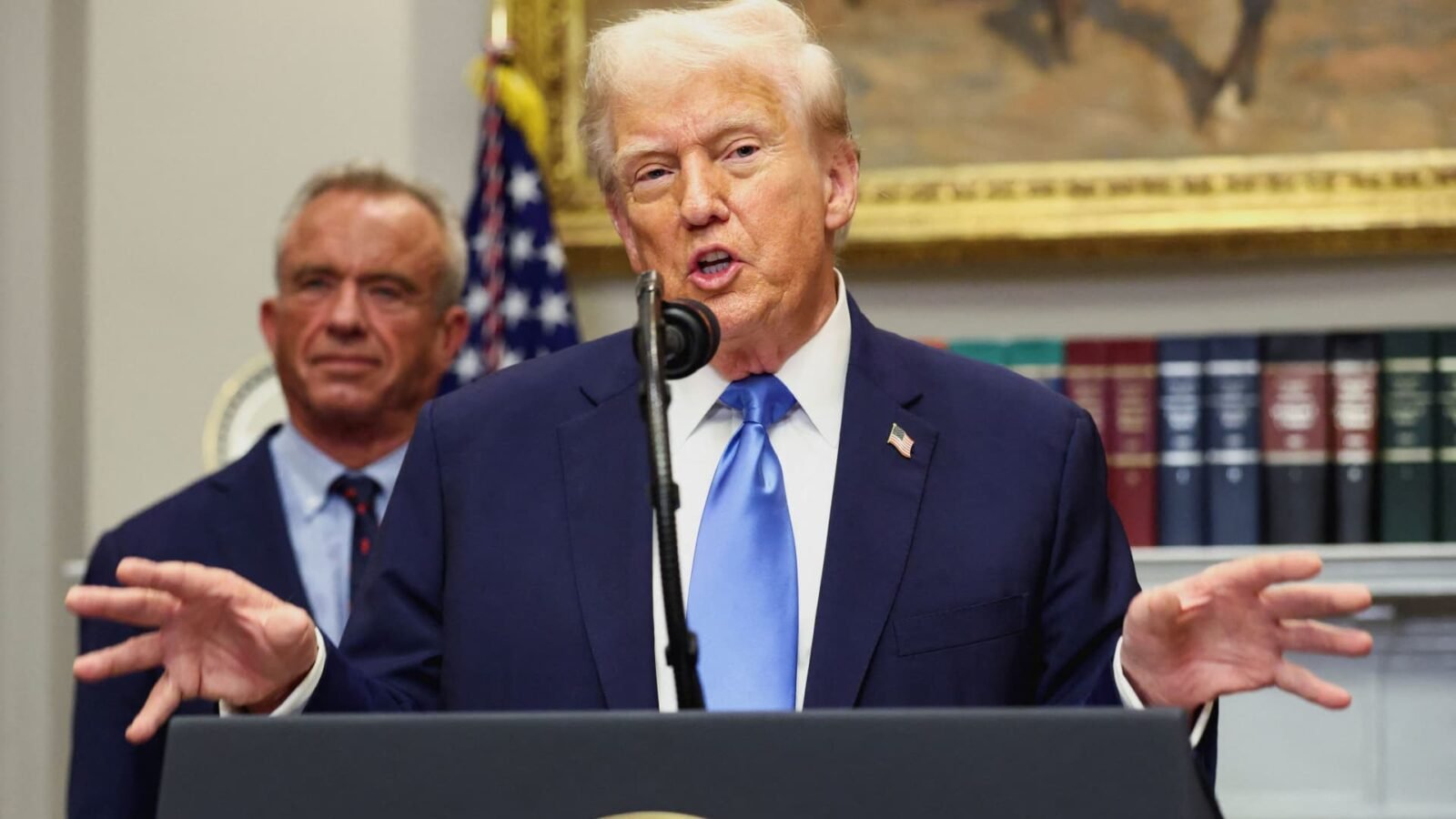

In a significant move poised to reshape the American healthcare landscape, President Donald Trump has unveiled the broad strokes of his administration’s new health-care initiative, dubbed “The Great Healthcare Plan.” This announcement arrives amidst a tense standoff in Congress, where lawmakers are grappling with the critical issue of extending Affordable Care Act (ACA) tax credits, leaving millions of Americans uncertain about the future of their health insurance premiums.
“The Great Healthcare Plan”: A New Vision for Healthcare
The White House asserts that this ambitious plan aims to dramatically lower drug prices and insurance premiums for citizens. President Trump, in a video outlining the policy framework, emphasized the urgency, stating, “I’m calling on Congress to pass this framework into law without delay. Have to do it right now.”
Tackling Prescription Drug Costs
A cornerstone of “The Great Healthcare Plan” is its aggressive approach to drug pricing. The framework seeks to codify recent agreements where major pharmaceutical companies committed to slashing the cost of certain prescription drugs in the U.S. This is achieved by pegging them to lower prices observed abroad, a strategy central to the President’s “most-favored-nation” policy. More than a dozen pharmaceutical firms reportedly agreed to reduce prices for Medicaid patients in exchange for a three-year exemption from tariffs. Furthermore, these companies committed to offering discounts on some medicines via Trump’s direct-to-consumer platform, Trump Rx, which is slated for launch this month. The President boldly claimed these prices could plummet by as much as 500%, a figure that raises questions given its implication of prices falling below zero.
Empowering Consumers and Reducing Premiums
Beyond drug prices, the plan proposes to redirect health insurance coverage funds “directly to the American people,” moving away from what the administration describes as “big insurance companies billions in extra taxpayer-funded subsidy payments.” This echoes similar proposals floated by Trump in recent remarks. A White House fact sheet indicates the plan would also “fund a cost-sharing reduction program,” which is projected to “reduce the most common Obamacare plan premiums by over 10%.”
Enhancing Transparency and Accessibility
Transparency is another key pillar. The policy would mandate health insurers to prominently display coverage comparisons “in plain English” on their websites, alongside detailed information on overhead costs and claim denial rates. Additionally, healthcare providers accepting Medicare or Medicaid would be required to “publicly and prominently post their pricing and fees to avoid surprise medical bills,” aiming to eliminate unexpected charges for patients.
The Sticking Point: ACA Subsidy Negotiations
The unveiling of the White House’s plan comes at a critical juncture for Congress, where senators remain deadlocked over extending the now-lapsed ACA subsidies. A bipartisan group has been tirelessly working on a solution for weeks but recently encountered a significant hurdle concerning language related to the Hyde Amendment, which restricts federal funding for abortion services.
White House Stance vs. Congressional Efforts
Notably, the White House’s new proposal does not include an extension of the ACA subsidies, a demand vehemently pushed by Democrats as a prerequisite for any health-care deal. While the administration had not publicly presented a comprehensive plan until Thursday, President Trump has consistently advocated for funds to be directed to patients rather than insurance companies. This divergence has sparked apprehension among some negotiators.
Senator Lisa Murkowski (R-Alaska), a key negotiator, expressed concerns about the potential impact on ongoing talks. “We’ve all known that in order to be able to advance something, we’re going to have to have buy-in from the White House,” Murkowski told reporters. “Does this set things back if he signals that he does not support extending [the subsidies]? I mean, that’s the basis of our plan here.”
Conversely, Senator Jeanne Shaheen (D-N.H.), leading the Democratic side of the talks, remained optimistic despite not having reviewed Trump’s plan. “Most of the areas have agreement, so what we need to do is get bill text together and then get final sign-off so that we can talk to our colleagues about what we’re proposing,” Shaheen commented. A White House official clarified that while the plan doesn’t explicitly close the door on extending subsidies, it clearly outlines the President’s preferred approach: directing financial aid directly to individuals rather than through insurance providers.
Implications and the Path Forward
The introduction of “The Great Healthcare Plan” injects a new dynamic into the already complex debate surrounding American healthcare. As Congress continues its struggle to find common ground on ACA subsidies, the White House’s bold new framework sets a clear direction for the administration’s priorities, potentially complicating bipartisan efforts while promising a radical overhaul of drug pricing and insurance premium structures for the American populace.
For more details, visit our website.
Source: Link