
A diplomatic tightrope walk is underway in the Arctic as Denmark and Greenland navigate persistent overtures from the United States regarding the future of the vast, resource-rich territory. Despite a “fundamental disagreement” over former President Donald Trump’s repeated calls for a U.S. takeover, a working group has been established to explore avenues for cooperation, highlighting the complex geopolitical currents swirling around the world’s largest island.
The Unconventional Overture: Trump’s Greenland Ambition
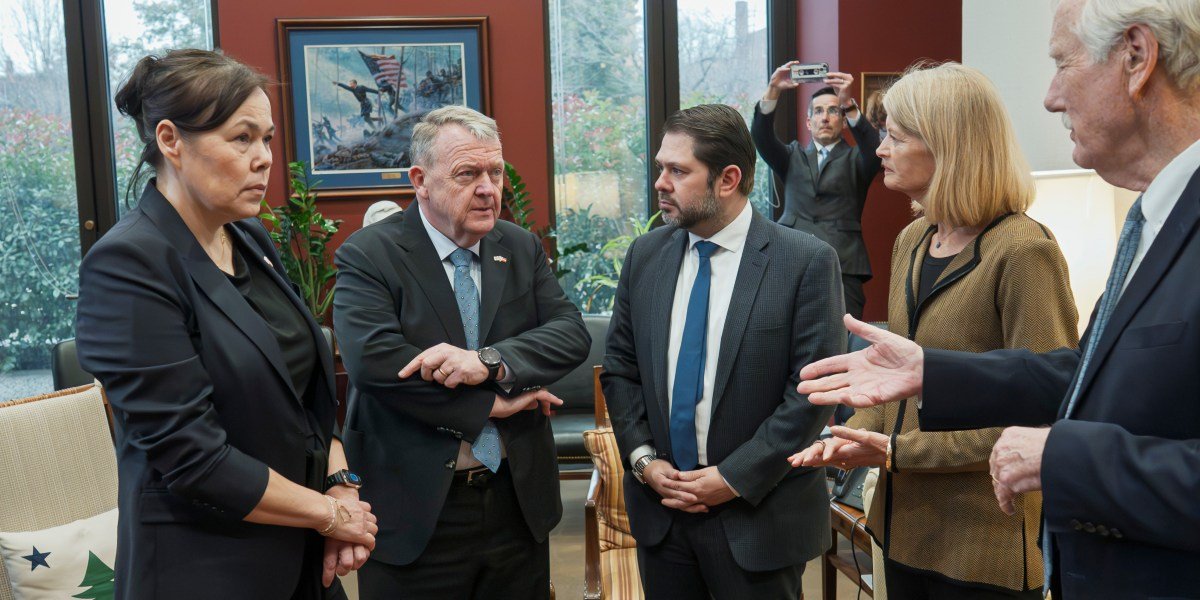
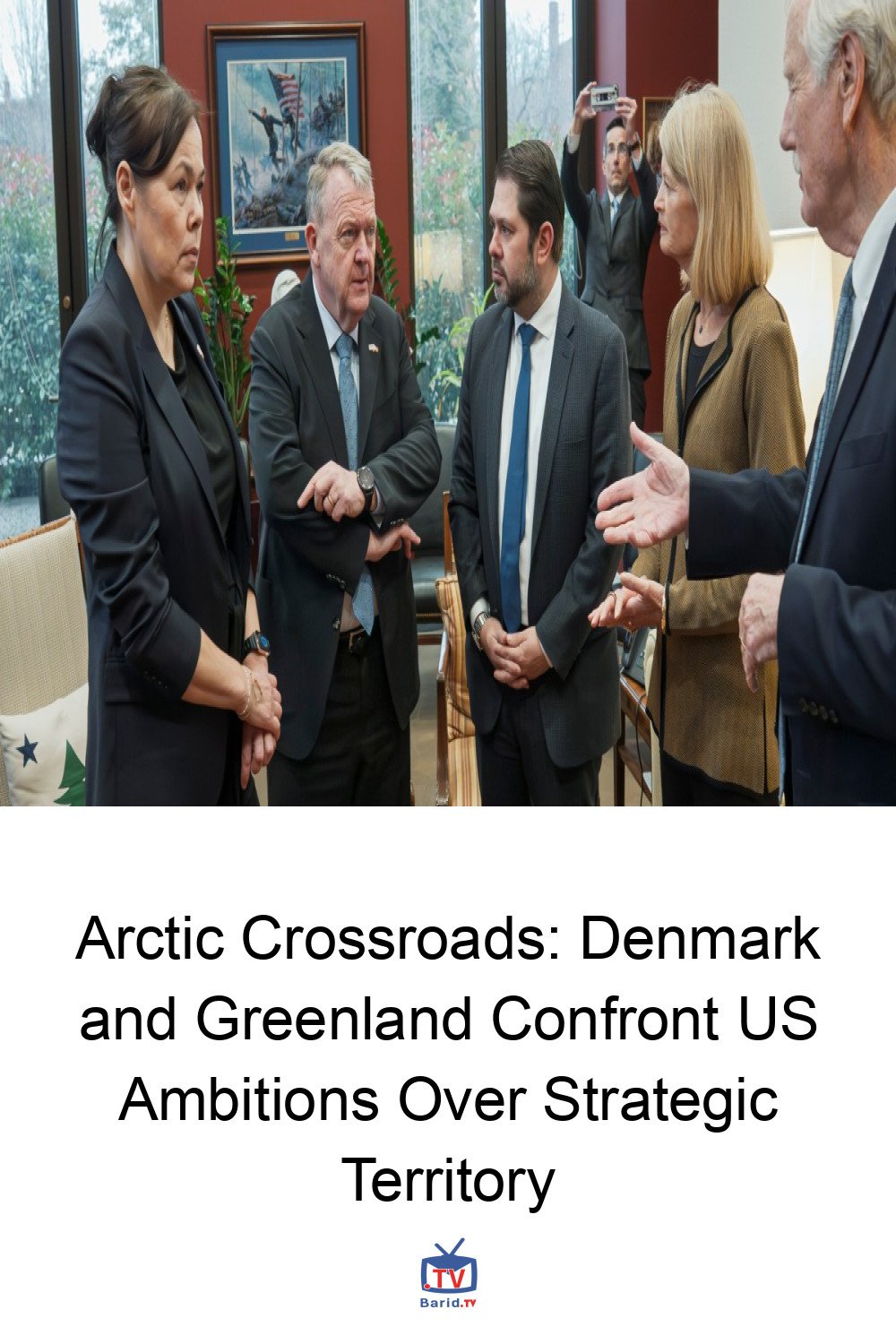
The saga began with former President Donald Trump’s audacious proposition: the United States should acquire Greenland. This unconventional desire, reiterated even after high-level White House talks involving Danish and Greenlandic officials, underscores a unique diplomatic challenge. Danish Foreign Minister Lars Løkke Rasmussen, following discussions with Greenland’s Foreign Minister Vivian Motzfeldt and senior U.S. officials, candidly acknowledged, “it remains clear that the president has this wish of conquering over Greenland.”
Trump’s rationale consistently centered on national security, arguing that anything less than American control of Greenland was “unacceptable” and that NATO should facilitate the acquisition. He frequently cited the island’s importance to the U.S. “Golden Dome missile defense program” and the perceived threat from Russian and Chinese expansion in the Arctic as justifications for his stance.
Diplomacy Amidst Firm Red Lines
While the U.S. administration, under Trump, maintained its acquisition ambitions, the recent White House talks yielded a crucial development: the agreement to form a working group. This initiative, as articulated by Minister Løkke Rasmussen, aims to “address the American security concerns, while at the same time respecting the red lines of the Kingdom of Denmark.”
Greenland’s Foreign Minister Motzfeldt echoed this sentiment, expressing “measured hope” that these discussions could pave the way for enhanced cooperation rather than continued demands for acquisition. “We have shown where our limits are and from there, I think that it will be very good to look forward,” she stated, emphasizing the territory’s autonomy and Denmark’s sovereignty.
Arctic Militarization: A Regional Response
In a direct response to the escalating geopolitical interest in the Arctic, Denmark has announced significant plans to bolster its military presence in the region. Danish Defense Minister Troels Lund Poulsen confirmed an increase in “military presence and exercise activity” across the Arctic and North Atlantic, undertaken in close cooperation with NATO allies.
This stepped-up defense posture, involving aircraft, ships, and soldiers from Denmark and unnamed allied nations, reflects a growing awareness of the Arctic’s strategic importance in an unpredictable global security landscape. Germany, Sweden, and Norway have already indicated their intentions to contribute personnel for exploration, exercises, and cooperation mapping in Greenland, signaling a collective NATO effort to reinforce its presence in the High North.
NATO Secretary General Mark Rutte, while maintaining a cautious distance from the direct U.S.-Denmark dispute, affirmed the alliance’s consensus that “security in the High North is a priority.”
Greenland’s Irresistible Strategic Value
The intense focus on Greenland is not merely about territorial expansion; it’s rooted in the island’s profound strategic importance. As climate change accelerates the melting of Arctic ice, new, shorter trade routes to Asia are becoming viable, transforming global shipping dynamics. Furthermore, Greenland boasts vast, largely untapped reserves of critical minerals—essential components for modern technology, from computers to smartphones.
Trump’s arguments about preventing Russian and Chinese influence in the region resonate with broader concerns about resource control and strategic choke points. His assertion, “If we don’t go in, Russia is going to go in and China is going to go in,” encapsulates the high-stakes competition unfolding in the Arctic.
A Future of Cooperation or Contention?
The formation of the working group represents a cautious step towards de-escalation, offering a forum for dialogue between the U.S., Denmark, and Greenland. While the fundamental disagreement over ownership persists, the willingness to discuss shared security concerns and explore cooperation suggests a recognition of the complex realities and the mutual benefits of a stable Arctic. The future of Greenland, an autonomous territory with immense strategic and economic potential, remains a pivotal point in evolving global geopolitics.
For more details, visit our website.
Source: Link