
The Digital Battlefield: Deconstructing the White House’s Aggressive Social Media Strategy
In an era where political narratives are shaped at lightning speed, the Trump administration has redefined the boundaries of digital communication. What many perceive as crude “shitposting” is, in fact, a calculated and aggressive component of a sophisticated “rapid response” media strategy. Tina Nguyen, a Senior Reporter for The Verge and author of Regulator, delves into this phenomenon, offering insights from high-profile Democratic communications strategist Lis Smith.
The Unapologetic Offensive: Memes as Political Weaponry
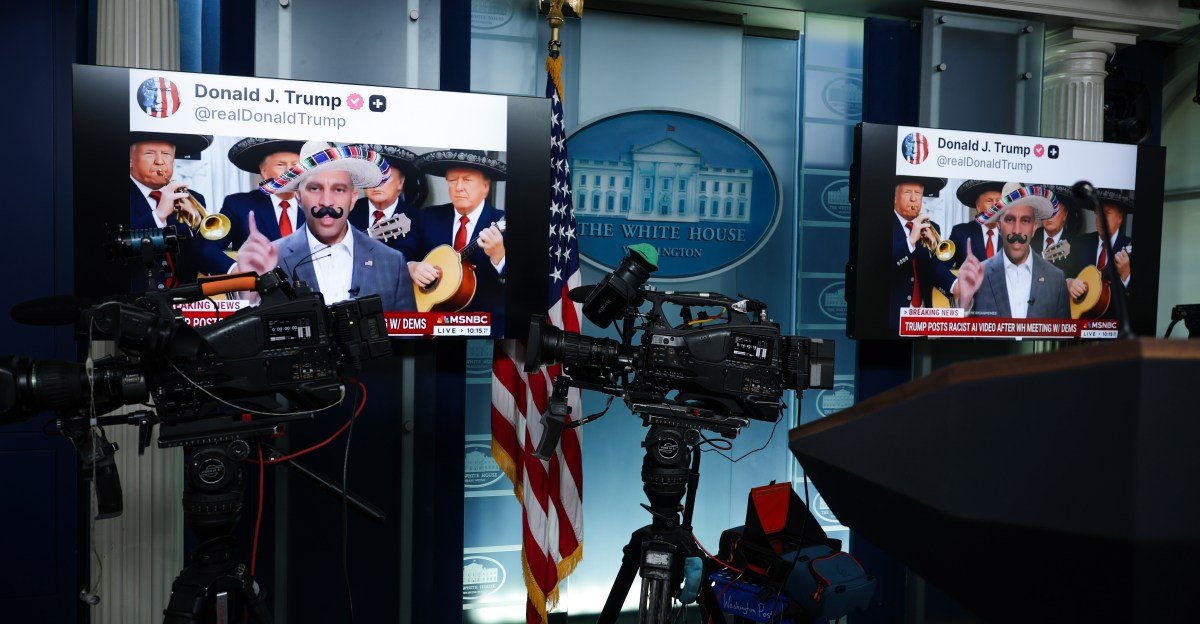
Recent events have underscored the administration’s readiness to leverage social media for immediate, often provocative, messaging. Whether responding to international incidents with stark acronyms like “FAFO” or addressing domestic controversies with Buzzfeed-style lists attacking opponents, the White House’s digital footprint is characterized by its blunt force. When ICE agents made arrests, the administration’s retort was a defiant “Welcome to the Find Out stage.”
While these tactics shock many observers, seasoned political insiders recognize them as a distinct, albeit extreme, form of “rapid response.” This strategy involves the relentless, full-time effort to seize control of a breaking news narrative, often within minutes, before adversaries or traditional media can define it.
Rapid Response in the Age of Instant Information
“Every political office, every political campaign, has a dedicated operation that helps them respond strategically to events in the news that are out of their control,” explains Lis Smith, a veteran Democratic communications strategist. Smith, who directed rapid response for Barack Obama’s 2012 campaign and played a pivotal role in elevating Pete Buttigieg’s profile, highlights the evolution of this profession.
Originating with the advent of the 24-hour news cycle, rapid response has exploded in complexity and importance with the rise of social media. “You cannot control all the narratives that are going to be out there, so you need to be able to manage the chaos that’s coming into your world,” Smith emphasizes.
Smith’s perspective on social platforms is purely utilitarian. X (formerly Twitter) remains unparalleled for disseminating “text-based rapid response communications like written statements” to a broad spectrum of “elites and opinion-shapers.” Conversely, platforms like Bluesky might engage niche, left-leaning audiences, but struggle to “penetrate” mainstream discourse. Similarly, Rumble-based campaigns rarely escape the confines of the right-wing echo chamber.
The Double-Edged Sword of Digital Cruelty
While memes offer a swift way to convey political messages to specific, in-the-know audiences, their humor and context often fail to resonate beyond these groups. This is particularly true for individuals who might align with certain policy goals, such as immigration control, but are alienated by the administration’s harsh execution and communication style.
Smith argues that the administration’s reliance on memes fundamentally “flattens the political debate.” She states, “It takes the humanity, the seriousness, and the nuance that’s needed out of it and replaces it just with cruelty.” This approach, while effective in energizing a base, risks alienating potential sympathizers and eroding the depth of public discourse.
The Broader Implications for Political Tech
The White House’s digital strategy is part of a larger landscape of political tech dystopia, where spectacle often overshadows substance and ethical lines blur. Recent reports from The Verge underscore this trend:
- “Snatching Maduro was all about the spectacle” by Elizabeth Lopatto and Sarah Jeong, highlighting how political actions can be driven by a desire for dramatic effect, with real-world, often tragic, consequences.
- “America’s new era of energy imperialism is about more than oil” by Justine Calma, detailing the administration’s pursuit of global resources and control.
“The MAGA-approved video of an ICE killing”
by Mia Sato, illustrating how the administration crafts narratives around controversial events.- “Tim Cook and Sundar Pichai are cowards” by Elizabeth Lopatto, questioning tech giants’ accountability regarding harmful content on their platforms.
- “Trump’s fundraisers asked Microsoft for its White House ballroom donation” by Emma Roth, revealing the intertwined nature of corporate influence and political fundraising.
As the digital frontier of politics continues to evolve, the Trump administration’s aggressive, meme-driven rapid response strategy serves as a stark case study in its power, its limitations, and its profound impact on the nature of public debate.
For more details, visit our website.
Source: Link