

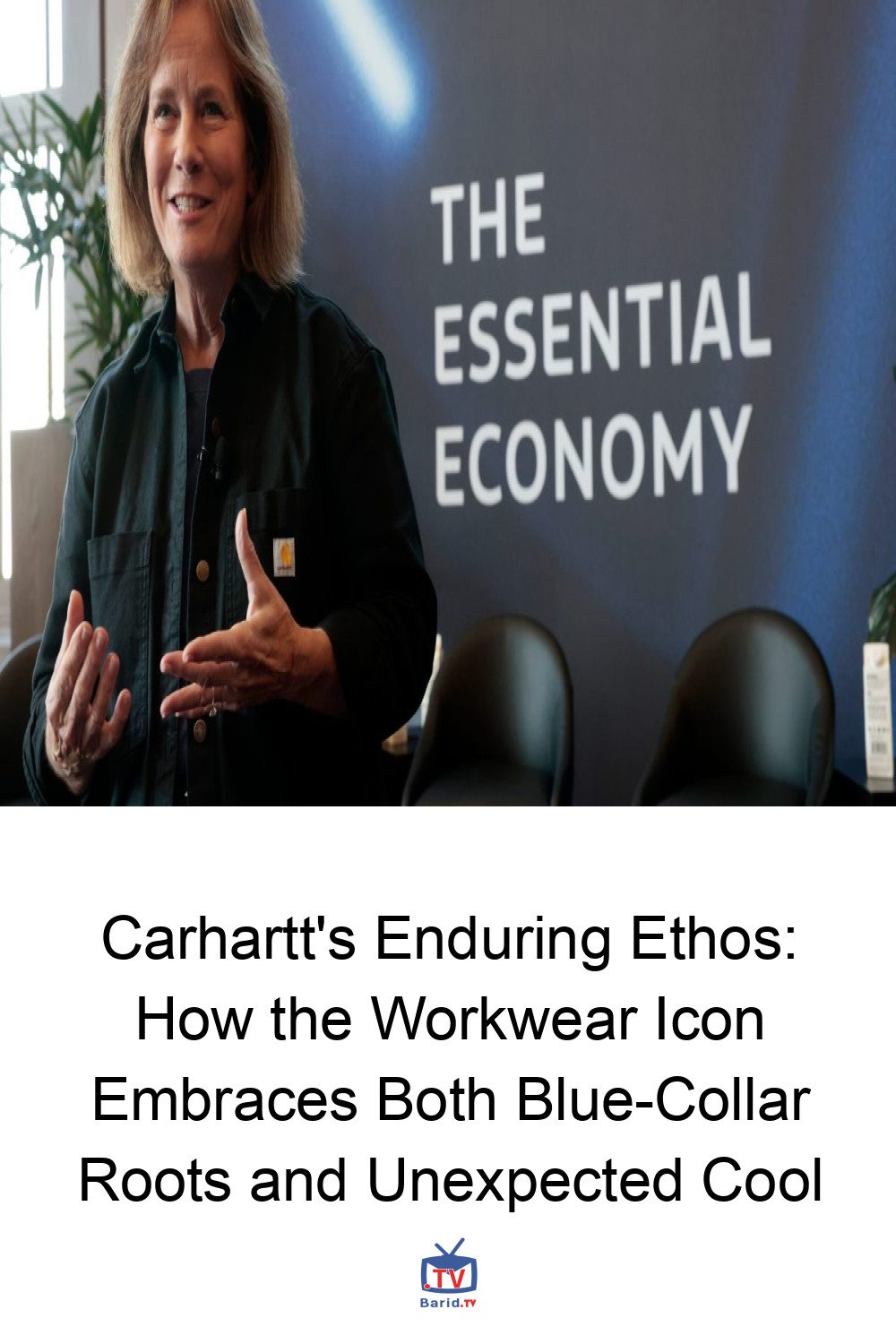
In a fashion landscape obsessed with fleeting trends and influencer endorsements, Carhartt stands as a steadfast anomaly. While its rugged workwear has unexpectedly captivated urban “hipsters” from the bustling streets of Brooklyn to the chic boulevards of Berlin, CEO Linda Hubbard firmly asserts that the company’s core mission remains anchored to the job site. “We’ve really been about the worker… we don’t try to be everything to everybody,” Hubbard revealed in a recent interview with Fortune, alongside Mary Culler, President of Ford Philanthropy.
This candid conversation highlighted a significant multi-year partnership between the two iconic Detroit-area brands, aimed at invigorating what Ford CEO Jim Farley terms “the essential economy.” Farley’s urgent call to action comes amidst a critical shortage of over 1 million factory, construction, and auto workers. “Today’s essential economy faces a critical crossroads,” Farley stated, emphasizing the need to challenge the narrative that a four-year college degree is the sole path to success. With 95 million such jobs forming the nation’s backbone, Ford and Carhartt are uniting to champion workforce development, community building, and providing the essential tools for those who power the American Dream.
Bridging the Gap: Ford and Carhartt’s Shared Vision
The collaboration between Ford and Carhartt, two titans born from Detroit’s industrial spirit, has been remarkably seamless. Culler attributes this synergy to their shared values and literal proximity within the city. “We’re not going to change it overnight,” Culler acknowledged, but both companies are committed to dismantling barriers to entry in skilled trades, such as the high cost of tools and transportation challenges.
A Partnership Forged in Detroit DNA
The deep-rooted connection between Ford and Carhartt extends beyond corporate strategy. Culler shared a personal anecdote, noting her college-bound children’s ritualistic stop at the Carhartt store whenever they return to Detroit. This familial connection underscores the brand’s enduring appeal. Moreover, a history of local volunteer efforts has long intertwined the two companies, though Culler humorously admits Carhartt often holds the “cool factor.” She recounted a summer volunteer project where Carhartt team members, clad in their iconic overalls, were instantly recognizable and enviable, while Ford volunteers sported their standard blue shirts.
Culler views the partnership as a logical evolution, frequently observing Ford trucks and Carhartt gear coexisting on job sites. Together, they are leveraging their considerable scale to move beyond mere awareness, implementing tangible “tactics” to address the challenges facing the essential economy. This shared “ethos” of community enrichment and economic empowerment is, for Hubbard, the bedrock of their effortless collaboration, whether it’s revitalizing the Michigan Central innovation hub or constructing park benches for southwest Detroit.
Authenticity Over Fleeting Trends
Hubbard, while aware of Carhartt’s unexpected “hipster cache”—a phenomenon even GQ noted in 2023—gently dismisses it. She attributes the brand’s widespread appeal to its unwavering authenticity and the deep-seated “Carhartt DNA” passed down through generations of blue-collar families. It’s a testament to the brand’s enduring quality: form may be temporary, but class (and durability) is permanent.
Indeed, Carhartt’s commitment to its roots is quantifiable. In 2020, the Detroit Regional Chamber of Commerce reported the company produced over 10 million pieces of workwear in the U.S., solidifying its position as the nation’s largest workwear manufacturer. “Everything that we make is work-worthy and we welcome anyone into the brand that wants to celebrate hard work,” Hubbard affirmed. “So the fact that people want to wear it and maybe they’re not, you know, core workers is okay with us if they want to celebrate the people that work hard and celebrate a brand that tries to showcase that.”
From Accounting to Iconic Workwear
Hubbard’s own journey to leading a 137-year-old Detroit institution is as unique as the brand itself. Her career began in public accounting, a world far removed from the rugged jackets and hoodies now embraced by both construction crews and urban trendsetters. “If you told me I was going to be selling T‑shirts and hoodies at the end of my career, I’d have been like, huh, what?” she muses. Yet, her path has serendipitously placed her at the forefront of a vital initiative: partnering with Ford to empower young people to forge careers in the skilled trades. “We are a workwear brand and we don’t try to be anything else,” she concludes, a statement that perfectly encapsulates Carhartt’s enduring legacy and its pivotal role in shaping the future of American labor.
For more details, visit our website.
Source: Link