
In a bold and unsettling return to the post-apocalyptic landscape, Nia DaCosta’s 28 Years Later: The Bone Temple doesn’t just continue a beloved horror franchise; it radically redefines it. Moving beyond mere survival, this highly anticipated sequel delves deep into the spiritual and psychological aftermath of the Rage virus, presenting a terrifying crisis of faith in humanity’s desperate end times.
A New Chapter in the Rage Saga
The journey to 28 Years Later has been a long one, with a significant gap following 28 Weeks Later. The announcement that writer-director titans Alex Garland and Danny Boyle envisioned a new horror trilogy, with Sony fast-tracking production for 28 Years Later and its direct sequel to shoot back-to-back, immediately piqued interest. However, the studio’s decision to bring Nia DaCosta into the director’s chair signaled a deliberate shift, promising a fresh perspective for the iconic series.
DaCosta’s distinct directorial voice is undeniably palpable in The Bone Temple. Her vision masterfully intertwines visceral horror with an unexpected, often dark, humor. While the film delivers its fair share of gruesome violence and stomach-turning moments, it’s this strategic embrace of comedy that truly elevates the narrative. Each laugh, however uncomfortable, serves as a poignant reminder of what humanity strives to preserve amidst the flesh-eating ghouls: connection, community, and the very essence of what makes us human.
The Allure of the Cult: Spike and the Jimmys
Picking up shortly after the events of 28 Years Later, The Bone Temple introduces us to Spike (Alfie Williams), a teenager grappling with his new reality as a reluctant recruit into Sir Lord Jimmy Crystal’s (Jack O’Connell) enigmatic cult. This roving band of platinum blonde wig-wearing followers, all adopting the moniker “Jimmy,” operates with a chilling, ultraviolent efficiency against anything that crosses their path in the ravaged English wilderness. Spike, despite his proficiency with a bow and arrow, finds himself outmatched by their brutal tactics.
For individuals like Jimmy Ink (Erin Kellyman) and Jimmima (Emma Laird), murder at Crystal’s command has become second nature. Spike struggles to reconcile Crystal’s claims of divine guidance with the grim reality of their actions. Yet, in a world devoid of conventional choices, he is compelled to join their ranks, even if it means adopting their unsettling, almost predatory, aesthetic.
Faith Weaponized: A Twisted Family
Through the collective identity of the Jimmys, the film powerfully explores the dangerous potential of weaponized faith. While a genuine, if twisted, fondness binds this group, offering a semblance of safety in numbers, their allegiance to Jimmy Crystal is ultimately rooted in fear and the pervasive gullibility born from societal collapse. DaCosta paints a stark picture of how, in the absence of established order, charismatic delusion can prey on the vulnerable.
The Fragility of Leadership: Jimmy Crystal and Dr. Kelson
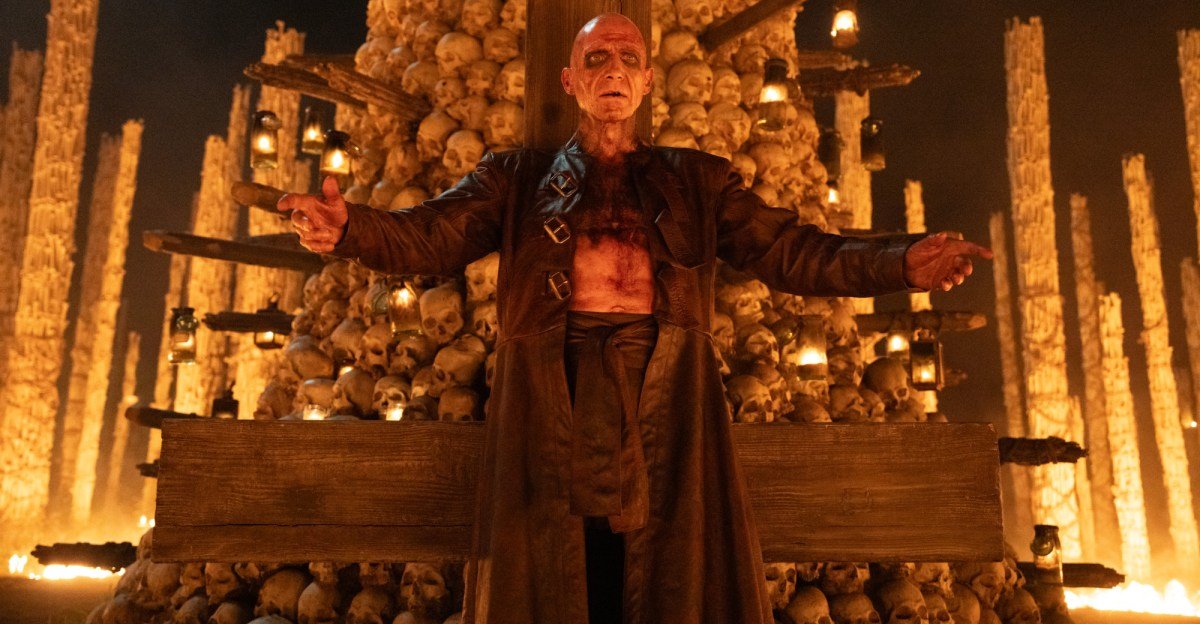
Jack O’Connell’s portrayal of Jimmy Crystal is nothing short of captivating. Despite the character’s overt psychopathy and moments of profound delusion, O’Connell imbues him with a haunting vulnerability, revealing a scared boy trapped within an unhinged man. Crystal’s frequent references to the Teletubbies and his insistence that “Satan” whispers commands into his ear serve as chilling indicators of his fractured psyche.
His delusional pronouncements resonate with his young followers, who have grown up in a world where rational authority figures and clear distinctions between fact and fiction are scarce. However, Crystal’s bluster proves less effective against those with more life experience and memories of the pre-plague world, such as the seasoned Dr. Ian Kelson (Ralph Fiennes).
Unveiling the Infected: Kelson and Samson’s Dynamic
Dr. Kelson becomes a pivotal figure, through whom The Bone Temple begins to unravel intriguing questions about the infected. The film dedicates significant time to returning characters like Samson (Chi Lewis-Parry), the formidable, spine-ripping Alpha introduced in 28 Years Later. The evolving dynamic between Kelson and Samson, masterfully brought to life by Fiennes and Lewis-Parry, is both surprising and alarmingly humorous.
Their interactions, while providing much-needed levity, also serve a profound purpose: they starkly remind the audience of the immense loss humanity has endured in the 28 years since the Rage contagion first erupted. Where its predecessor engaged with contemporary zombie narratives, The Bone Temple draws inspiration from deeper, older canons of the undead, with DaCosta punctuating Samson’s relentless hunt for flesh with unsettling moments that underscore the primal horror at the franchise’s core.
For more details, visit our website.
Source: Link