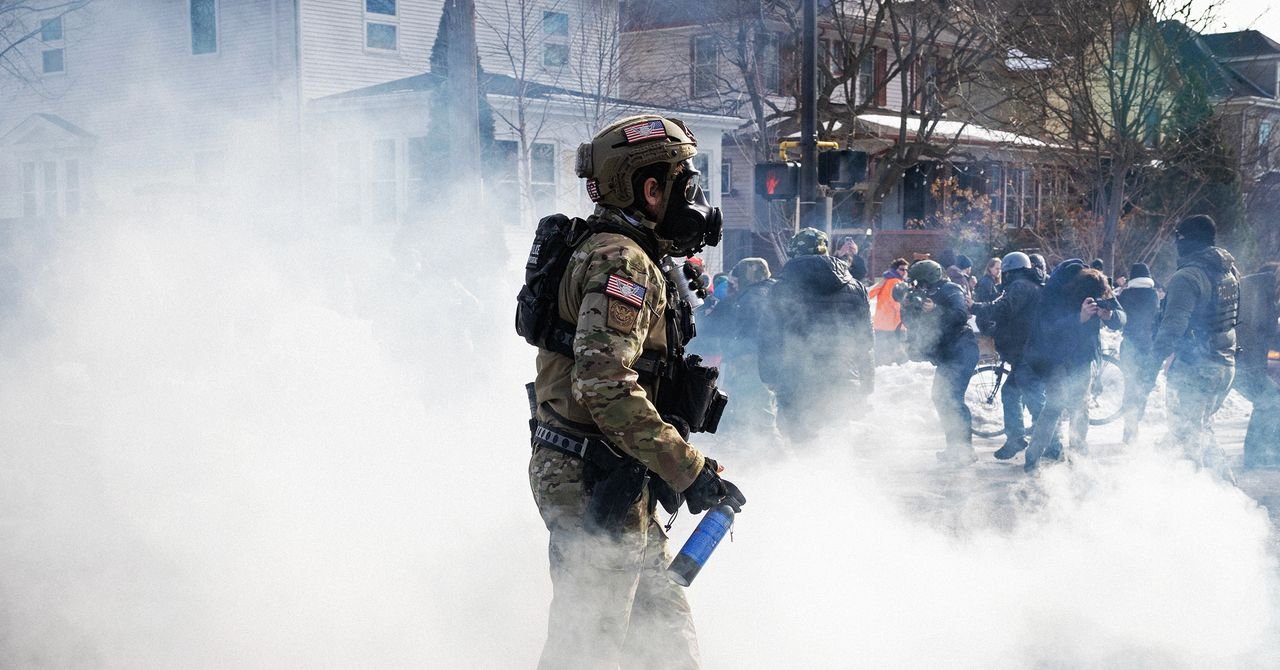

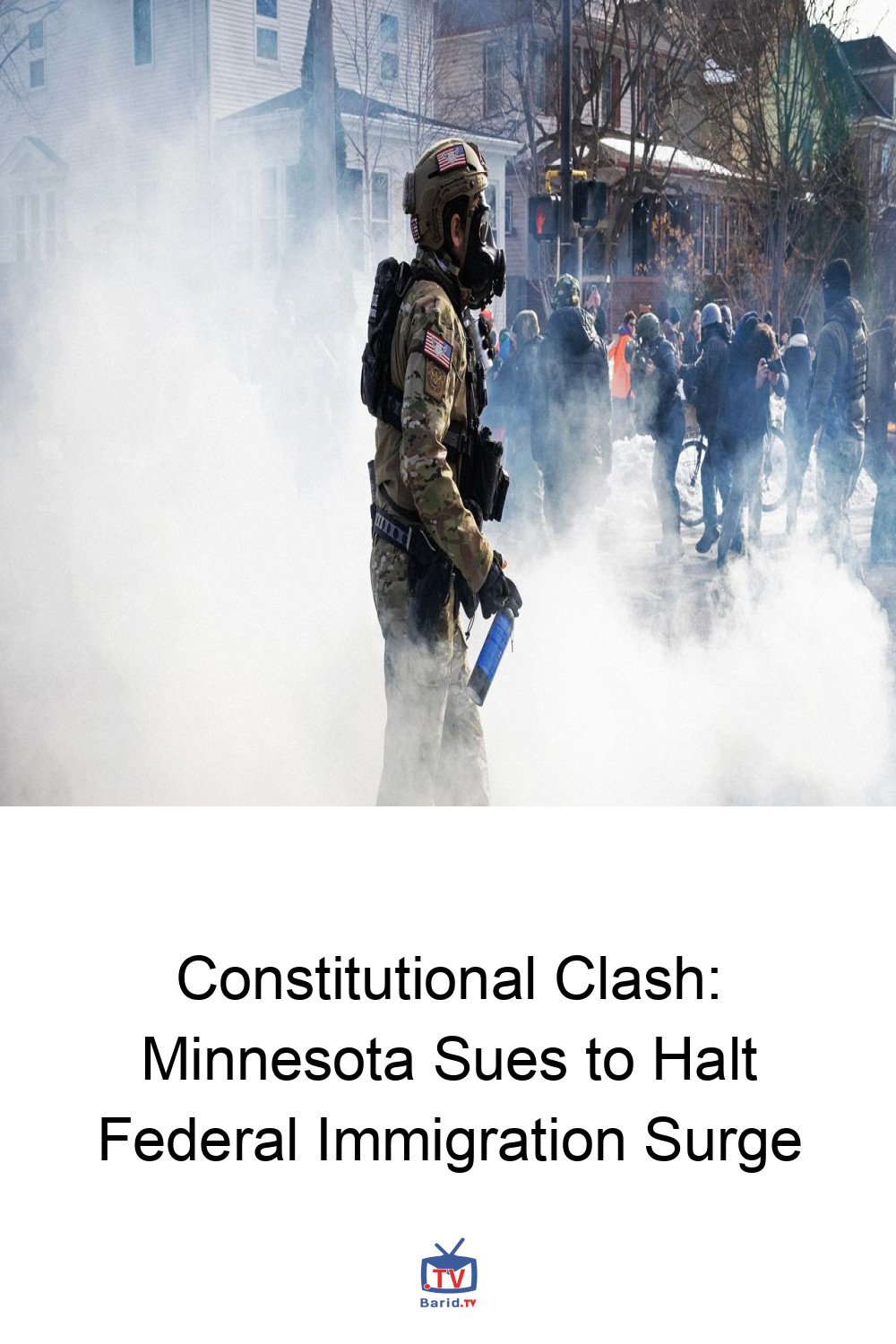
In a dramatic escalation of tensions between state and federal authorities, the State of Minnesota, alongside its major cities Minneapolis and St. Paul, has launched a sweeping federal lawsuit aimed at immediately halting what they describe as an “unprecedented and unlawful surge” of U.S. federal agents within the Twin Cities metropolitan area. Filed on Monday, the 80-page complaint argues that the federal deployment constitutes a grave constitutional violation and poses a direct threat to public safety and local governance.
Challenging “Operation Metro Surge”
The lawsuit, lodged in a U.S. district court in Minnesota, directly targets the U.S. Department of Homeland Security (DHS) and senior federal officials, including DHS Secretary Kristi Noem. At its core, the legal action seeks to block “Operation Metro Surge,” a large-scale immigration enforcement initiative that plaintiffs contend has unleashed thousands of armed, masked federal agents into Minnesota communities — far removed from border regions — thereby overwhelming local infrastructure and law enforcement capabilities.
Allegations of Chaos and Constitutional Overreach
Minnesota Attorney General Keith Ellison, speaking at a press conference, characterized the federal presence as “in essence, a federal invasion of the Twin Cities and Minnesota, and it must stop.” He leveled serious accusations against DHS agents, alleging they have sown “chaos and terror” across the metro area through a pattern of warrantless arrests, excessive force, and enforcement actions conducted in sensitive locations such as schools, churches, and hospitals.
Ellison detailed the disruptive impact, noting forced school closures and lockdowns, adverse effects on local businesses, and the diversion of crucial police resources from routine public safety duties. He cited over 20 ICE-related incidents, including alarming reports of individuals being pulled into unmarked vehicles by masked agents and vehicles being left abandoned in the streets, which he termed an “unlawful commandeering of police resources.”
The Tragic Death of Renee Nicole Good
A pivotal and deeply unsettling element of the lawsuit is the recent fatal shooting of Minneapolis resident Renee Nicole Good by an ICE agent. This incident, plaintiffs argue, served as a turning point, intensifying fear and unrest within the community. Ellison emphasized that Good’s killing, coupled with subsequent federal rhetoric, left families and entire communities feeling profoundly unsafe in public spaces.
Renee Nicole Good, a 37-year-old wife and mother of three, was tragically shot and killed by an ICE officer during an enforcement operation in Minneapolis on January 7. The subsequent investigation has been exclusively taken over by the FBI, effectively preventing Minnesota authorities from accessing evidence or participating in the probe. State officials assert that this move severely undermines transparency and erodes public trust in law enforcement integrity.
Legal Battlegrounds: Tenth Amendment and Retaliation
The plaintiffs assert that the federal operation flagrantly violates the Tenth Amendment, which reserves powers not delegated to the federal government to the states or the people. They also cite breaches of federal administrative law and long-standing limits on immigration enforcement. Furthermore, the lawsuit accuses the federal administration of engaging in “retaliatory conduct based on Minnesota’s lawful exercise of its sovereign authority,” suggesting the surge is punitive against a state that has asserted its own jurisdiction.
When questioned by a PBS Frontline reporter about curbing the use of crowd-control weapons—after the reporter’s crew had allegedly been pepper-sprayed by federal agents—Attorney General Ellison underscored the importance of First Amendment protections. He urged journalists to file complaints, stating, “Part of what our case is about is First Amendment protection. The press is protected by the First Amendment, and it’s vitally important in this moment.”
A Wider Pattern: Illinois and Chicago Join the Fight
Minnesota’s legal challenge is not isolated. On the same day, the state of Illinois and the city of Chicago filed a separate lawsuit against DHS and senior federal officials. Their complaint accuses the federal administration of unleashing a “militarized immigration operation” that has “rampaged for months through Chicago and surrounding areas, lawlessly stopping, interrogating, and arresting residents, and attacking them with chemical weapons.” This parallel legal action highlights a growing national concern over the scope and tactics of federal immigration enforcement in non-border regions.
For more details, visit our website.
Source: Link