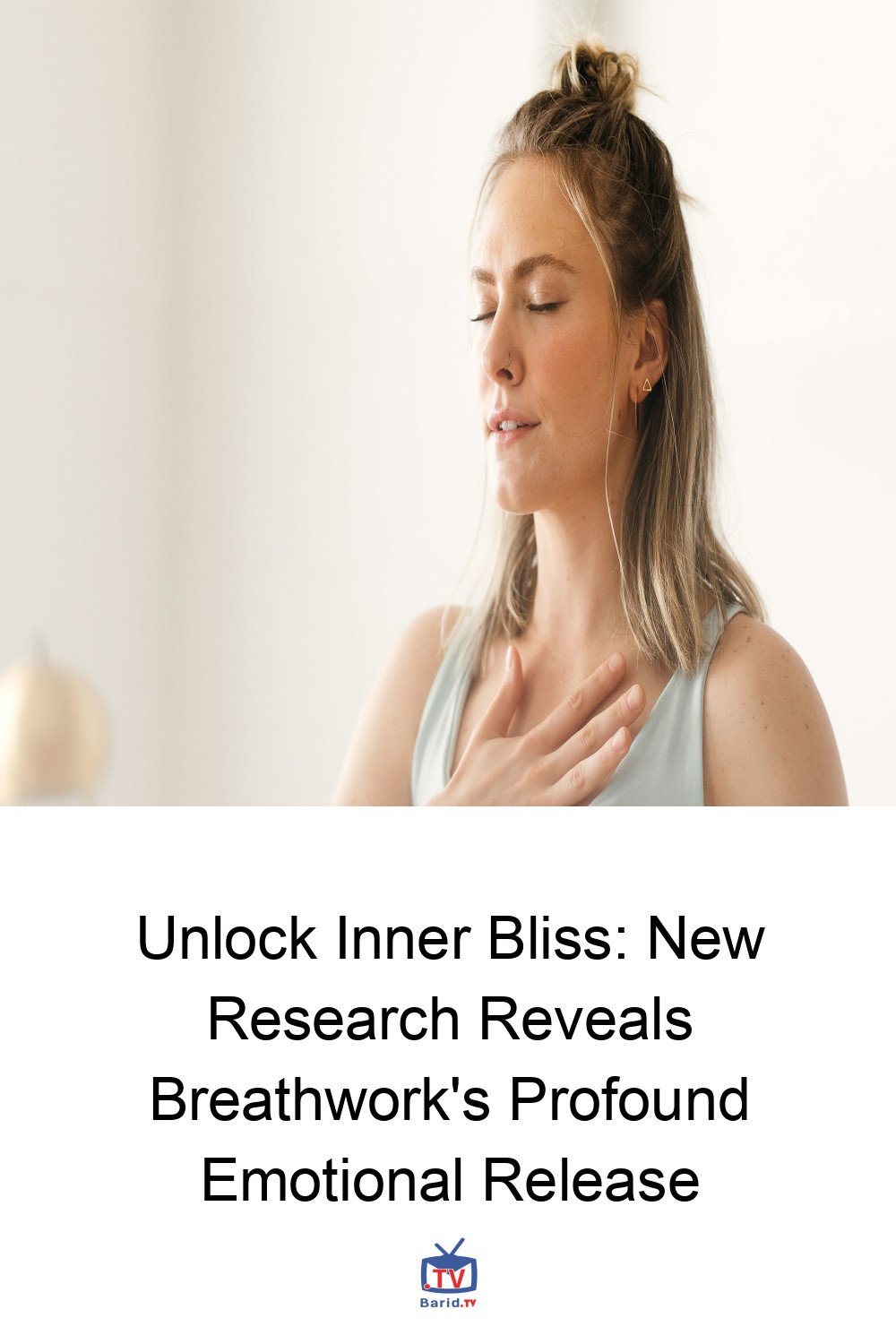
In an increasingly fast-paced world, the quest for inner peace and emotional equilibrium has led many to explore ancient practices. Among these, breathwork has emerged as a powerful tool, gaining significant traction in wellness circles. Now, groundbreaking research published in the journal PLOS One offers scientific validation for what many practitioners have long experienced: a simple, intentional breathing practice can unlock profound emotional release and even lead to blissful states.
The Science of Serenity: How Breathwork Transforms Your Mind
Breathwork, at its core, involves consciously controlling your breathing patterns to elicit specific physiological and psychological effects. From calming the nervous system to boosting energy, its versatility is well-documented. However, the exact neurobiological mechanisms behind its more profound impacts—such as inducing altered states of consciousness (ASCs) and facilitating deep emotional release—have remained largely unexplored until recently.
Unveiling the Brain’s Response to Breath
A recent study delved into the impact of high ventilation breathwork (HVB) combined with music on experienced practitioners. Participants engaged in 20- to 30-minute sessions of continuous cyclic breathing, followed by detailed questionnaires and neuroimaging. The findings were compelling:
- Breathwork significantly reduced the body’s stress response.
- It effectively diminished negative emotions.
- Crucially, it was found to reliably evoke “profound psychedelic states” and spiritual experiences.
The study authors explained, “Our key findings include that breathwork can reliably evoke profound psychedelic states. We believe that these states are linked to changes in the function of specific brain regions involved in self-awareness, and fear and emotional memory processing.” This transformation is attributed to breathwork’s ability to alter blood flow to specific brain areas, fostering deeper sensations of unity, bliss, and emotional liberation.
Embarking on Your Breathwork Journey: Simple Steps to Bliss
The beauty of breathwork lies in its accessibility. It’s a free practice you can engage in anytime, anywhere, requiring nothing more than your own breath. The research specifically highlighted techniques like Conscious Connected Breathing (continuous breathing, often through the mouth, without pauses) and Holotropic Breathwork (a high-ventilation style typically guided by a facilitator).
Popular Breathwork Techniques to Explore
While the aforementioned techniques can induce altered states, many other forms of breathwork offer profound calming and balancing benefits:
- Box Breathing: A simple yet effective technique involving inhaling for four counts, holding for four, exhaling for four, and holding for four. Ideal for stress reduction and focus.
- Nadi Shodhana (Alternate-Nostril Breathing): An ancient yogic practice that balances the hemispheres of the brain, promoting calm and mental clarity.
- 4-7-8 Technique: Developed by Dr. Andrew Weil, this method involves inhaling through the nose for 4 seconds, holding for 7 seconds, and exhaling audibly through the mouth for 8 seconds. Excellent for relaxation and sleep.
Whether you seek guidance through online videos, workshops, or prefer to experiment with these accessible methods, the path to harnessing your breath’s power is readily available.
The Transformative Promise of Breathwork
Whether your goal is to alleviate stress, explore altered states of consciousness, or simply release pent-up emotions, breathwork presents a powerful and accessible solution. As study co-author Alessandro Colasanti, Ph.D., aptly summarizes, “[Breathwork] holds tremendous promise as a transformative therapeutic intervention for conditions that are often both distressing and disabling.” It’s a testament to the profound connection between our breath, our minds, and our emotional well-being.
For more details, visit our website.
Source: Link