

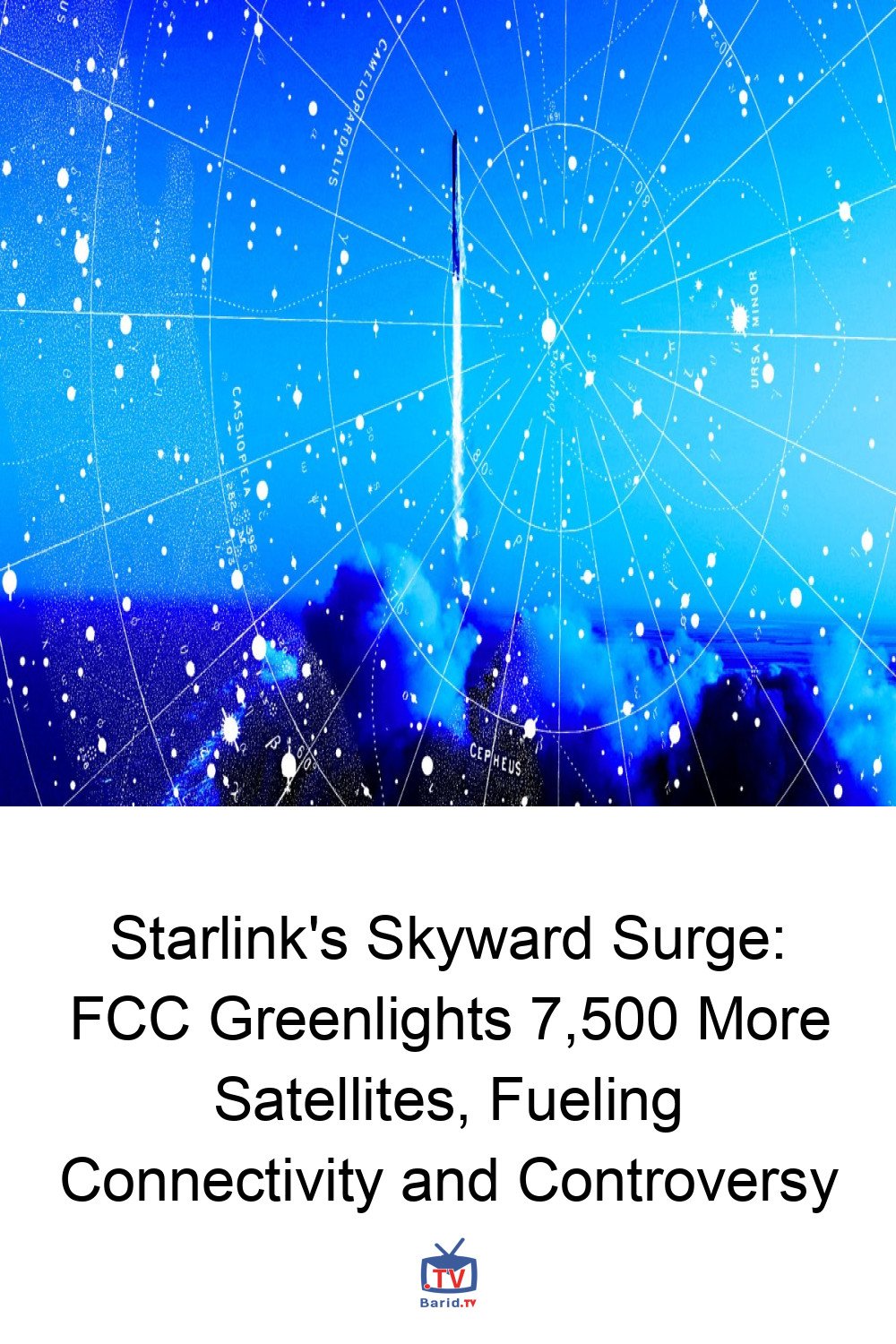
The Federal Communications Commission (FCC) has given a significant nod to SpaceX, approving the launch of an additional 7,500 Gen2 Starlink satellites. This landmark decision is set to dramatically expand the constellation, bringing the total number of Starlink satellites in orbit to approximately 15,000 worldwide by the end of 2031. The move underscores a pivotal moment in the race for global satellite internet dominance, though it comes with its own set of challenges and controversies.
A New Era for Starlink: FCC’s Landmark Decision
On Friday, the FCC officially greenlit SpaceX’s ambitious plan, a decision that not only permits a substantial increase in the Starlink network but also waives previous requirements designed to prevent overlapping coverage and enhance capacity. This regulatory flexibility suggests a strong commitment from the government to foster the growth of satellite-based internet services, potentially influenced by a recently mended relationship between the administration and SpaceX owner Elon Musk, following earlier public disagreements.
Unpacking the Approval: Numbers and Deadlines
While SpaceX had initially sought approval for a staggering 30,000 satellites, the current green light for 15,000 represents a significant, albeit scaled-back, victory. The approval comes with strict timelines: 50 percent of the newly approved Gen2 satellites must be launched and fully operational by December 1st, 2028, with the remaining half to follow by December 2031. These deadlines highlight the urgency and scale of the deployment, pushing SpaceX to accelerate its launch cadence in the coming years.
The Trade-Offs: Connectivity Versus Cosmic Concerns
This massive expansion, however, is not without its detractors. The prospect of 15,000 satellites orbiting Earth has reignited concerns among astronomers, who have long voiced worries about light pollution interfering with ground-based observations of the cosmos. Beyond the visual impact, the sheer volume of satellites intensifies fears regarding space junk and the increased risk of orbital collisions. SpaceX has already had to take measures, such as lowering the orbit of many existing satellites, to mitigate collision risks, a challenge that will only grow with the expanded constellation.
Despite these environmental and scientific anxieties, the FCC’s decision ultimately weighed heavily on the promised benefits. The expanded Starlink network is poised to deliver direct-to-cell connectivity outside the US, a game-changer for remote and underserved regions. Furthermore, the promise of internet speeds reaching up to 1 Gbps offers a compelling vision for a future where high-speed, low-latency internet is accessible globally, bridging digital divides and fostering unprecedented connectivity.
Looking Ahead: The Future of Satellite Internet
As SpaceX gears up for this monumental deployment, the world watches with a mix of anticipation and apprehension. The FCC’s approval marks a critical step in realizing a truly global satellite internet infrastructure, but it also places a greater onus on SpaceX and regulators to address the burgeoning challenges of orbital sustainability and the preservation of our night sky. The balance between technological advancement and environmental stewardship will define the next chapter of space-based connectivity.
For more details, visit our website.
Source: Link