

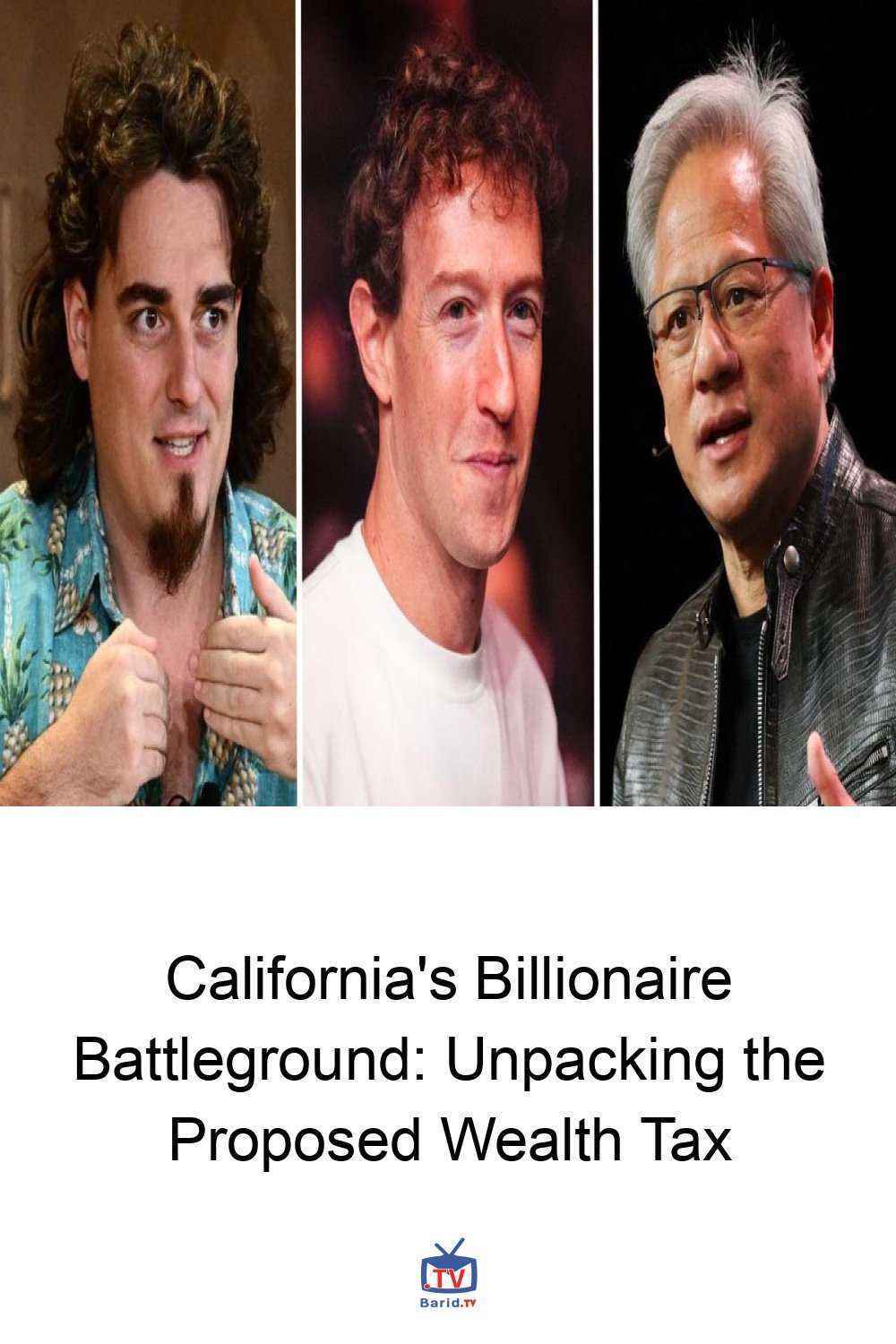
California’s Billionaire Battleground: Unpacking the Proposed Wealth Tax
California, a state synonymous with innovation, wealth, and progressive policies, is once again at the forefront of a contentious economic debate. A proposed wealth tax, aimed squarely at the state’s more than 200 billionaires, threatens to reshape the financial landscape and spark a significant exodus of the ultra-rich. This ambitious legislative push seeks to address widening income inequality and fund critical public services, but it comes with a hefty price tag of controversy and potential constitutional challenges.
What Does the Proposed Wealth Tax Entail?
The specifics of the proposed legislation are designed to target the state’s wealthiest residents. While the exact figures can vary in legislative drafts, the general premise involves an annual tax on a percentage of a resident’s global net worth, exceeding a certain high threshold (e.g., $50 million or $1 billion). Unlike income tax, which taxes earnings, a wealth tax assesses an individual’s total assets—including stocks, bonds, real estate, and other holdings—minus liabilities. Proponents argue this is a necessary step to ensure the wealthiest contribute their fair share, especially as much of their wealth is often held in unrealized gains.
The Golden State’s Ultra-Rich: Who Could Be Affected?
With over 200 billionaires calling California home, the potential impact of such a tax is immense. From Silicon Valley tech titans to Hollywood moguls and real estate magnates, California boasts one of the highest concentrations of ultra-high-net-worth individuals globally. A wealth tax would directly affect these individuals, potentially compelling some to reconsider their residency in the Golden State. The list includes prominent figures whose fortunes are deeply intertwined with California’s economic engine, raising questions about the long-term economic repercussions.
Economic Implications and the Heated Debate
The proposal has ignited a fierce debate among economists, policymakers, and the public. Advocates champion the wealth tax as a vital tool to combat extreme wealth concentration, fund essential social programs, and reduce the state’s reliance on volatile income tax revenues from a small number of high earners. They point to rising inequality and the need for a more equitable distribution of economic prosperity.
Conversely, critics raise serious concerns about the feasibility, constitutionality, and economic consequences of such a tax. Arguments against it often include:
- Capital Flight: The fear that billionaires and their businesses will relocate to states with more favorable tax environments, leading to a loss of investment, jobs, and philanthropic contributions.
- Constitutional Challenges: Legal experts question whether a state can tax global net worth, especially for individuals who may eventually leave the state, and if it violates existing tax laws or property rights.
- Valuation Difficulties: Accurately assessing and valuing complex assets annually, particularly for illiquid holdings like private company stakes or art collections, presents significant administrative hurdles.
- Economic Disincentives:
Critics argue it could discourage entrepreneurship and investment within the state, ultimately harming California’s long-term economic vitality.
The Road Ahead: A Precedent-Setting Battle?
California’s journey with a wealth tax is not unique globally, with several European nations having experimented with similar taxes, often with mixed results. However, its implementation in a major U.S. state would set a significant precedent. The proposal faces a challenging path through the legislative process, likely encountering strong opposition from business groups and wealthy individuals. Even if passed, it is almost certain to face immediate legal challenges, potentially leading to a protracted court battle.
As California grapples with its fiscal future and the imperative to address social disparities, the proposed wealth tax on its billionaires stands as a defining moment. Its outcome will not only shape the lives of the state’s wealthiest residents but could also serve as a blueprint—or a cautionary tale—for other states considering similar measures.
For more details, visit our website.
Source: Link