

Presidential Directive Sparks Mortgage Rate Drop
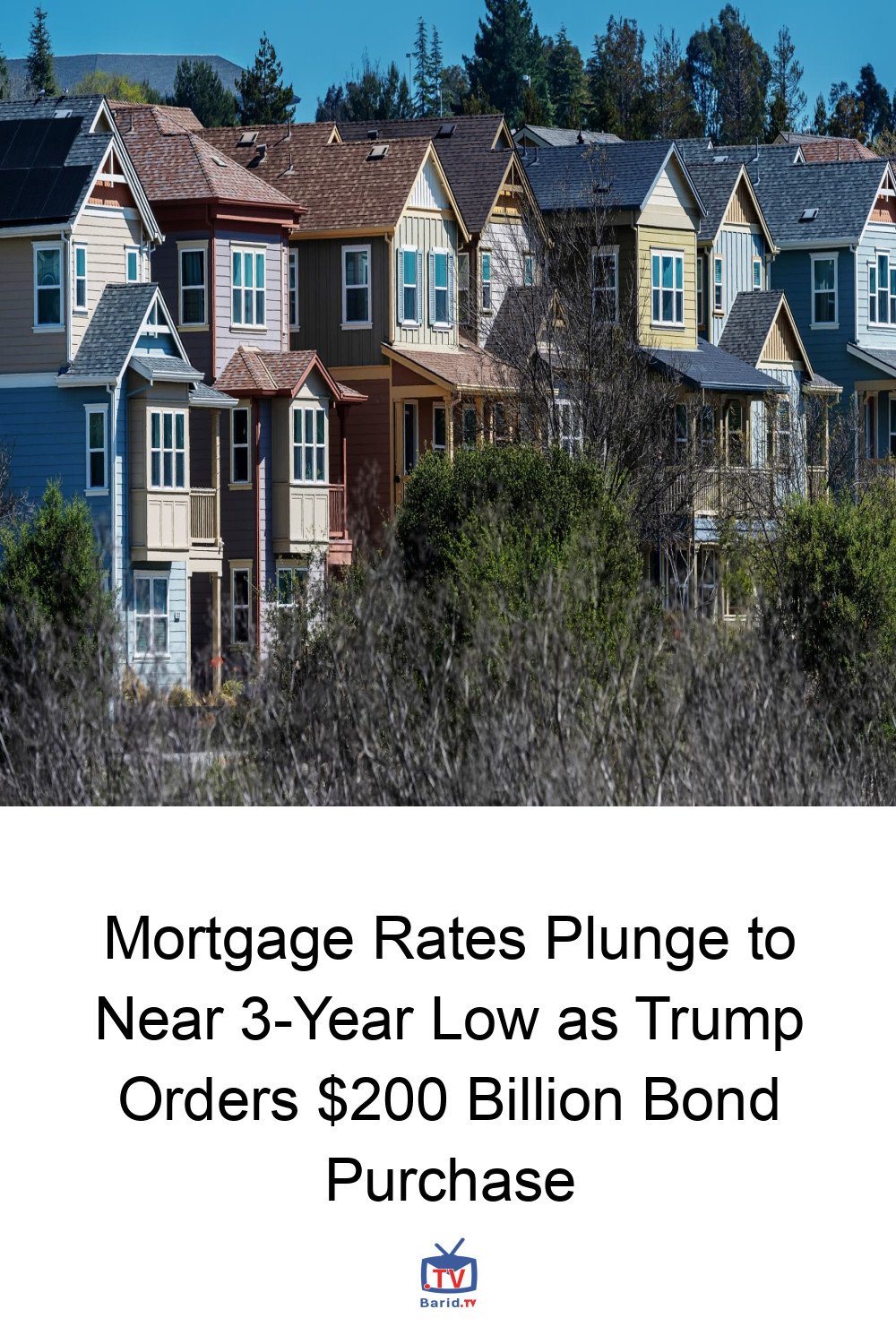
In a significant move poised to reshape the housing market, mortgage rates have plummeted to their lowest levels in nearly three years. This dramatic shift follows a directive from President Donald Trump, instructing mortgage giants Fannie Mae and Freddie Mac to acquire an additional $200 billion in mortgage bonds. The announcement, made via social media, aims to drive down monthly payments and enhance homeownership affordability across the nation.
The immediate impact was palpable: the rate on a 30-year mortgage sharply dropped by 22 basis points to 5.99%, according to Mortgage News Daily, mirroring a low last seen in February 2023. While Fannie Mae and Freddie Mac do not originate loans directly, their role in purchasing loans from lenders, bundling them into mortgage-backed securities (MBS), and selling them to investors is crucial. This mechanism replenishes lender funds, ensuring a steady flow of capital for new loans and maintaining lower, more stable interest rates for homebuyers.
A Historical Precedent: Lessons from the Pandemic
The strategy of injecting liquidity into the MBS market to influence rates is not without precedent. During the initial months of the Covid-19 pandemic, as global markets reeled, the Federal Reserve undertook massive MBS purchases, acquiring $580 billion in agency MBS in just two months. This was followed by sustained buying, increasing its agency MBS holdings from $1.4 trillion to $2.3 trillion between March 2020 and June 2021. Coupled with a near-zero lending rate, these actions drove the average 30-year fixed mortgage rate to a record low of 2.75% by early 2021.
Matthew Graham, COO at Mortgage News Daily, emphasizes the significance of the current $200 billion injection. “How big a deal is $200 billion? This depends on a few factors, but the reaction in the MBS market is enough to tell you that it matters,” he noted, observing rates already falling in anticipation of the move.
Decoding the Impact: What Does 5.99% Mean for Homebuyers?
Analysts are projecting a further drop in mortgage rates, with most predicting a reduction of 25 to 50 basis points. UBS analysts, for instance, believe $200 billion in MBS purchases could lead to a 10-25 basis point reduction, potentially bringing the 30-year headline mortgage rate to around 6.0% (from a previous 6.21%). While still higher than the 4.4% average outstanding mortgage rate or the 3.25% levels of early 2022, this decline could provide a much-needed boost to both new construction demand and existing home turnover.
For the average homebuyer, even a modest drop can translate into tangible savings. A reduction to 5.9% on a median-priced home of $425,000, with a 20% down payment on a 30-year fixed mortgage, could lower monthly payments by $118. While this might not seem substantial to all, it could be a critical factor for first-time buyers teetering on the edge of affordability. However, the perennial challenge of saving for a down payment remains a significant hurdle for many.
The Broader Picture: Affordability Challenges Persist
Despite the positive psychological impact, experts caution against overstating the immediate transformative power of this initiative. Ivy Zelman, executive vice president of research and securities at Zelman, a Walker & Dunlop Company, acknowledges the psychological boost, especially for those unaware of existing builder incentives. “I think psychologically it will help,” she stated, suggesting it might draw previously hesitant buyers into the market.
However, Zelman also highlights that overall affordability, not just mortgage rates, continues to sideline many buyers. Home prices remain nearly 50% higher than pre-pandemic levels—ironically, a consequence of the very record-low mortgage rates driven by previous MBS purchases. “This is not enough to really get the market going because we know people can’t qualify even at 4.99%,” Zelman contends, underscoring the need for more comprehensive solutions.
Homebuilders React: A Mixed Blessing?
Homebuilder stocks rallied on the news, though many had already been actively buying down mortgage rates into the 5% range to attract buyers. Their primary concerns have recently shifted towards increasing costs from tariffs and persistent labor shortages. Nevertheless, the announcement itself could stimulate buyer demand for new constructions, potentially offering a marginal benefit to builder margins, which have been shrinking due to higher operational costs.
John Lovallo, an analyst at UBS, echoed this sentiment, noting a “marginal benefit from the positive psychological impact on consumers.” While the directive offers a glimmer of hope for a more accessible housing market, the underlying structural issues of high home prices and qualification barriers suggest that significant work remains to be done to truly unlock widespread affordability.
For more details, visit our website.
Source: Link