
CES 2026: Where AI Got Seriously Strange
Artificial Intelligence remains the undeniable titan of the tech landscape, yet its novelty has long since faded. In an era where AI integration is commonplace, merely embedding it into a product no longer guarantees a spotlight, especially at the colossal Consumer Electronics Show. My journey through CES 2026 revealed a pervasive and peculiar trend: AI is officially embracing its eccentric side. Forget incremental improvements; this year, innovation veered into the wonderfully bizarre. From personal holographic companions that chat with you to gaming monitors that blur the lines of fair play, here are the five most unconventional AI inventions that caught my eye at CES 2026.
Razer’s Project AVA: Your ‘Holographic’ Desk Companion
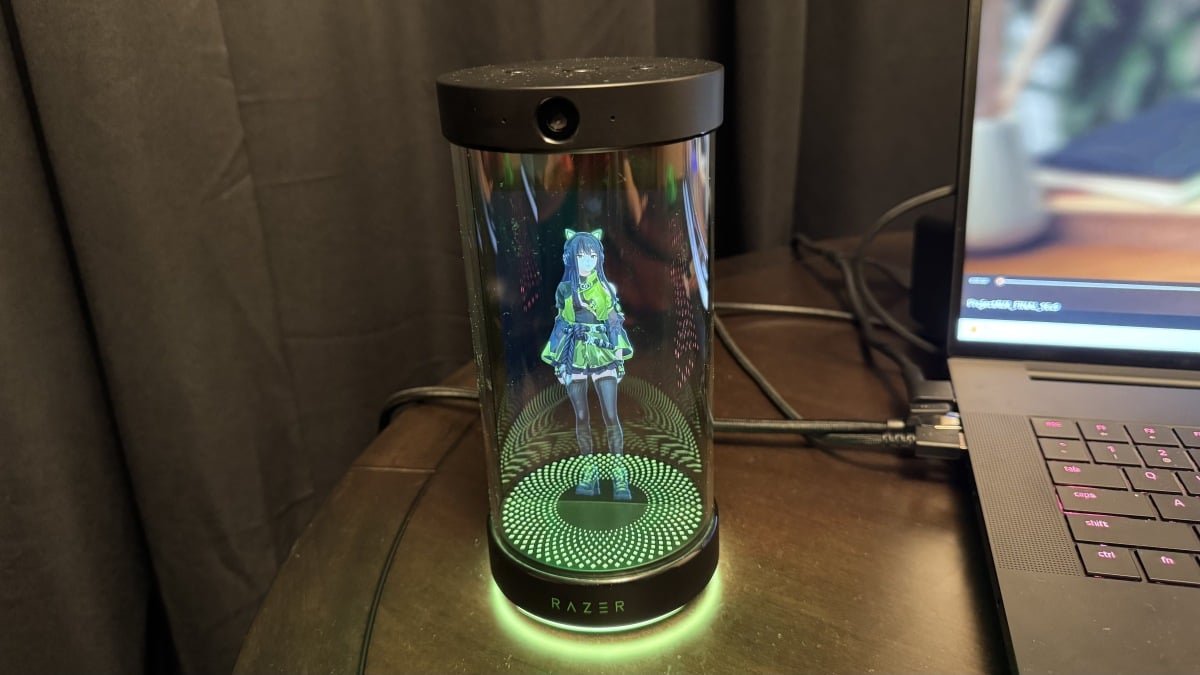
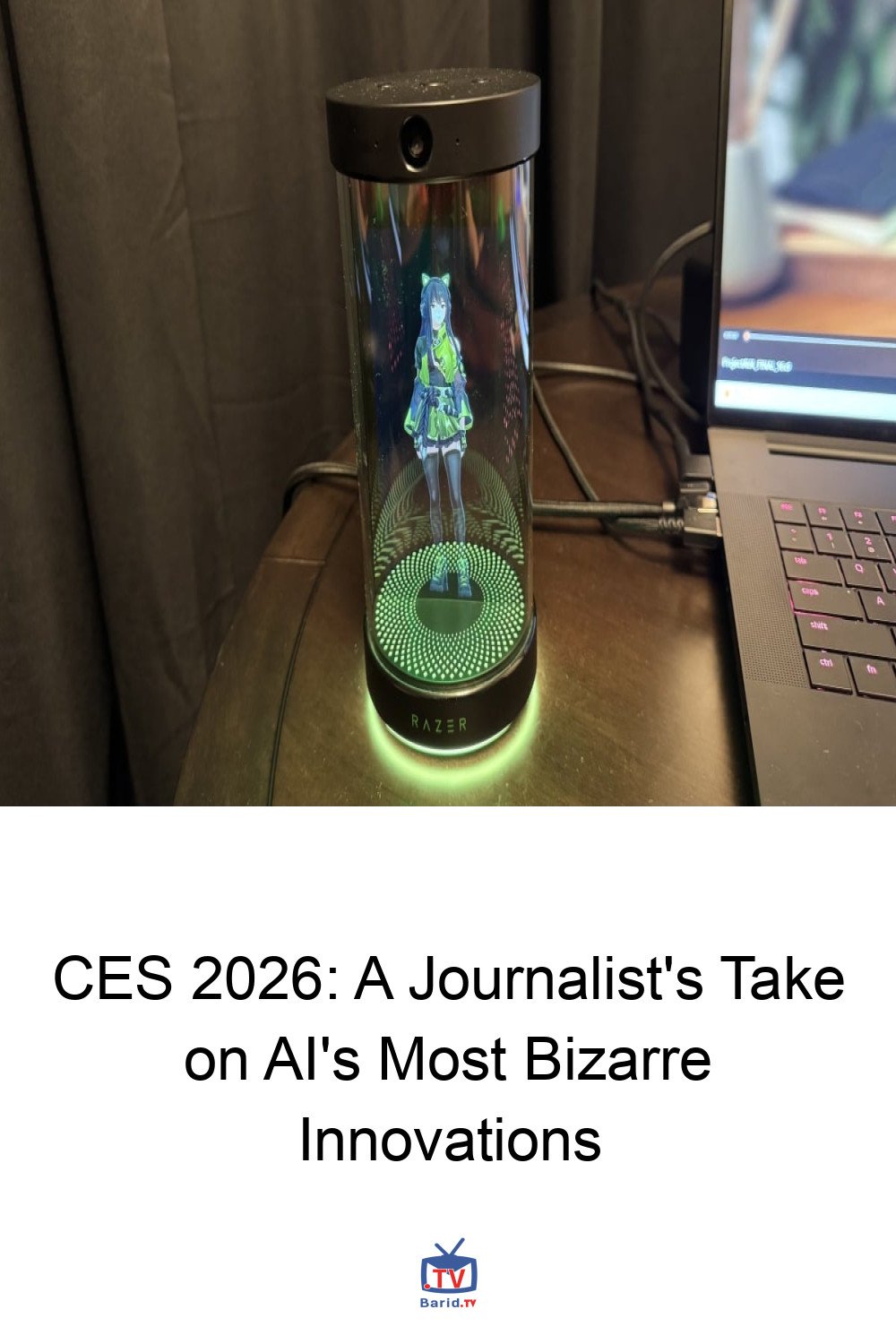
Last year, Razer’s Project AVA was a mere disembodied voice — an AI esports coach confined to a laptop. This year, the gaming lifestyle giant has dramatically escalated its ambition, attempting to pull AVA into the physical realm. Stepping into Razer’s CES suite, I found myself conversing with “Kira,” an anime girl “hologram” emanating from a sleek USB tube. This compact device, equipped with a camera, microphones, and its own speaker, allowed Kira to observe my orange sweater, inquire about the show, and even suggest a round of Battlefield 6, offering rather generic loadout advice.
Razer clarified that this particular demo was highly directed, explaining Kira’s immediate pivot to gaming. However, the overarching vision for the new AVA is a versatile AI companion, transcending mere gameplay. Intriguingly, the system boasts “AI agnostic” capabilities, meaning users could theoretically integrate their preferred AI models. While my demo clearly utilized Grok, complete with its signature (and occasionally cringeworthy) humor, Razer confirmed compatibility with alternatives like ChatGPT or Gemini.
Kira’s animated presence, powered by Animation Inc., highlights a crucial distinction: the core chatbot and animations aren’t entirely novel. What Razer is truly selling here is the physical USB tube and the unique character designs. Beyond Kira, a typical anime gamer girl, I also glimpsed Zane, a heavily tattooed, muscular figure in an astonishingly deep V-neck – clearly catering to distinct demographics. For those seeking a more understated presence, the tube can simply display Razer’s logo amidst an audio waveform, known as AVA. The company is even exploring celebrity likenesses, with esports legend Faker and influencer Sao already on board.
Razer is still refining its distribution strategy, with plans to bundle characters initially and offer additional purchases later. As for pricing and availability, details remain scarce. Project AVA is officially a concept, potentially returning to the drawing board. Yet, Razer’s website hints at a release in the latter half of 2026, with a $20 reservation option already available.
Stripping away the AI functionalities already accessible via existing apps, Project AVA essentially presents a talking, animated desk toy. While this isn’t an inherently poor concept, the term “hologram” feels like a stretch. Kira appeared more like a flat image projected onto a transparent screen within a cylinder, rather than a truly three-dimensional Princess Leia-esque projection. The novelty, in my view, doesn’t quite live up to the ambitious holographic pitch.
Neurable x HyperX: The Mind-Reading Gaming Headset
For competitive gamers, the ritual of warm-up sessions before a match is a familiar, albeit time-consuming, necessity. Neurable and HyperX aim to revolutionize this with their new concept headset, promising to get players “locked in” in mere minutes.
Outwardly, it resembles a standard gaming headset. However, discreetly integrated into the earcups are advanced sensors designed to monitor and interpret your focus levels. These are consumer-grade iterations of the sophisticated brain-computer interfaces often depicted in science fiction, miniaturized and streamlined, devoid of any cumbersome wires or intrusive electrodes.
The magic, naturally, lies with AI. While the compact sensors yield fewer raw readings than their larger laboratory counterparts, Neurable asserts that its AI models are adept at discerning meaningful patterns within this data, translating them into actionable insights while intelligently filtering out noise. For gamers, this translates into a rapid focus exercise dubbed “Prime.” During this 90-second routine, users concentrate as a cloud of dots visually coalesces into a solid orb, ostensibly priming their minds for peak performance.
For more details, visit our website.
Source: Link