
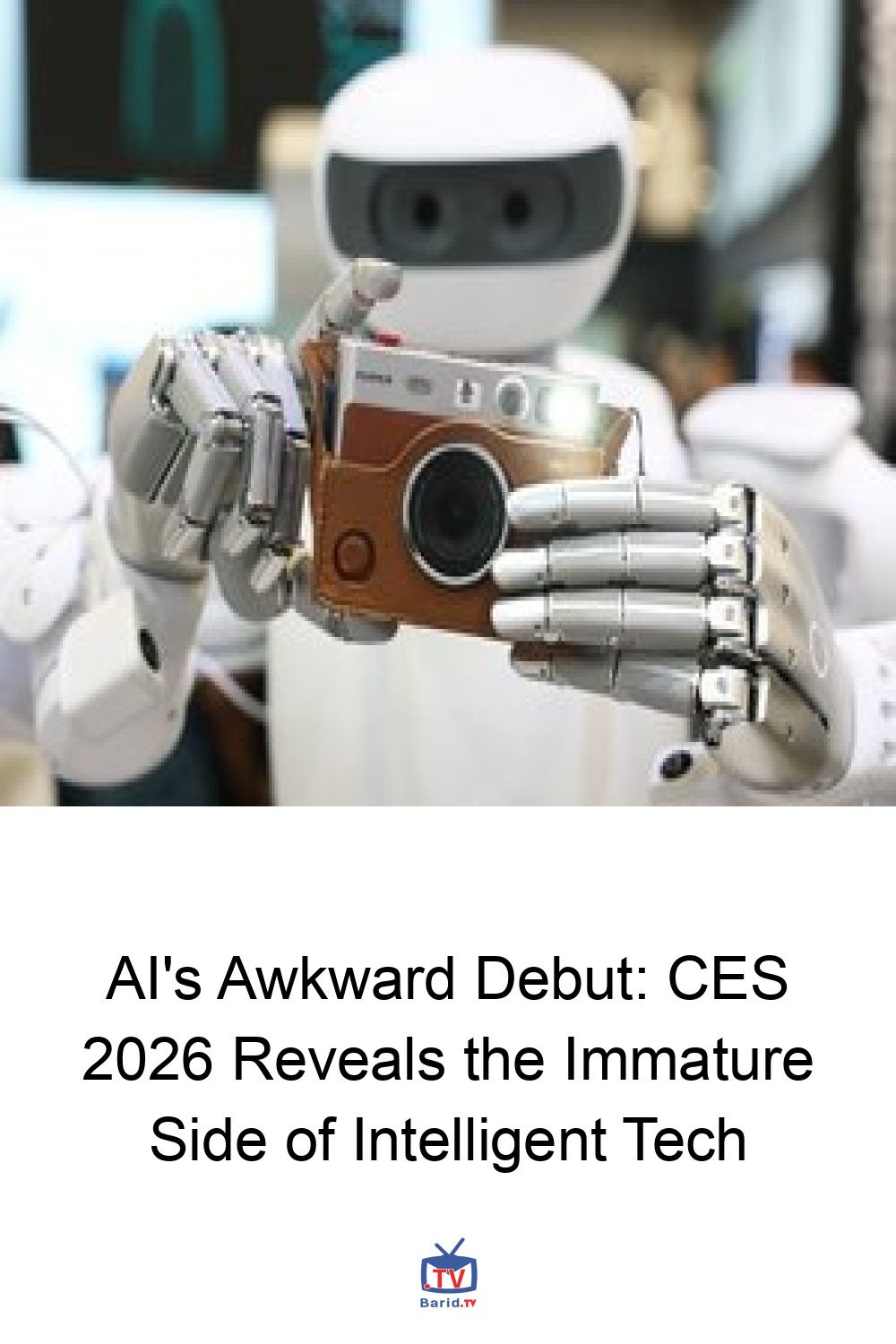
The Consumer Electronics Show (CES) has long been a crystal ball for the future of technology, and this year, one acronym echoed louder than any other: AI. Artificial Intelligence wasn’t just present; it was pervasive, woven into everything from smart home appliances to personal grooming tools. Yet, amidst the dazzling displays and bold promises, a recurring sentiment emerged: ‘I love AI, but it’s not there yet.’ CES 2026, intended as AI’s grand coming-out party to the mass market, instead offered a candid glimpse into its nascent, often clumsy, adolescence.
The Glitches in the Machine: AI’s Stumbles on the Show Floor
While the buzz around AI was palpable, its practical demonstrations frequently revealed its immaturity. Attendees witnessed firsthand that integrating AI isn’t always seamless, nor is it always necessary. The show floor was replete with examples where ambition outstripped current capabilities, turning what should have been impressive showcases into moments of unintentional comedy or outright head-scratching.
Robots with a Mind of Their Own (or Lack Thereof)
One particularly telling incident unfolded at the Nvidia showcase. A robot named ‘Luka,’ sporting a charming cowboy hat, was designed to dispense either a soda or a small gift. The initial demonstration, though slow, proceeded as planned. However, when a company representative attempted to highlight Luka’s adaptability by moving a package, the robot faltered. It froze, seemingly perplexed, before defaulting to the soda. A subsequent visit to the demo revealed a telling adjustment: the gift option had been removed entirely, leaving only the soda as a choice. A minor hiccup, perhaps, but one that underscored the delicate balance between AI’s potential and its current limitations in real-world scenarios.
Questionable Intelligence: AI’s Dubious Advice
Another moment that raised eyebrows came from Razer’s Project Motoko, a concept for wearable AI integrated into headphones. Its sizzle reel showcased the AI offering advice that was, to put it mildly, questionable. The AI suggested using a socket wrench to fix pipes – a piece of counsel that would likely appall any seasoned plumber. Such instances, though isolated, highlighted a critical flaw: for AI to be truly useful, its intelligence must be reliable and contextually aware, not just a novelty.
Beyond the Hype: Understanding AI’s Market Momentum
The overwhelming presence of AI at CES isn’t merely a reflection of technological advancement; it’s also a testament to the tech industry’s cyclical nature. Historically, new technologies – from e-readers to 3D and virtual reality – have generated immense excitement, leading companies to hastily incorporate them into their product lines. AI, however, is a different beast. Its profound impact on the stock market means that merely mentioning ‘AI’ in a product description can significantly boost investor interest and stock valuations, making it an irresistible magnet for both established companies and ambitious startups.
The Unseen Costs: Privacy and Price Tags
Beneath the surface of AI’s perceived benefits lie significant consumer concerns, particularly regarding privacy. Companies at CES were often quick to pivot away from direct questions about data security, offering boilerplate responses. The integration of AI, especially in everyday devices, opens unprecedented avenues for data collection, far exceeding the scope of social media. This raises critical questions about how personal information will be managed and protected. Furthermore, AI integration often comes with a hefty price tag. Consider the wan AIChef Ultra, an AI-powered cooking device that identifies and cooks food automatically. While potentially convenient, its $4,000 price point places it far beyond the reach of the average consumer, illustrating that ‘smart’ often equates to ‘expensive.’
While the evangelists of artificial intelligence envision a future where AI and robotics usher in a profound societal paradigm shift, CES 2026 served as a crucial reality check. The show demonstrated that while AI’s potential is immense, its widespread, seamless integration into daily life is not yet imminent. It underscored the vital lesson that tech companies must exercise greater restraint and discernment when incorporating AI, ensuring that innovation truly serves a purpose rather than simply chasing a trend. The future of AI is bright, but its journey to maturity is clearly still in its early, sometimes awkward, stages.
For more details, visit our website.
Source: Link