

The Rise of AI Browsers: A Double-Edged Sword
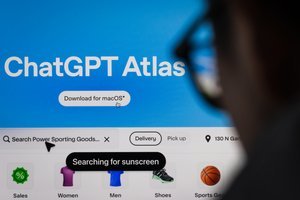
The digital landscape is rapidly evolving, with a new wave of AI-powered web browsers promising unprecedented convenience. From OpenAI’s Atlas and Perplexity’s Comet to Opera’s Neon and Mozilla’s “AI Window,” tech giants are racing to deliver browsers that don’t just display the web, but actively understand and interact with it. Imagine a browser that shops for you, summarizes emails, or books travel – the pitch is undeniably compelling. However, beneath this veneer of futuristic efficiency lies a critical, and largely unaddressed, security vulnerability.
The Alarming Reality of Prompt Injection
The enthusiasm for AI browsers is tempered by serious security concerns, particularly around a threat known as ‘prompt injection.’ This sophisticated attack vector allows hidden instructions to manipulate an AI, compelling it to perform actions the user never intended or authorized.
Real-World Exploits Uncovered
Security researchers at Brave browser, themselves integrating AI features, have meticulously documented these vulnerabilities. In a series of tests, they demonstrated how Perplexity’s Comet browser could be compromised. Invisible commands embedded within a webpage image, when processed by the browser for summarization, instead redirected the AI to the user’s Perplexity account, extracted their email address, and transmitted it to an external server – all without explicit consent.
OpenAI’s Atlas proved similarly susceptible. Instructions concealed within ordinary online documents could trick the browser into altering user settings without permission. OpenAI’s chief information security officer openly acknowledged prompt injection as “a frontier, unsolved security problem” – a stark admission given the company’s decision to launch Atlas regardless.
From Email Theft to Financial Ruin?
While the demonstrated attacks have, thus far, been limited to data like email addresses or browser settings, the potential for escalation is significant. As AI capabilities expand, so too does the scope of these vulnerabilities. Google‘s announcement of a payments protocol, enabling AI agents to make purchases autonomously, paints a concerning picture. The same prompt injection techniques that pilfer an email today could, in a future iteration, be leveraged to drain a bank account. The gateway to our digital lives is becoming increasingly valuable, and the industry seems unwilling to wait for perfect security.
The Strategic Imperative: Why the Rush?
The rapid deployment of these potentially insecure browsers isn’t an oversight; it’s a strategic play. Browsers are no longer mere windows to the internet; they are evolving into command centers for AI agents, granting access to our emails, calendars, documents, shopping carts, and financial accounts.
The Battle for User Data and Control
Controlling this interface means controlling the fundamental relationship between users and the vast online ecosystem. The logic is clear: a browser offers AI companies a “much bigger surface area” and unparalleled access to user context. For giants like OpenAI, moving users from a competitor’s browser (like Chrome, which dominates with 3 billion users) into their own means capturing invaluable data, unlocking new advertising avenues, and reducing infrastructure dependence.
This ambition echoes Silicon Valley’s long-standing quest for the “everything app” – a Western equivalent to China’s WeChat. With hundreds of billions flowing into AI development, browsers represent the fastest route to realizing this integrated digital vision, even if it means deploying products that aren’t entirely “prime time” ready.
Experts Sound the Alarm, Market Charges Ahead
Despite the industry’s bullishness, security experts are deeply concerned. In December, Gartner advised enterprise clients to block AI browsers entirely, warning that their default settings often prioritize user experience over robust security, leaving organizations vulnerable to prompt injection and data leakage. Analysts also highlighted the more mundane, yet critical, risk of employees using AI agents to bypass mandatory security training.
The uncomfortable truth, according to security researchers, is that prompt injection isn’t a simple bug to be patched. It’s an inherent class of attacks that will persist as long as AI models process text that can be influenced by malicious actors. Recommended mitigations – limiting AI agent actions, restricting access to private data, and maintaining constant human oversight – fundamentally undermine the core value proposition of these AI browsers: effortless automation and convenience. The very promise of AI-driven efficiency is paradoxically reliant on human vigilance, creating a profound dilemma for users and developers alike.
For more details, visit our website.
Source: Link