
Mauro Porcini: The Design Maverick Steering Samsung’s Future
For Mauro Porcini, Samsung Electronics’ inaugural Chief Design Officer, his illustrious career path leading design at some of the world’s most prominent companies feels less like a series of jobs and more like a preordained journey. “It felt like faith, God, or whatever you believe in, was looking down and saying ‘Wait a second, before going after your dream, you need to prepare yourself. You need to be ready,’” Porcini reflects from his office at Samsung’s R&D center, nestled near Seoul’s vibrant Gangnam district. “I needed to get ready for probably my dream job: Being in tech, in a world where tech is about to completely change the way we live.”
A Fresh Perspective in Seoul
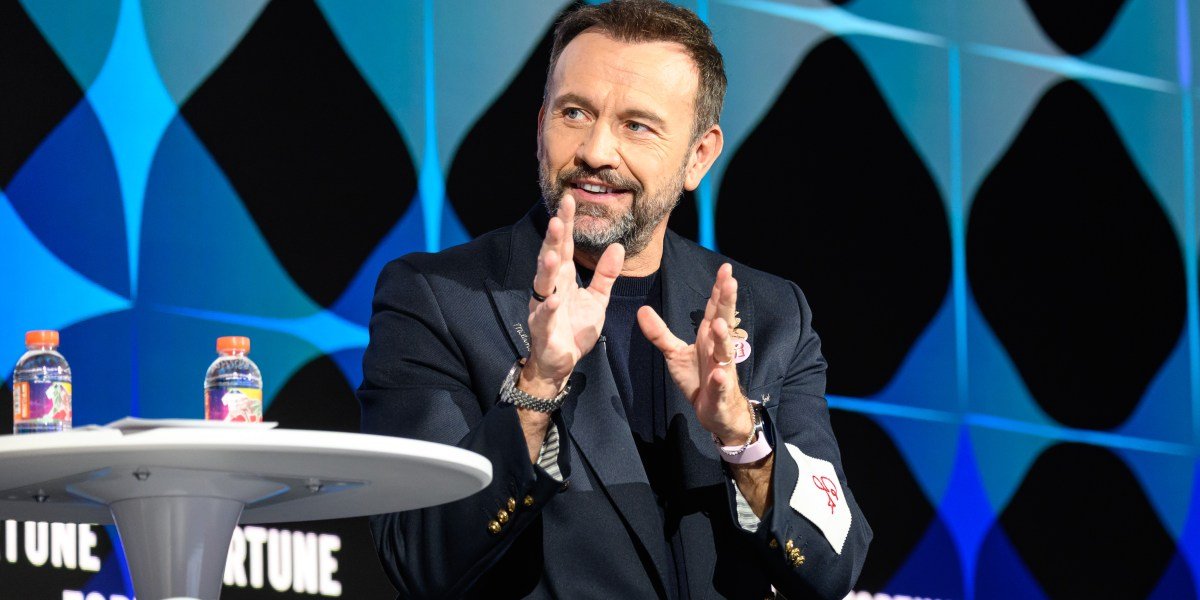
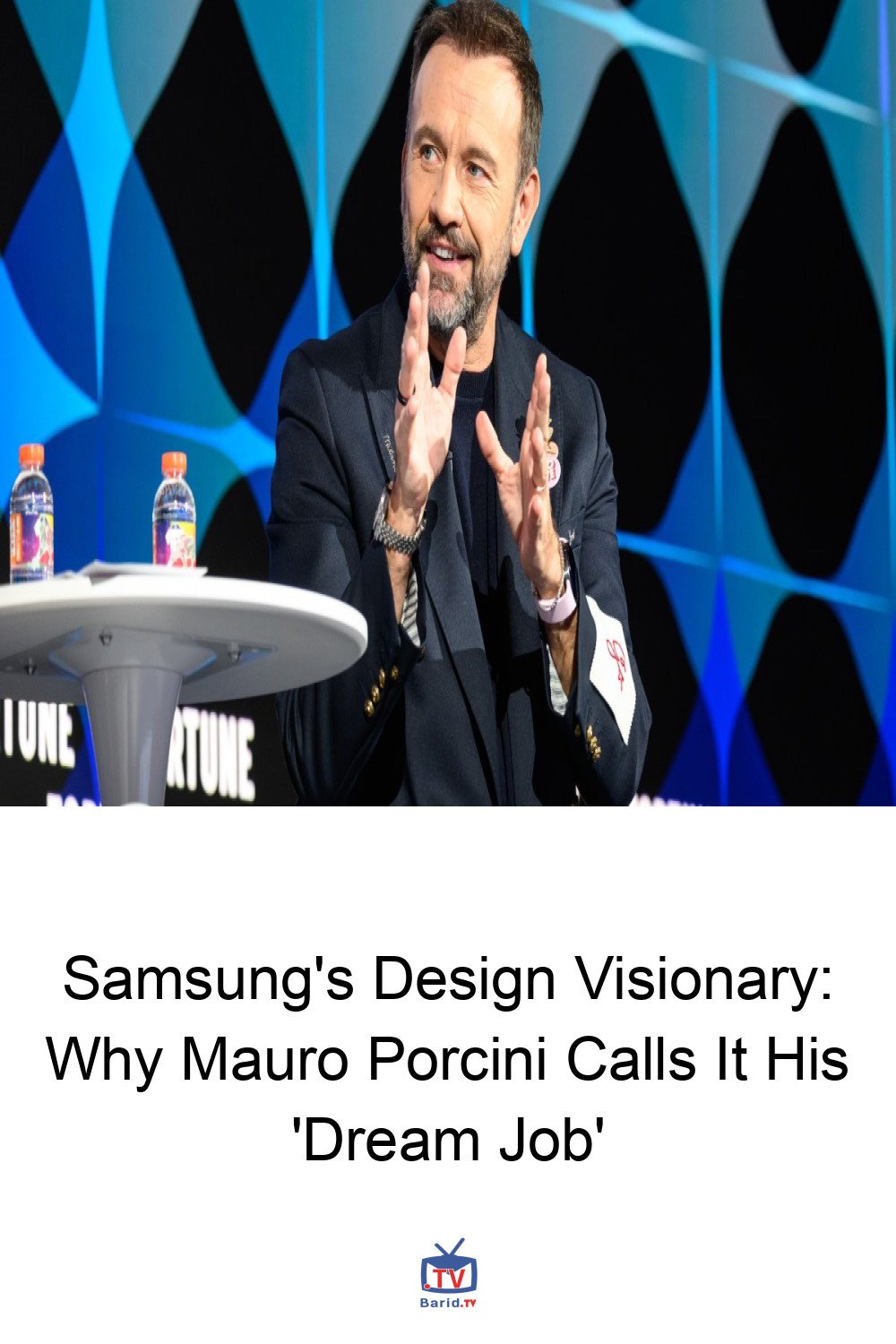
Porcini, a native of Gallarate, a quaint town outside Milan, brings a distinctly European flair to the typically understated Korean corporate environment. His attire—plaid trousers with white racing stripes, platform boots, and a beige jacket with a striking red lapel—stands in vivid contrast to the more conventionally dressed Korean designers and office workers. This sartorial individuality mirrors his professional approach: an outsider tasked with injecting fresh vision into a global titan.
Navigating a Shifting Landscape
For decades, Samsung, a powerhouse in consumer electronics ranging from smartphones and televisions to monitors and refrigerators, leveraged its vast internal design capabilities to build a brand that rivaled Apple in prestige. However, the competitive landscape is rapidly evolving, threatening to dislodge the Global 500 manufacturer from its top-tier position. Counterpoint Research indicates that Apple likely surpassed Samsung as the No. 1 smartphone seller in 2025, marking a significant shift after over a decade. Furthermore, agile Chinese firms like Xiaomi in phones and TCL in TVs are increasingly encroaching on Samsung’s premium market segments. Adding to this complexity is the disruptive potential of Artificial Intelligence, poised to redefine the capabilities of smart devices.
The Mission: Meaningful Design
In response to these formidable challenges, Samsung has strategically turned to Porcini, an external visionary, entrusting him with the task of leveraging his unique design philosophy to sharpen the company’s competitive edge. “How can we evolve our portfolio to be as meaningful as possible to people and to the business? This is the overall mission,” Porcini articulates. “How can we create the best possible products? What is their identity? How do people interact with them?” This move underscores Samsung’s continued commitment to design, even as economic pressures and technological advancements might otherwise temper corporate enthusiasm for costly human-centric design initiatives.
A Career Forged in Innovation
Mauro Porcini’s professional pedigree is arguably unparalleled in contemporary corporate design. Few others can boast a track record spanning multiple Fortune Global 500 giants: 3M (No. 489), PepsiCo (No. 115), and now Samsung (No. 27). His career is marked by a series of groundbreaking “firsts.”
Bridging Industries: From Post-its to Pepsi
In 2011, Porcini made history as 3M’s first-ever Chief Design Officer, a culmination of over a decade leading design efforts where he championed the integration of aesthetics into the very fabric of product development. “If I was making beautiful and functional products in ugly packaging, or if the experience in retail or digital was wrong, we were going to go nowhere,” he recalls. This pioneering role often required him to venture beyond his initial mandate, stepping on “so many people’s toes” to embed design thinking across the organization. Just a year later, PepsiCo recruited him to become its inaugural Head of Design. Here, he expanded his understanding beyond mere product aesthetics. “Industrial designers in tech, historically, focus on the product,” he explains. “What I learned in consumer packaged goods was the importance of the overall experience with the brand.” These diverse experiences instilled in Porcini a profound appreciation for the multidisciplinary collaboration essential for holistic design. “The ideal configuration is one where you have designers coming in with a human-centric approach, you have marketing coming in with a business perspective, and R&D coming in with a technology perspective,” he asserts.
Returning to Tech Roots
For Porcini, his role at Samsung represents a significant return to his technological origins. His master’s thesis, remarkably, focused on wearables, presciently envisioning how smart clothing and other integrated technologies would become integral to daily life long before wireless standards like Wi-Fi and Bluetooth were commonplace. His admiration for Samsung’s design prowess is also long-standing; in 2013, he brought then-PepsiCo CEO Indra Nooyi to Seoul specifically to meet Samsung’s top management and delve into their design investment strategies.
The Legacy of Design at Samsung
From that visit, Porcini gleaned two critical lessons: Samsung’s relentless drive to reinvent and revitalize its products, and its ability to “unit[e] the entire organization around one design mission.” This forward-thinking design ethos is largely attributable to the late chairman Lee Kun-Hee, who famously urged Samsung, one of South Korea’s dominant chaebols, to shed its “fast follower” reputation and compete with the world’s best. His seminal 1993 “Frankfurt Declaration” famously implored executives to “change everything except your wife and children.” As Youngjin Yoo, a professor at the London School of Economics and former Samsung adviser, notes, “Lee understood design’s power in digital technology.” Samsung’s designers have historically delved deep into user interaction, recognizing, for instance, that a television, often off for most of the day, functions as much as a piece of furniture as it does an entertainment source.
For more details, visit our website.
Source: Link