
Greenland: A Geopolitical Gambit or a Costly Fantasy?
Former President Donald Trump’s renewed pursuit of Greenland, once dismissed as a “quixotic proposal,” has resurfaced as a significant point of discussion, raising profound questions about its economic viability, strategic rationale, and potential geopolitical fallout. Experts warn that any attempt to acquire the vast Arctic island would necessitate “billions upon billions” in expenditure over decades, all for a mineral industry that, by all accounts, barely exists.
A Strategic Ambition Reawakened
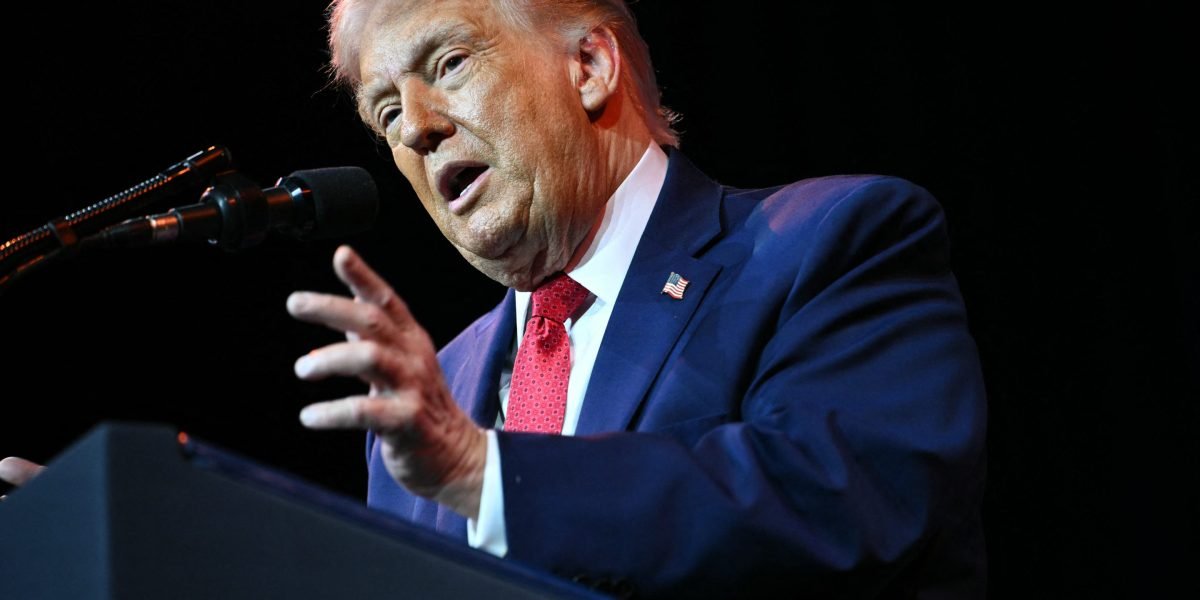
Trump’s 2019 vow to purchase Greenland, reiterated for a potential second term, has evolved from a simple acquisition idea into a more assertive stance, with the White House reportedly considering military involvement to secure what it deems a “national security situation.” This aggressive posture, particularly following recent hypothetical actions in Venezuela, has “galvanized” the administration’s focus on the Western Hemisphere, according to Alexander Gray, a former Trump administration official who testified on Greenland acquisition mechanisms.
“People need to understand that he is serious. He wants Greenland to be a part of the United States,” Gray told Fortune, emphasizing that while the ‘how’ remains open for discussion, the ultimate objective is unwavering.
The Mirage of Mineral Wealth
A primary justification cited by Trump officials for U.S. control over Greenland is its purported mineral wealth. The island is estimated to hold between 36 and 42 million metric tons of rare earth oxides, potentially ranking as the world’s second-largest reserve after China. With the global rare earth elements market projected to reach $7.6 billion by 2026 and China dominating 69% of production, securing alternative sources appears strategically sound. The U.S. has reportedly been assisting Greenland in diversifying its economy, with projects like Tanbreez aiming to extract rare earths for processing in the U.S.
Expert Reality Check: Billions, Not Billions
However, the economic allure quickly fades under expert scrutiny. Anthony Marchese, chairman of Texas Mineral Resources Corporation and a congressional witness, offered a sobering assessment to Fortune: “If you’re going to go to Greenland for its minerals, you’re talking billions upon billions upon billions of dollars and extremely long time before anything ever comes of it.”
The obstacles are formidable. Greenland’s harsh Arctic climate limits mining operations in its northern regions to just six months a year, requiring equipment and fuel to endure prolonged exposure to extreme winter elements. Infrastructure is virtually non-existent; settlements lack connecting roads, ports are scarce, and the island’s energy grid is insufficient to support industrial-scale mining.
An Undeveloped Industry, Local Opposition
Despite reported mineral abundances, Greenland lacks a developed industrial mining sector. With a population of only 56,000, predominantly in southern coastal areas, only one mine is fully operational. The practice itself faces significant opposition from locals and environmental groups, making project approvals exceptionally difficult. Most operations remain in the exploratory stage, generating “close to zero revenues.”
Marchese further highlighted the fundamental uncertainty surrounding Greenland’s deposits: “You’re going to have hundreds of millions of dollars of drilling to do in order to determine first, is this a deposit that’s worth mining?” He added that existing mineral sampling maps are likely “very lightly sampled,” providing little insight into the actual size or grade of deposits. His timeline estimate for any significant development? “My opinion, 10 to 15 years. No question, given the infrastructure you have to overcome.”
Geopolitical Risks and Economic Doubts
Beyond the economic quagmire, experts warn of catastrophic geopolitical costs. The proposal to acquire Greenland, a self-governing territory within the Kingdom of Denmark (a NATO ally), could severely strain the Western alliance. The security rationale, too, is highly questionable, suggesting that the pursuit of Greenland might yield minimal economic benefit for decades while jeopardizing crucial international relationships.
Ultimately, the dream of transforming Greenland into a mineral superpower under U.S. control clashes starkly with the harsh realities of Arctic development, environmental concerns, and complex international diplomacy. The island remains a strategic enigma, a potential treasure trove shrouded in logistical nightmares and political controversy.
For more details, visit our website.
Source: Link