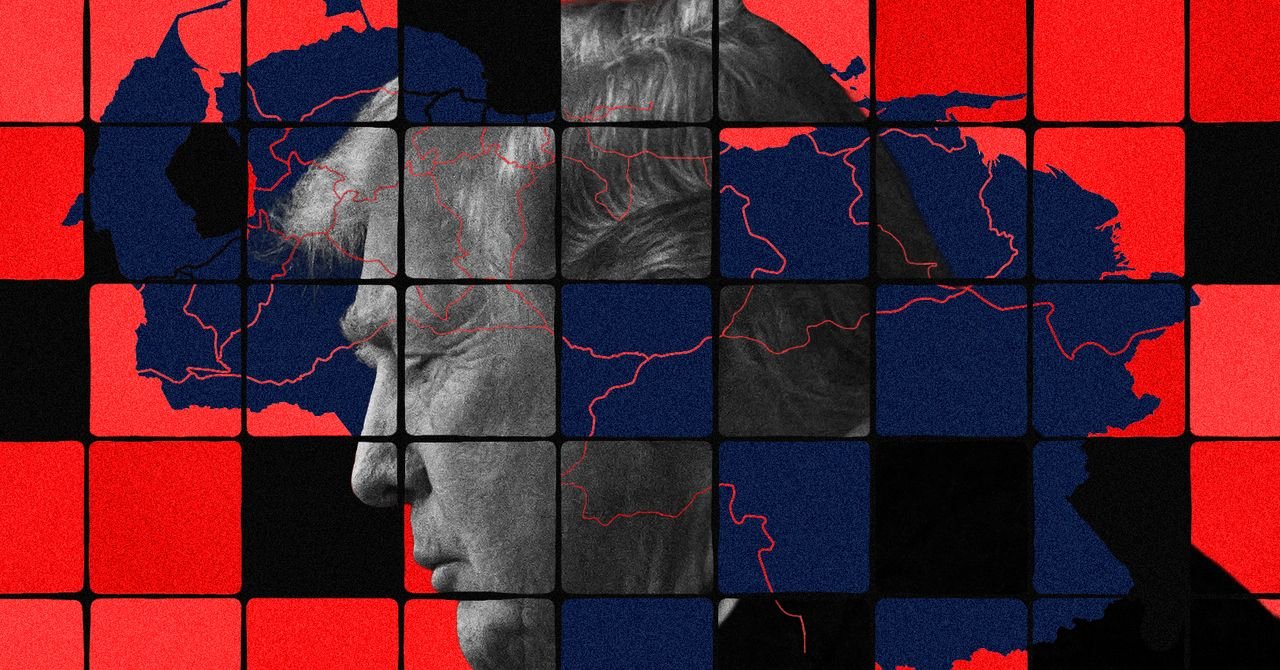


Trump’s Venezuelan Gambit: A Familiar Script with a Modern Twist
Donald Trump’s recent actions in Venezuela, culminating in the dramatic seizure of leader Nicolás Maduro, represent more than just a contemporary geopolitical maneuver. They are a stark, unsettling echo of a century of U.S. interventionism in Latin America. While many predecessors have looked south with an eye for influence and profit, Trump’s particular brand of imperial ambition feels both deeply atavistic and uniquely ‘Trumpian’ – a dangerous cocktail that shows no signs of dissipating.
Within hours of the U.S. military’s audacious operation, Trump’s initial rhetoric, which vaguely referenced democracy and anti-narcotics efforts, swiftly pivoted. The true prize, it became clear, was Venezuela’s vast oil reserves. “We’re in charge,” Trump declared to reporters. “We’re going to run everything. We’re going to run it—fix it.” Even before Maduro faced a New York City courtroom, Trump was already christening his strategy the “Donroe Doctrine,” openly threatening other nations from Colombia to Greenland. This unilateral action, seemingly undertaken without congressional consultation, raises serious questions about its legality under both international and U.S. law.
While the immediate shock of Saturday morning’s events might suggest a perilous new chapter in Trump’s authoritarian tenure, understanding the historical context – particularly the U.S.’s long engagement with the region and Trump’s own seemingly anachronistic worldview – reveals a disturbing continuity. This moment, despite its dramatic flair, is surprisingly predictable, rooted in principles that define America’s past interventions.
Principle One: The Paradox of Power – Good at Coups, Bad at What Follows
For over a century, U.S. meddling in Latin America has been characterized by a peculiar duality: short-term tactical military success often leading to long-term strategic failure. This pattern, deeply ingrained in America’s political DNA, is vividly illustrated through historical examples.
Guatemala’s Bitter Harvest: The United Fruit Company and the CIA’s Early Days
Consider the early 1950s, when the powerful United Fruit Company, fearing land reforms proposed by Guatemala’s democratically elected President Jacobo Árbenz, successfully lobbied the Truman and Eisenhower administrations. Their argument? Árbenz might embrace communism. The CIA, a relatively nascent agency, was tasked with orchestrating a coup. While new to Central American interventions, the U.S. itself was not; it had previously occupied Nicaragua, Haiti, and Cuba to protect American interests, particularly sugar plantations.
E. Howard Hunt, a figure later infamous for his role in Watergate, was instrumental in laying the groundwork for Árbenz’s overthrow. Though a middling spy, Hunt’s career soared after he helped orchestrate what he later described as a “terror campaign to terrify Arbenz particularly, to terrify his troops.” This operation proved to be one of the CIA’s few successful coups of the 1950s, solidifying Hunt’s reputation.
The Bay of Pigs Debacle: A Blueprint for Failure
Hunt’s perceived success made him a natural choice for the agency’s next major undertaking: the Bay of Pigs invasion aimed at overthrowing Fidel Castro’s regime in Cuba. A crucial departure from previous interventions was the reliance not on U.S. Marines, but on an army of Cuban exiles. Hunt was tasked with forming a provisional, U.S.-friendly government to take over once the CIA-trained invasion force succeeded.
However, just weeks into John F. Kennedy’s presidency, the invasion failed spectacularly. Over a hundred ‘freedom fighters’ perished on the beaches when promised U.S. air support never materialized, and within days, 1,200 were captured, leading to hundreds of executions. The debacle was a profound embarrassment for the young Kennedy administration. Yet, despite this monumental failure, the CIA’s appetite for regime change and intervention in the region remained undiminished, setting a dangerous precedent for future engagements that prioritized immediate tactical gains over long-term stability and ethical considerations.
For more details, visit our website.
Source: Link