
Venezuela’s Political Upheaval: Why Global Oil Markets Are Holding Steady
The dramatic overnight events in Venezuela, culminating in the capture of President Nicolás Maduro and his wife, represent a seismic shift in the nation’s political landscape. Yet, for the global energy markets, the immediate tremors appear surprisingly muted. Despite Venezuela boasting the world’s largest proven oil reserves, analysts suggest that the overthrow is unlikely to send shockwaves through crude prices in the near term.
Immediate Market Reaction: A Muted Response
While the scale of the U.S.-backed operation was unexpected, market observers had already largely factored in potential conflict in Venezuela, mitigating the surprise factor for oil exports. Arne Lohmann Rasmussen, chief analyst and head of research at A/S Global Risk Management, noted that markets had “already priced in a conflict with Venezuela that would disrupt oil exports.”
Experts predict only a modest uptick, if any, in Brent crude prices. Rasmussen estimated a rise of just $1 to $2, or even less, when futures trading resumes. He even projected Brent to edge lower next week than its Friday close of $60.75. The paradox is clear: “Despite this being a huge geopolitical event that you would normally expect to be positive or push up oil prices,” Rasmussen explained, “the bottom line is there’s still too much oil in the market, and that’s why oil prices will not go ballistic.”
Why the Calm? Venezuela’s Current Production & Global Oversupply
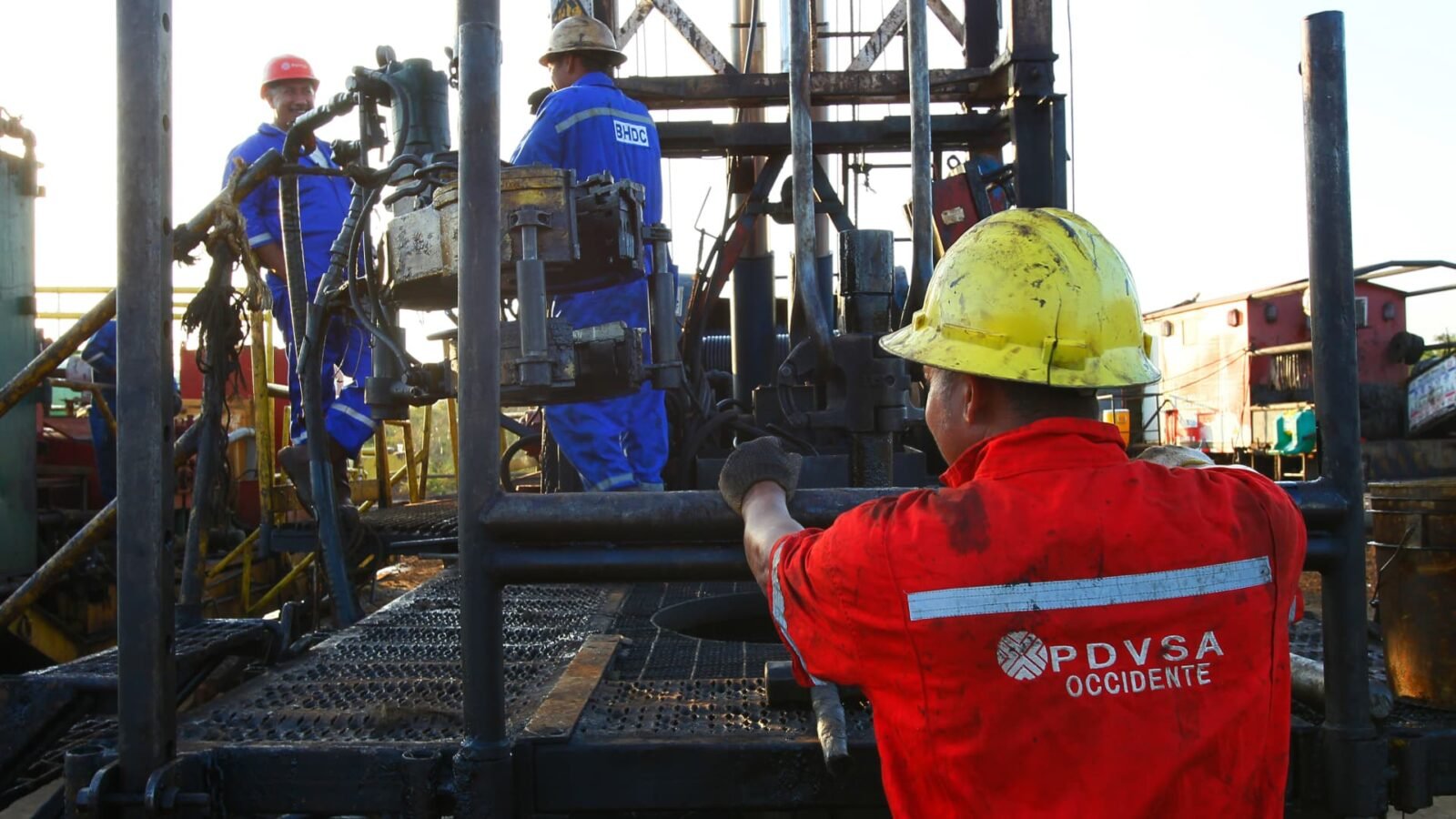
The primary reason for the market’s composure lies in Venezuela’s significantly diminished oil output. A founding member of OPEC, the South American nation currently produces a mere 800,000 barrels of oil per day – less than 1% of global production. Of this, only about 500,000 barrels are exported. This low volume means even a complete disruption would have a limited impact on the vast global supply.
Adding to this, the global oil market is currently in a state of oversupply, a pattern often observed in the first quarter of the year, coupled with relatively weak demand. This surplus has been exacerbated by OPEC+ ramping up production after years of cuts, alongside record-breaking U.S. output exceeding 13.8 million barrels per day. The market saw its biggest annual decline in five years in 2025, with Brent crude falling 19% and U.S. crude nearly 20%.
The Long View: Potential for a Bearish Future?
Paradoxically, the regime change could even lead to a bearish outlook for oil prices in the medium to long term. Analysts suggest that a new Venezuelan government, potentially leading to the lifting of sanctions and the return of foreign investors, could dramatically boost the nation’s oil production. Saul Kavonic, head of energy research at MST Financial, estimated exports could soar to 3 million barrels in the medium term under such conditions.
“If anything, the future of Venezuela will have a bearish impact on the market, because there’s really nowhere to go but up,” stated energy industry consultant David Goldwyn, a former top State Department energy official. President Trump affirmed that the embargo on Venezuelan oil remains in effect for now, but also spoke of U.S. oil companies investing billions to rebuild the sector, though details remain scarce.
Challenges for Rebuilding and Reinvestment
Despite the tantalizing prospect of accessing the world’s largest oil reserves, the path to significant foreign investment in Venezuela is fraught with challenges. David Goldwyn highlighted the inherent difficulties of government transitions, citing lessons from Iraq and Afghanistan. “No company is going to want to commit to invest billions of dollars for a long-term operation until they know what the terms are,” he explained, emphasizing the need for governmental stability and clear operational frameworks.
Historical grievances also loom large. Companies like Exxon Mobil are still awaiting repayment of debts from Venezuela’s national oil company, Petróleos de Venezuela S.A. (PDVSA). Bob McNally of Rapidan Energy reminded clients that foreign oil producers were infamously “kicked out of Venezuela in the early 2000s” when assets were expropriated. While the allure of vast reserves is undeniable if sanctions are lifted, rebuilding the sector would require decades of investment and billions of dollars.
A Question of Global Demand
Ultimately, the decision for U.S. oil companies to commit to such a massive undertaking hinges on a fundamental question: “Does the world need that much oil?” McNally posed. Until late last year, market consensus suggested that global oil demand growth was set to plateau. The long-term viability of massive new investments in Venezuelan oil will depend not just on political stability and favorable terms, but also on the evolving global energy landscape and future demand projections.
For more details, visit our website.
Source: Link