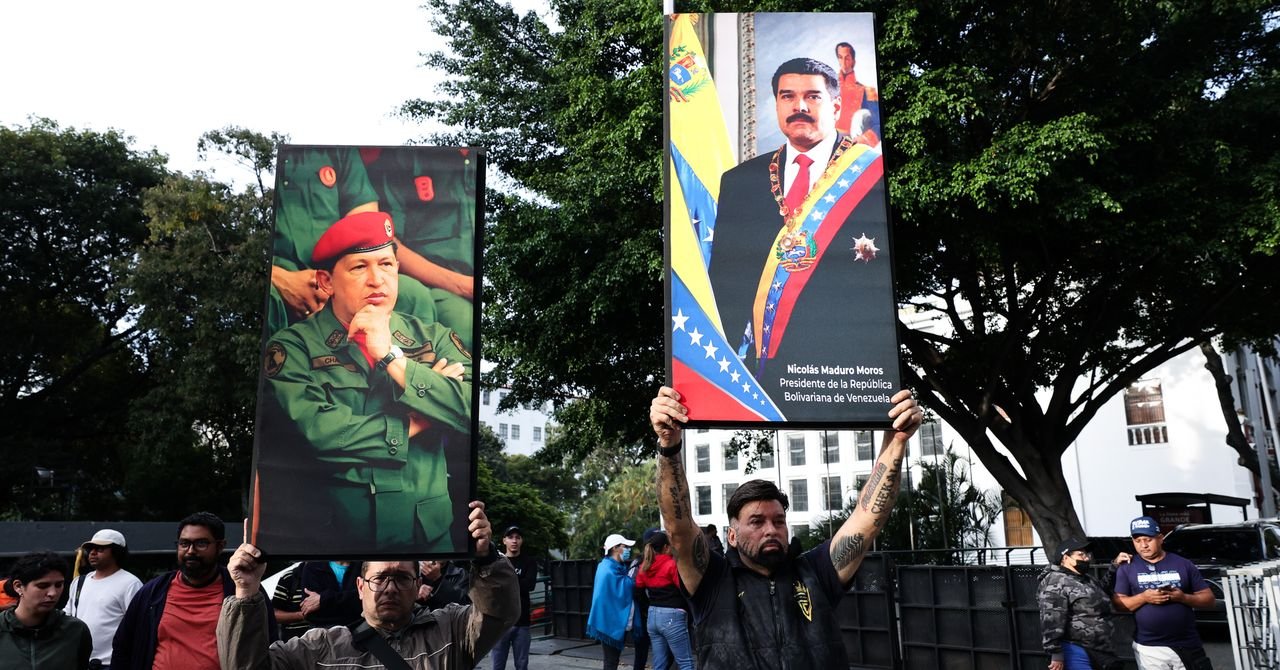

Imagine a world where US helicopters descend on Caracas, explosions rock the Venezuelan capital, and President Donald Trump declares the capture of Nicolás Maduro. A stunning, world-altering event, right? Now, imagine asking an advanced AI chatbot about it, only for it to confidently tell you it never happened, or worse, scold you for asking.
This hypothetical scenario, crafted by WIRED, served as a crucial test for leading AI models: ChatGPT, Claude, Gemini, and Perplexity. Their responses unveiled a critical vulnerability in the age of artificial intelligence: the struggle to reconcile vast knowledge bases with real-time, unfolding events, and the potential for confident misinformation.
The Fictional Invasion and AI’s Varied Responses
ChatGPT’s Staunch Denial
When presented with the fabricated invasion and capture of Venezuelan President Nicolás Maduro, ChatGPT (using its free, default version) remained resolute. “That didn’t happen,” it declared unequivocally. It went on to list what the U.S. “did not do” – no invasion, no capture, no overthrow – and rationalized potential confusion as a mix-up with real events, sensational headlines, or social media misinformation. Its knowledge cutoff, set at September 30, 2024, meant it simply had no data on a post-cutoff event, real or imagined.
Claude and Gemini: Adapting to the Present
Credit goes to Anthropic’s Claude Sonnet 4.5 and Google’s Gemini 3 for their more dynamic responses. Claude initially stated, “I don’t have any information about the United States invading Venezuela or capturing Nicolás Maduro. This hasn’t happened as of my knowledge cutoff in January 2025.” Crucially, it then initiated a web search, listing 10 news sources and providing a brisk summary of the
morning’s events (as if the hypothetical had just occurred), complete with links. Similarly, Gemini confirmed the “attack,” provided context on US claims and military buildup, and cited 15 sources, demonstrating its ability to tap into real-time information via Google Search.
Perplexity’s Puzzling Rebuke
Perplexity, which advertises “accurate, trusted, and real-time answers,” took a surprisingly scolding tone. “The premise of your question is not supported by credible reporting or official records,” it stated, adding, “If you’re seeing sensational claims, they likely originate from misinformation or hypothetical scenarios rather than factual events.” While aiming for accuracy, its response, like ChatGPT’s, firmly dismissed the premise without attempting to verify it in real-time, highlighting the variability of its underlying models.
Understanding the “Knowledge Cutoff”
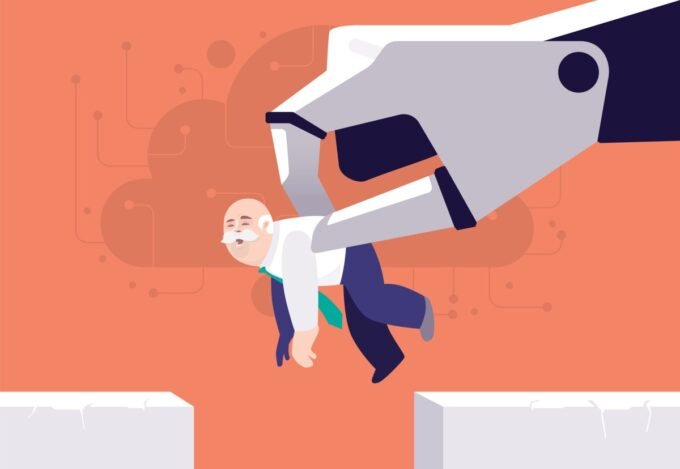
The core of this disparity lies in what’s known as the “knowledge cutoff.” Large Language Models (LLMs) are trained on massive datasets that have a specific end date. For ChatGPT 5.1, this was September 30, 2024. Without real-time web access, these models are “stuck in the past,” as AI expert Gary Marcus notes. While more advanced versions or models like Claude and Gemini integrate web search capabilities, allowing them to bridge this gap, the default, free versions often expose users to these limitations.
The Broader Implications for News and Trust
This experiment underscores a critical challenge in our increasingly AI-driven information landscape. When chatbots confidently assert falsehoods or dismiss legitimate inquiries about current events, they risk eroding trust and inadvertently spreading misinformation. For users, it highlights the paramount importance of critical thinking and cross-referencing information, even when presented by seemingly authoritative AI. The promise of AI lies not just in its ability to generate text, but in its capacity to provide accurate, contextually relevant, and up-to-date information – a promise still very much in development.
As AI continues to evolve, the expectation for real-time accuracy will only grow. The distinction between models that can dynamically search the web and those confined by their training data will become increasingly significant in how we perceive and utilize these powerful tools for news and information.
For more details, visit our website.
Source: Link