




The Solar System: A Comprehensive Guide
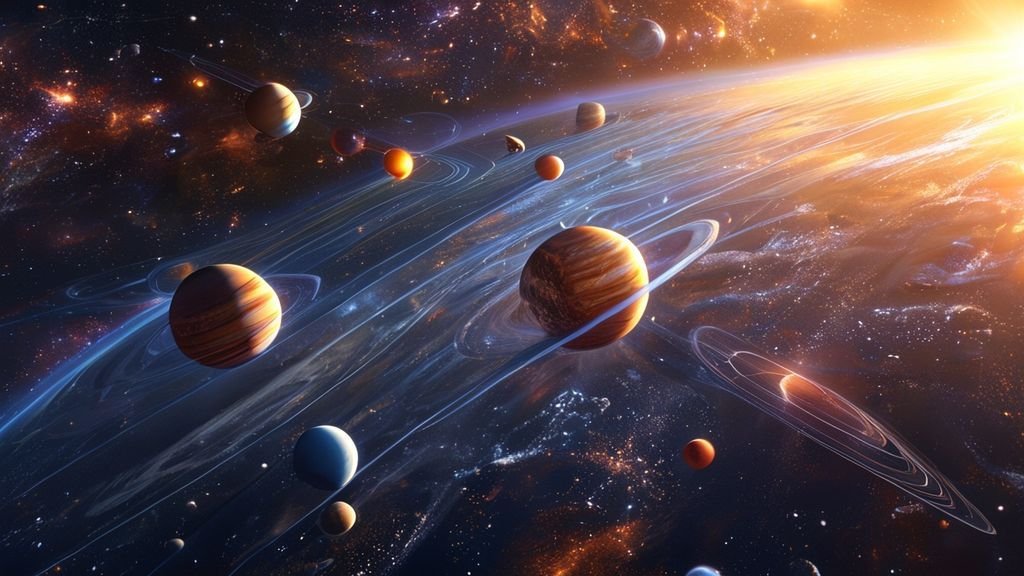
The solar system is a vast and complex celestial neighborhood consisting of eight planets, dwarf planets, asteroids, comets, and other smaller bodies that orbit around the sun. In this article, we will delve into the structure and composition of our solar system, exploring the unique characteristics of each planet and their relative positions.
Planets in Our Solar System
The Inner Planets
The inner planets, also known as the terrestrial planets, are Mercury, Venus, Earth, and Mars. These planets are small, rocky, and have relatively close orbits to the sun.
The Outer Planets
The outer planets, also known as the gas giants, are Jupiter, Saturn, Uranus, and Neptune. These planets are massive, gaseous, and have distant orbits from the sun.
The Sun: The Center of Our Solar System
The sun is the star at the center of our solar system, accounting for 99.8% of the total mass. It is a massive ball of hot, glowing gas that generates energy through nuclear reactions in its core.
The Dwarf Planets and Other Small Bodies
The solar system also includes dwarf planets, asteroids, comets, and other smaller bodies that orbit around the sun. Dwarf planets are objects that are large enough to be rounded by their own gravity but have not cleared their orbits of other objects.
Exploring the Solar System
The exploration of the solar system has been a significant focus of space agencies and scientists for decades. From the early space missions to the latest robotic explorers, we have gained a deeper understanding of the solar system and its many mysteries.
Conclusion
The solar system is a vast and complex celestial neighborhood that continues to fascinate and inspire us. From the inner planets to the outer planets and the sun, each component plays a crucial role in the delicate balance of our solar system.







Comments are closed.