
As the new year unfolds, our celestial companion, the Moon, continues its timeless dance across the night sky. For those gazing skyward on January 4th, a significant phase of this cosmic ballet is underway, marking a gradual transition from the brilliance of the recent Full Moon towards the elusive New Moon.
Tonight’s Lunar Glimpse: The Waning Gibbous
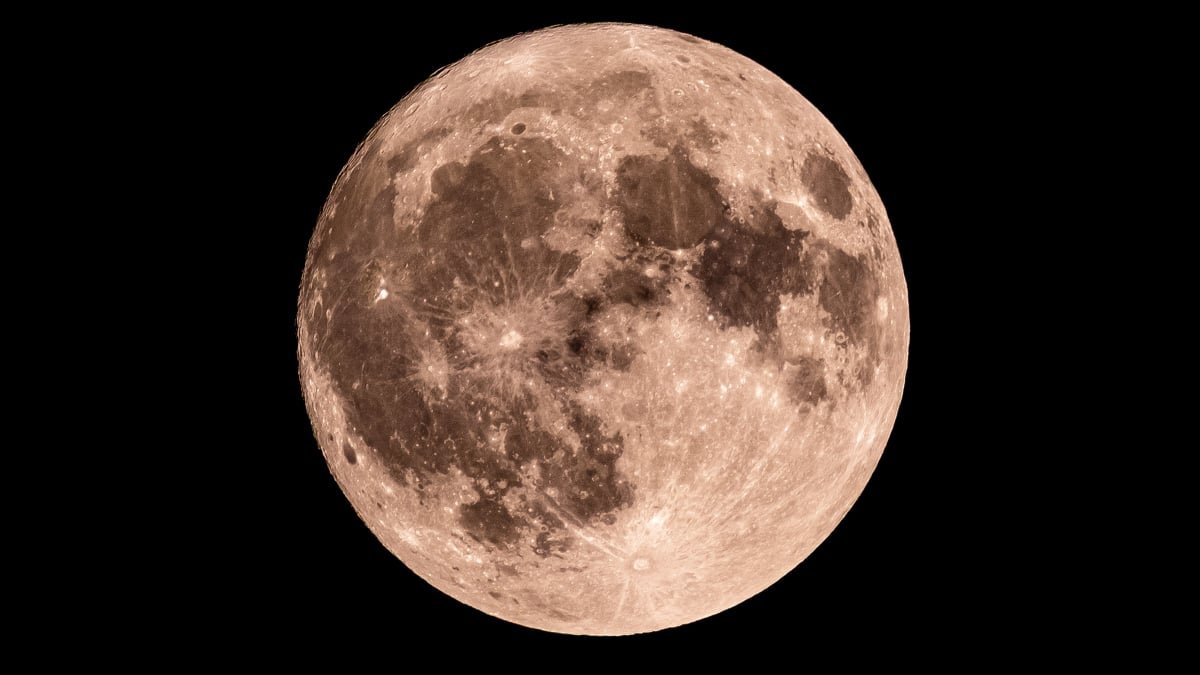
On Sunday, January 4th, observers will be treated to the captivating spectacle of a Waning Gibbous moon. Having recently passed its full illumination, the Moon is now progressively shrinking in its visible light. According to astronomical data from The Sky Live, a remarkable 98.6% of the lunar surface will still be illuminated tonight, offering a nearly full, yet subtly diminishing, presence in the heavens. This phase signifies the beginning of the Moon’s journey back to invisibility, as it loses light from its right side (for those in the Northern Hemisphere).
Anticipating the Next Full Moon
While the Moon currently wanes, the cycle is ever-present. Mark your calendars: the next magnificent Full Moon is slated to grace our skies on February 1st, promising another breathtaking display of lunar grandeur.
Understanding the Moon’s Ever-Changing Faces: The Lunar Cycle
The Moon’s appearance is a dynamic spectacle, constantly shifting through a series of distinct phases. This celestial transformation is governed by what NASA describes as the lunar cycle, a journey that spans approximately 29.5 days. As the Moon meticulously orbits our Earth, its position relative to the Sun and our planet dictates how much of its sunlit surface we can observe. While the same side of the Moon perpetually faces Earth, the angle at which sunlight strikes it changes, leading to the familiar progression from a fully lit orb to a mere sliver, and even complete invisibility.
The Eight Principal Phases of the Moon
The lunar cycle is traditionally divided into eight primary phases, each offering a unique visual experience:
- New Moon: This marks the beginning of the cycle. The Moon is positioned directly between the Earth and the Sun, rendering the side facing us completely dark and thus invisible to the naked eye.
- Waxing Crescent: Following the New Moon, a delicate sliver of light emerges on the right-hand side of the Moon (in the Northern Hemisphere), gradually growing larger each night.
- First Quarter: At this stage, exactly half of the Moon’s face is illuminated on the right side, appearing as a perfect “half-moon.”
- Waxing Gibbous: More than half of the Moon is now lit, continuing to expand towards full illumination, though not yet entirely round.
- Full Moon: The zenith of the lunar cycle, where the entire face of the Moon is fully illuminated by the Sun, presenting a brilliant, complete disc in the night sky.
- Waning Gibbous: Immediately after the Full Moon, the illumination begins to recede. The Moon starts to lose light from its right side (Northern Hemisphere), gradually decreasing in size. This is the phase we observe on January 4th.
- Third Quarter (or Last Quarter): Similar to the First Quarter, but now the left half of the Moon is illuminated, again appearing as a “half-moon.”
- Waning Crescent: The final visible phase before the New Moon, characterized by a thin crescent of light remaining on the left side, steadily diminishing until it disappears entirely.
Understanding these phases not only enhances our appreciation for the night sky but also connects us to the ancient rhythms that have guided human observation for millennia.
For more details, visit our website.
Source: Link