
In the high-octane world of prediction markets, a recent event has ignited a fiery debate over ethics, transparency, and the very definition of “insider trading.” Just hours before a dramatic U.S. military operation led to the capture of Venezuelan President Nicolás Maduro, an anonymous account on Polymarket placed a series of remarkably prescient wagers, turning a modest investment into a staggering fortune.
The Uncanny Wager: A Fortune Forged in Foresight?
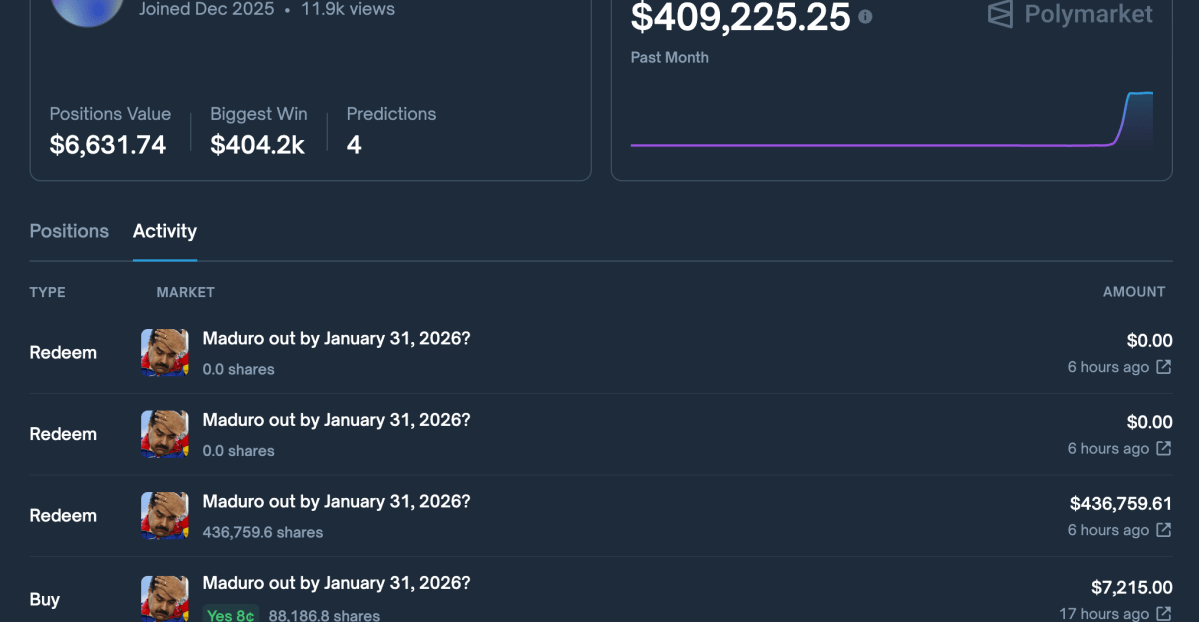
The timeline of events reads like a thriller. On January 3, 2026, as the world watched the unfolding geopolitical drama in Venezuela, a newly established account on the popular prediction platform, Polymarket, executed a series of investments that would soon yield extraordinary returns. The market had been actively trading on the likelihood of Maduro’s removal from power, with odds for “out by January 31, 2026” hovering at a mere $0.07 late on Friday evening.
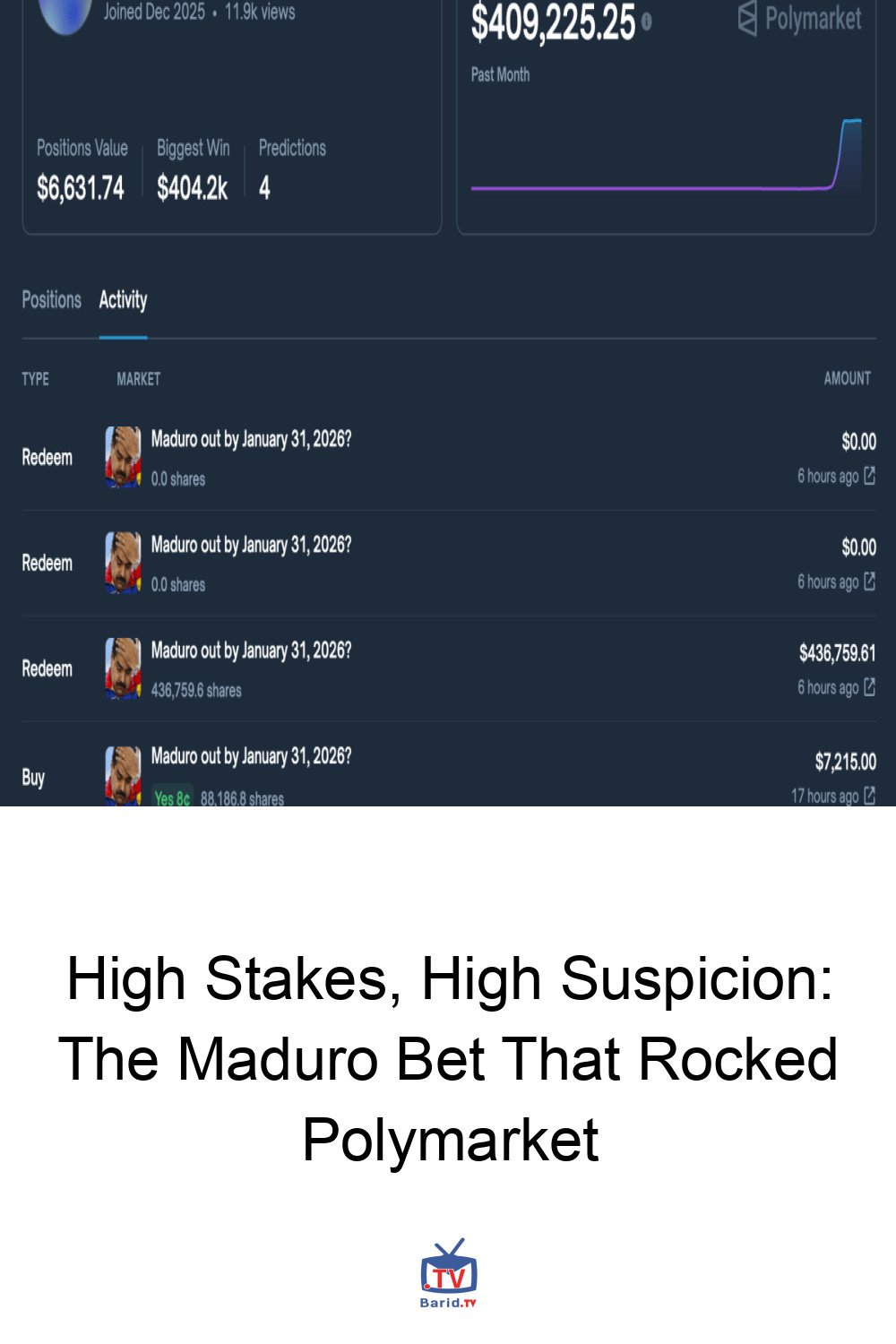
Yet, within a critical 24-hour window preceding the military intervention, this fresh account — created less than a week prior — poured over $30,000 into these low-priced contracts. The outcome? A spectacular profit exceeding $408,000, raising immediate red flags across social media and financial circles. The sheer timing and magnitude of the investment led many to speculate about the possibility of insider information, with some even suggesting a connection to the Pentagon.
Prediction Markets and the Insider Trading Conundrum
The incident quickly drew the attention of prominent figures like investor and podcaster Joe Pompliano, who pointed out on X (formerly Twitter) a crucial distinction: “Insider trading is not only allowed on prediction markets; it’s encouraged.” This statement encapsulates a fundamental philosophical divergence within the prediction market industry.
Unlike traditional financial markets, where insider trading is a serious criminal offense designed to ensure a level playing field for all investors, many prediction market platforms operate under a different ethos. Their perceived value often lies not in creating equitable investment opportunities, but in aggregating information and providing unique insights into future events. From this perspective, individuals with superior information, whether through diligent research or privileged access, are seen as contributing to the market’s efficiency and predictive power.
Industry Stance and the Quest for Integrity
While some platforms embrace this approach, others grapple with the ethical implications. Past instances of seemingly obvious insider trading have often been met with little intervention from the companies themselves. However, this isn’t a universal stance. When approached for comment, Kalshi, another prominent prediction market, referenced an X post indicating that such insider trading was, in fact, against its rules. Polymarket, the platform at the center of this particular controversy, has yet to issue a public response to inquiries.
The Maduro bet serves as a stark reminder of the unique regulatory and ethical landscape surrounding prediction markets. As these platforms grow in popularity and influence, the question of how to balance the pursuit of predictive accuracy with principles of fairness and transparency will undoubtedly become increasingly central to their future development and public perception.
For more details, visit our website.
Source: Link