
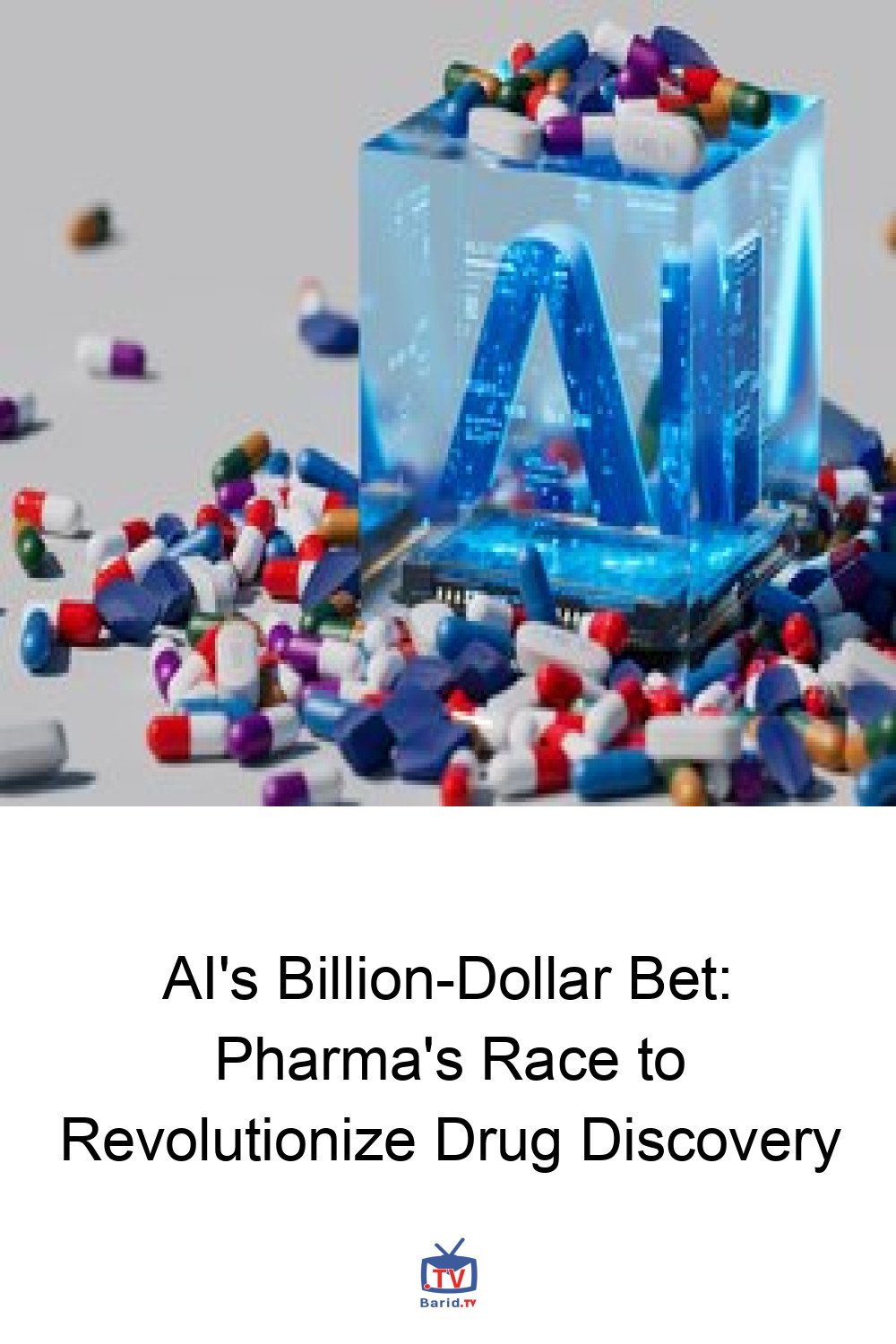
For years, the pharmaceutical industry has poured billions into artificial intelligence, a monumental gamble on the promise of accelerated drug discovery. While a market-ready, AI-developed drug has remained elusive, the tide is rapidly turning. Optimism is soaring as industry giants, nimble startups, and even tech visionaries like Sam Altman intensify their commitment, signaling that the long-awaited payoff may be closer than ever.
The Dawn of an AI-Powered Pipeline
The pharmaceutical landscape is on the brink of a paradigm shift, with AI poised to redefine the very essence of drug research and development. The first tangible proof of this revolution is Insilico Medicine’s Rentosertib, a drug discovered and designed using artificial intelligence. This groundbreaking compound is anticipated to enter Phase 3 clinical trials within the next 18 months – a crucial final stage before seeking FDA approval – and it’s set to achieve this milestone in record time.
This acceleration is not an isolated incident but a harbinger of a new era. The coming year is expected to witness an unprecedented surge in AI investments, strategic deals, and collaborative partnerships across Big Pharma, venture capital, and biotech startups. Even OpenAI CEO Sam Altman is personally channeling over $100 million into AI-driven drug discovery ventures, underscoring the profound belief in this technology’s transformative potential.
From Skepticism to Strategic Imperative
The initial skepticism that once shadowed AI’s capacity to significantly impact drug R&D is rapidly fading. Samuel Scarpino, director of AI + life sciences at Northeastern University and an advisor to numerous biotech startups, observes, “We are really seeing AI being used across the board now. I don’t think we can point to a clear winner yet… but it is definitely producing a lot of value.” This sentiment reflects a broader industry consensus: AI is no longer a futuristic concept but a vital tool delivering tangible results.
The financial projections reinforce this conviction. Precedence Research estimates that global investment in AI for the drug industry will skyrocket from an anticipated $2.51 billion in 2026 to a staggering $16.49 billion by 2034, illustrating a robust long-term commitment.
Industry Leaders Embrace the AI Factory
Among the vanguard of AI adoption, pharmaceutical behemoth Eli Lilly stands out. In a landmark move last October, Lilly announced a strategic partnership with Nvidia to construct a formidable ‘AI factory.’ This supercomputer, powered by over 1,000 high-performance chips, is designed to accelerate the discovery and rigorous testing of millions of potential new medicines.
Further solidifying its AI strategy, Lilly recently inked a deal with Insilico Medicine, potentially valued at $100 million. This collaboration leverages Insilico’s cutting-edge AI platform to jointly identify and develop novel therapies. Diogo Rau, Eli Lilly’s executive vice president and chief information and digital officer, emphasizes the company’s pervasive integration of AI, stating, “I don’t believe any other company in our industry is doing what we do at this scale.” While acknowledging the persistent “hype,” Rau confidently predicts an AI-discovered drug could hit the market by 2030, noting that “AI is doing very, very well at discovering new molecules” suitable for drug development.
Rentosertib: A Breakthrough in Blistering Time
The typical journey of a new drug from concept to market is a grueling 10 to 15 years, often costing upwards of $2 billion. Reaching human trials alone can consume a minimum of 4 to 5 years, with a disheartening nine out of ten candidates failing to progress beyond this initial stage. This stark reality underscores the immense significance of Insilico’s Rentosertib.
Developed by Boston and Hong Kong-based Insilico, founded in 2014 by Alex Zhavoronkov to leverage an AI platform designed to reduce animal testing, Rentosertib entered human trials in less than two years – an astonishing pace for the industry. This first-in-class drug candidate targets idiopathic pulmonary fibrosis, a chronic and fatal lung disease for which there is currently no cure, claiming approximately 40,000 lives annually in the United States.
In June, the company reported promising Phase II study results, showing improved lung function with minimal side effects in 71 patients. This success paves the way for a larger Phase III trial. Northeastern’s Scarpino remarks, “The typical time frame for drug development has been dramatically shortened. This could be a game changer,” even as the drug still faces potential hurdles.
The Investment Frenzy and Future Outlook
Venture capital firms are unequivocally betting on AI’s transformative power. A November Pitchbook report revealed that VCs injected a substantial $2.7 billion into AI drug development firms through the first three quarters of 2025. This surge occurred even as overall investment in biotech startups experienced a slowdown, highlighting the “frenzied AI investment environment and investor conviction in the ability of AI integration to drive greater R&D efficiency,” as noted by PitchBook.
While rudimentary forms of AI have been utilized in drug research for decades, the current wave of excitement was ignited by the 2020 introduction of AlphaFold2. Developed by Google DeepMind and Isomorphic Labs, this revolutionary AI system enabled the prediction of the three-dimensional structures of some 200 million biological molecules, earning its creators the Nobel Prize in Chemistry in 2024. Its widespread adoption by over 2 million people across 190 countries speaks volumes about its impact.
Eli Lilly’s Diogo Rau offers a pragmatic view, cautioning that AI is far from replacing human researchers but will fundamentally reshape their roles. Its application in human trials also remains limited. However, the undeniable acceleration and efficiency gains position AI as an indispensable partner in the quest for future medical breakthroughs.
For more details, visit our website.
Source: Link