
BYD Dethrones Tesla: A Seismic Shift in the Global EV Landscape
The electric vehicle (EV) market has witnessed a monumental changing of the guard, as Chinese automotive giant BYD officially surpassed Tesla to claim the coveted title of the world’s largest EV manufacturer. This isn’t merely a minor adjustment in market share; it signifies a profound reordering of the global automotive hierarchy, underscored by Tesla’s second consecutive year of sales decline.
Tesla’s Crown Slips: A Year of Unfulfilled Promises
For years, Tesla, under the charismatic leadership of Elon Musk, has been synonymous with electric innovation. However, 2025 proved to be a challenging year, culminating in a significant downturn. While BYD’s EV sales surged by 28 percent to an impressive 2.25 million units globally, Tesla reported a delivery of 1.64 million vehicles. This stark contrast represents a 16 percent year-over-year decline for Tesla in the fourth quarter alone, painting a clear picture of a brand struggling to maintain its momentum.
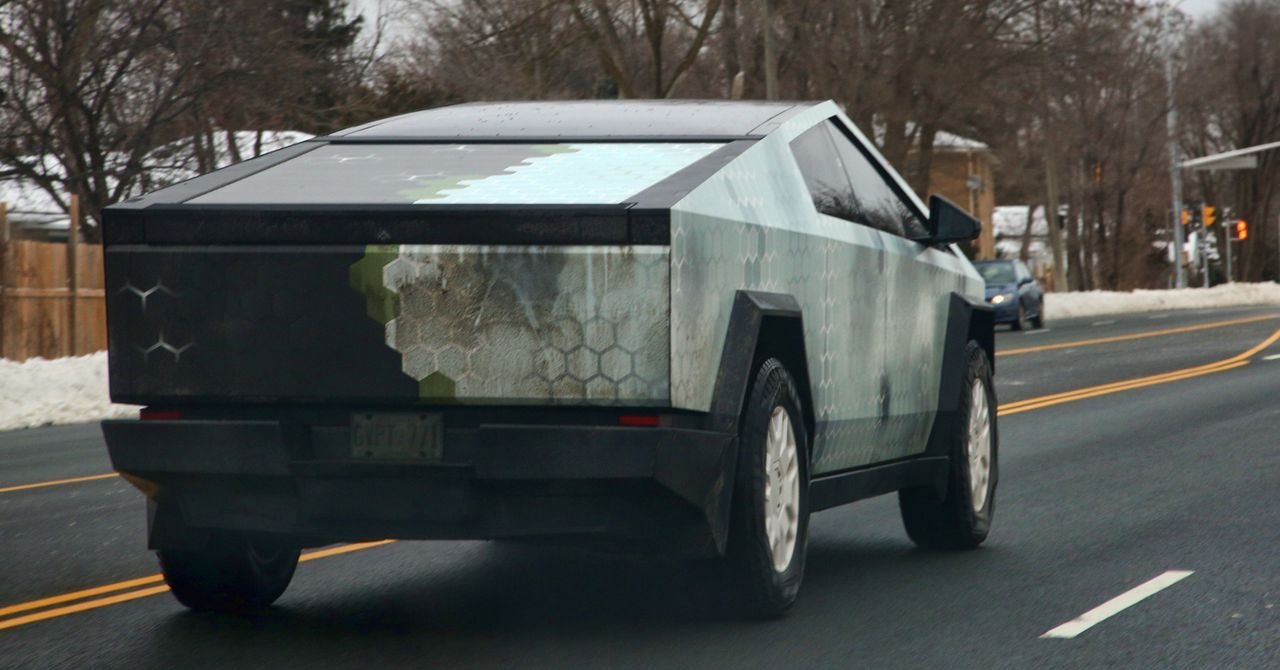
The signs of trouble were not new. BYD had already outpaced Tesla in European sales on multiple occasions throughout 2025, foreshadowing the global shift. Domestically, Tesla’s struggles were compounded by a series of missteps. The much-anticipated refresh of the high-selling Model Y, a critical vehicle for the company’s financial health, was met with a lukewarm reception and failed to invigorate sales. The Cybertruck, another highly publicized venture, also faced significant hurdles. March saw a recall that inadvertently revealed fewer than 50,000 units had been sold since deliveries began 14 months prior—a far cry from Musk’s ambitious projection of 250,000 Cybertrucks annually.
Beyond the Showroom: Political Maneuvers and Internal Support
As sales faltered in the US and plummeted in Europe, reports emerged of Elon Musk seeking political intervention. A notable instance involved former US President Donald Trump transforming the White House South Lawn into a makeshift Tesla showroom, even claiming an intention to purchase a Model S Plaid. However, this political alignment proved fleeting, with reports surfacing of Trump potentially selling the car after a public disagreement with Musk.
Further questions arose last month when EV news site Electrek reported that Musk’s aerospace company, SpaceX, had allegedly purchased tens of millions of dollars worth of Cybertrucks that Tesla was struggling to sell. If accurate, this internal transaction would have provided a significant, albeit artificial, boost to Tesla’s fourth-quarter financial performance, offering a temporary reprieve after the US ended its EV tax credits at the close of the third quarter.
Expert Perspective: Market Maturity and Product Stagnation
Industry veterans are weighing in on Tesla’s predicament. Andy Palmer, former COO of Nissan and ex-CEO of Aston Martin Lagonda, observes, “Tesla still has formidable assets, brand recognition, manufacturing know-how, and a strong installed base. The challenge is that the market has matured while the product line has not moved fast enough. People are struggling to justify spending on a Tesla when other brands, including those from China, are delivering more innovative and advanced products.” This sentiment highlights a critical point: the EV landscape is no longer a nascent market dominated by a single innovator, but a fiercely competitive arena demanding constant evolution.
Musk’s Future Vision: Robotaxis and Optimus – A Distant Reality?
In response to the automotive challenges, Musk has recently articulated a strategy that seemingly pivots away from traditional EV sales, instead banking on robotaxis and the mass production of Optimus humanoid robots to secure Tesla’s future and, incidentally, a proposed $1 trillion pay package for himself. However, the practical realization of these ambitions remains distant. Despite promises of delivering 1 million humanoid robots within the next decade, publicly available footage still depicts these machines requiring remote operation, often with a comedic undertone.
Tesla’s autonomous driving prowess, once a cornerstone of its brand, also faces scrutiny. The limited launch of its Robotaxi service in Austin in June was reportedly rocky, and the technology appears to lag significantly behind competitors like Waymo in the emerging autonomous market. The gap between bold projections and current capabilities suggests an enormous amount of work is still required to solidify Tesla’s next incarnation.
BYD’s Relentless Ascent: Global Dominance and Innovation
Meanwhile, BYD’s rise has been nothing short of meteoric. Despite being largely blocked from the US market, its global expansion continues unabated. The company’s “new energy vehicles” (NEVs), encompassing both full EVs and plug-in hybrids, saw 4.6 million units sold in 2025, with over a million of those being exports—a staggering 145 percent year-on-year increase in passenger vehicle exports alone.
BYD’s aggressive international strategy includes significant inroads into Latin America, Southeast Asia, and Europe, often navigating complex tariff landscapes. Its entry into the UK market has been particularly successful, with sales surging by 880 percent (albeit from a lower base), making the UK its largest market outside China.
The Shenzhen-based automaker isn’t just focused on volume; it’s also pushing the boundaries of performance. A powerful statement of intent came in September when BYD’s limited-production Yangwang U9 Xtreme, a 3,000-horsepower electric hypercar, achieved a record-breaking top speed of 308.4 mph at Germany’s Papenburg test track. This feat cemented its status as the world’s fastest production car, regardless of powertrain.
The Road Ahead: Challenges and Divergent Paths
While BYD celebrates its triumph, the path ahead isn’t entirely smooth. Its 2025 sales figures, though impressive, actually represent the weakest growth in five years, signaling increasingly fierce domestic competition. Nevertheless, BYD is doubling down on expansion and innovation, with multiple new EV launches across various categories and price points anticipated for 2026.
In stark contrast, Tesla’s new offerings for 2026 are reportedly limited to the Cybercab and a new semitruck, assuming they arrive on schedule. This divergence in product pipeline, coupled with Musk’s pivot away from core automotive development, increasingly suggests that Tesla is evolving into something far removed from a traditional car company. The EV crown has been passed, and with it, perhaps, the very definition of leadership in the electric age.
For more details, visit our website.
Source: Link