
The Great American Vacation Drought: Why Workers Are Clinging to Their Desks in 2026
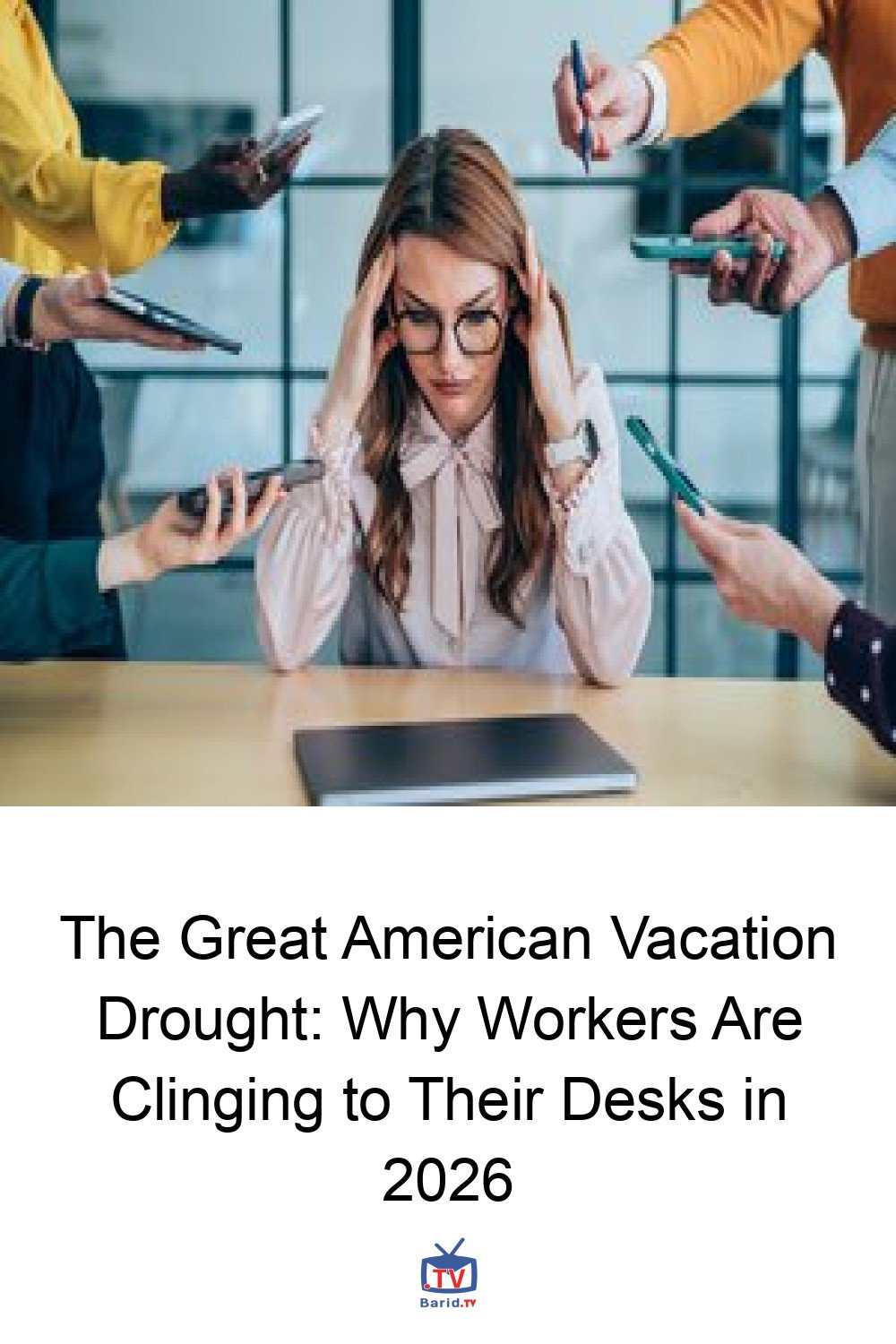
As the calendar pages turn towards 2026, a curious and concerning trend is emerging across the American professional landscape: a deepening reluctance to take earned vacation time. Despite the widely acknowledged benefits of rest and rejuvenation, U.S. career professionals appear to be doubling down on their presence in the workplace, driven by a complex web of anxieties rather than strategic ambition. The primary goal, it seems, is simply to stay put.
The Looming Shadow of Job Insecurity
A recent FlexJobs study paints a stark picture: while a significant 82% of full-time workers have paid time off, a substantial number are choosing not to use it. Heavy workloads, explicit or implicit managerial expectations, and unsupportive company cultures are cited as key deterrents. Alarmingly, 42% of respondents took merely one to ten days off, with a quarter reporting that their managers would actively discourage a full week away.
This reluctance isn’t without foundation. A Mercer survey reveals that 70% of employees are grappling with increased financial stress due to inflation and market volatility, while a sobering 56% fear for their jobs. Job security now ranks among the top three career concerns, alongside income and the ability to retire comfortably.
AI, Automation, and the Fear of Replaceability
The rise of artificial intelligence and automation technologies is adding another layer of apprehension. Kelsey Szamet, a partner at Kingsley Szamet Employment Lawyers, observes a significant shift in employee mentality. “Being an employment lawyer for employees, I am witnessing a shift in mentality as 2026 approaches,” Szamet states. “Now, many employees are concerned about the security of their jobs. The adoption of AI and automation technologies has allowed employees to actually consider their own replaceability before requesting a leave or a holiday, or any kind of time-off benefit.” The irony, as Szamet points out, is that “conversely, these employees usually need the time-off benefits the most.”
The Illusion of Indispensability: Are Workers Hurting Themselves?
This “job-hugger” mentality, characterized by constant presence, is often fueled by fear rather than a strategic career move. Shelley Smith, CEO of Premier Rapport Inc. and author of “Thirsty,” describes it as “cultural dehydration.” “Workers are operating from fear, not strategy,” Smith explains. “After 35-plus years consulting with over 50 companies, I’m seeing ‘cultural dehydration,’ where employees are so worried about appearing indispensable that they’re ironically making themselves more replaceable by burning out.”
Performance Over Presence: A Shifting Paradigm
Amy Spurling, CEO and founder of human resources technology firm Compt Workers, challenges the notion that constant presence guarantees job security. “Most layoffs aren’t driven by PTO logs but strategy, budgets, and role redundancy,” she asserts. “Any time I’ve had to do a layoff (and I hate to do it), I’ve focused on the latter. Those workers who never step away may think they’re protecting themselves, but they may be hurting their own performance, creativity, or resilience over time.” Spurling suggests that the risk of employers penalizing employees for taking time off is often overestimated, with such instances gaining disproportionate media attention.
Career confidence also plays a significant role. While many will default to presence in uncertain markets, “knowledge workers” in high-demand roles may still confidently take time off. Conversely, those in leaner organizations or more vulnerable functions are more likely to self-restrict PTO, driven by perceived risk.
Beyond the Desk: Strategic PTO and Future Planning
Intriguingly, for some, taking time off isn’t about pure relaxation but strategic career planning. Noelle Federico, CEO at Fortuna Partners, Inc., notes that forward-thinking employees might use PTO to explore “side-hustles, starting their own business, or exploring opportunities to collaborate and create new projects.” This mindset, she argues, is about preparing to pivot and seeing opportunity in adversity. “Opportunity exists in every adverse circumstance; you simply require the drive to seek it out. 2026 will be a time for innovators and people who are willing to see things in different ways,” Federico concludes.
A Call for Balance in the Modern Workplace
The real challenge isn’t employees taking their earned time off; it’s the underlying fear that prevents them from doing so, and the failure to continuously enhance their value. While tight household budgets may indeed limit expensive vacations, professionals skipping rest out of fear are making a strategic mistake unless they are actively working to become materially more valuable than they were a year ago. As 2026 approaches, fostering a culture that prioritizes both performance and well-being, rather than just presence, will be crucial for both employee resilience and organizational success.
For more details, visit our website.
Source: Link