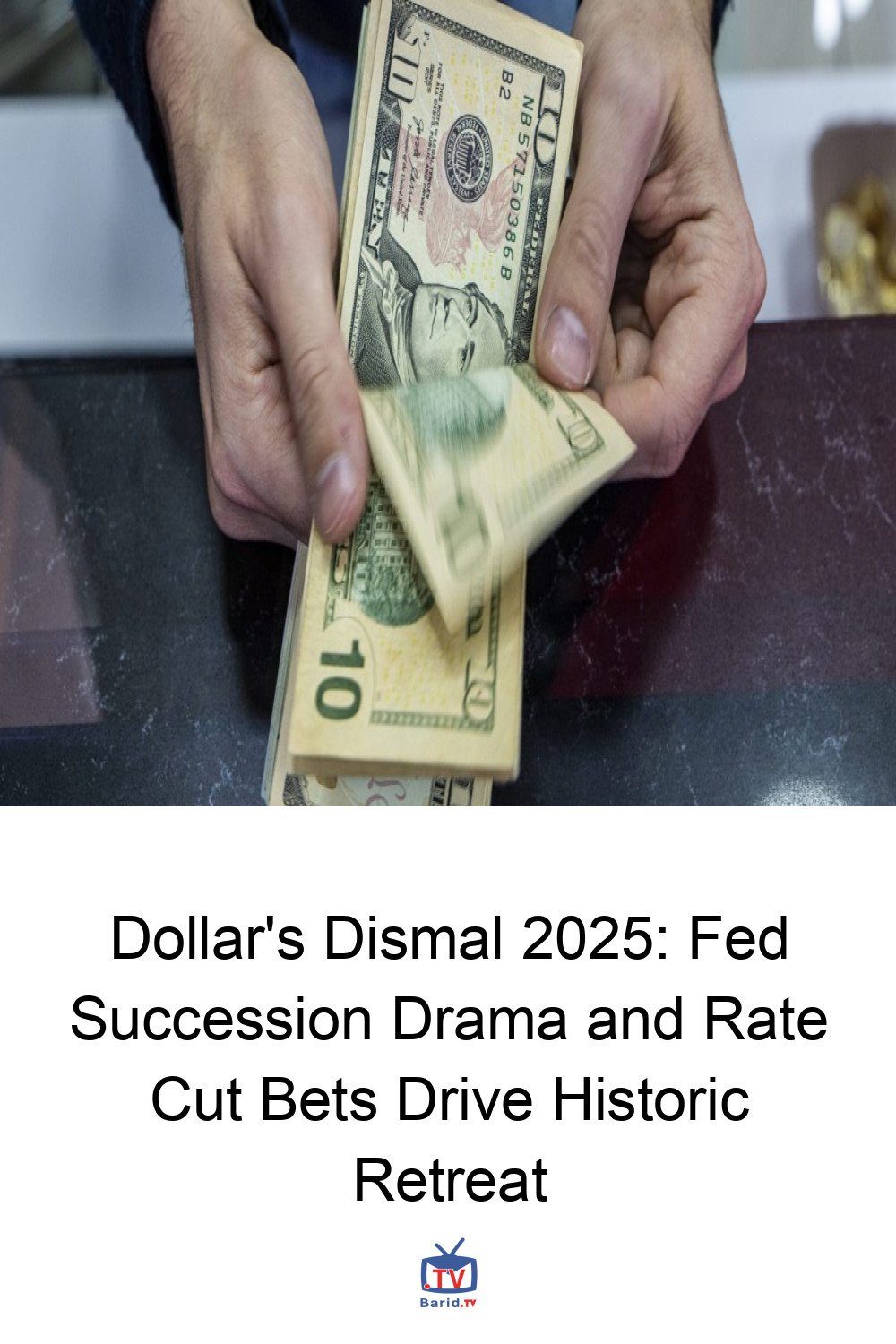
The U.S. dollar concluded 2025 with its most significant annual decline in eight years, leaving investors bracing for further depreciation. The primary catalyst? Anticipated deeper interest-rate cuts from the Federal Reserve, a policy path heavily influenced by the looming selection of its next chief.
A Year of Retreat: The Dollar’s Performance
The Bloomberg Dollar Spot Index plummeted approximately 8% over the year, fueling widespread bets on continued weakness. After an initial tumble following President Donald Trump’s tariff rollout in April, the greenback struggled to regain ground. This persistent weakness was largely underpinned by market expectations that Trump would appoint a more dovish successor to Fed Chair Jerome Powell, whose term is set to conclude next year.
The Fed’s Pivotal Role and Policy Divergence
“The biggest factor for the dollar in the first quarter will be the Fed,” noted Yusuke Miyairi, a foreign-exchange strategist at Nomura. “And it’s not just the meetings in January and March, but who will be the Fed chair after Jerome Powell ends his term.” With at least two rate reductions already priced in for the upcoming year, the Federal Reserve’s projected policy trajectory starkly diverges from that of several other developed economies, significantly diminishing the dollar’s allure. Data from the Commodity Futures Trading Commission revealed that traders amplified their bearish dollar wagers in the week leading up to December 23rd. Options market indicators further pointed towards sustained dollar weakness in January, with a potential moderation in subsequent months.
Global Central Banks Chart Different Courses
This divergence is particularly evident in the euro’s robust performance against the greenback. Benign inflation figures and a forthcoming wave of European defense spending have kept rate-cut expectations in the euro region near zero. Conversely, in nations like Canada, Sweden, and Australia, traders are actively wagering on interest rate hikes, further highlighting the unique position of the U.S. central bank. Despite a brief uptick of 0.2% earlier in the day, the dollar gauge remained largely unchanged after Labor Department data showed U.S. unemployment benefit applications fell last week to one of the lowest levels of the year. The greenback index ultimately recorded a 1.2% decline in December alone.
The Succession Saga: Who Will Lead the Fed?
The political dimension adds another layer of uncertainty. President Trump recently hinted at a preferred candidate to succeed Powell, though he expressed no immediate rush for an announcement, even musing about potentially dismissing the current central bank leader. National Economic Council Director Kevin Hassett has long been considered the frontrunner. However, Trump has also shown interest in former Fed Governor Kevin Warsh. Other names reportedly in contention include Fed Governors Christopher Waller and Michelle Bowman, alongside BlackRock’s Rick Rieder.
“Hassett would be more or less priced in since he has been the frontrunner for some time now,” explained Andrew Hazlett, a foreign-exchange trader at Monex Inc. “But Warsh or Waller would likely not be as quick to cut, which would be better for the dollar.” The choice of the next Fed Chair will undoubtedly be a defining moment for the dollar’s trajectory in the coming years.
As the dollar navigates a challenging landscape marked by aggressive rate-cut expectations and a high-stakes leadership transition at the Federal Reserve, investors are keenly watching for signals that will dictate its future. The drama surrounding the Fed’s helm, coupled with diverging global monetary policies, sets the stage for continued volatility and potential further declines for the world’s reserve currency.
For more details, visit our website.
Source: Link