Agile vs Waterfall: The Ultimate Showdown
When it comes to software development, there are two main approaches that have been debated for years: Agile and Waterfall. But what’s the real difference between these two methodologies, and which one is better? Let’s dive in and explore the pros and cons of each approach.
Agile: The Flexible Friend
Iterative approach**: Agile breaks down the development process into smaller, manageable chunks, allowing for flexibility and adaptability throughout the project.
Continuous improvement**: Agile encourages teams to reflect and improve their processes regularly, leading to better outcomes and increased customer satisfaction.
- Collaboration**: Agile promotes close collaboration between team members, stakeholders, and customers, ensuring everyone is on the same page.
- Adaptability**: Agile allows for changes in requirements and priorities, making it ideal for projects with high uncertainty or rapid changes.
Waterfall: The Predictive Path
- Linear approach**: Waterfall follows a linear sequence of phases, with each phase relying on the completion of the previous one.
- Predictability**: Waterfall provides a clear and predictable plan, making it easier to estimate costs and timelines.
- Less risk**: Waterfall reduces the risk of scope creep and changes in requirements, as they are locked in during the planning phase.
- More structure**: Waterfall provides a clear structure and guidelines for the development process, making it easier to manage and control.
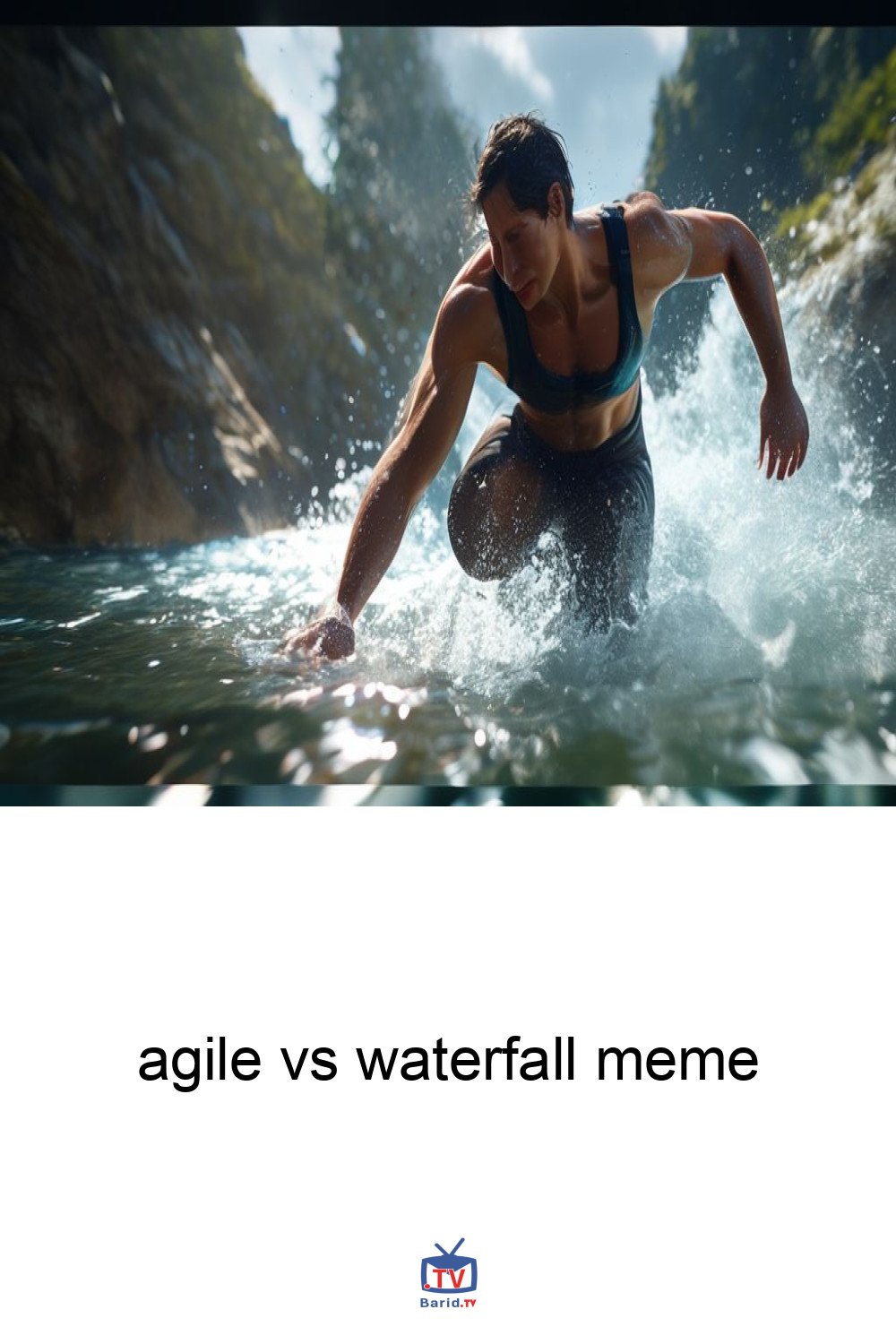
The Meme
So, which one is better? Well, it’s not that simple. Both Agile and Waterfall have their strengths and weaknesses, and the choice ultimately depends on the project’s specific needs and requirements. But, if we had to choose a winner, Agile would be the clear champion.
Why? Because Agile’s flexibility and adaptability make it better suited for projects with high uncertainty or rapid changes. Plus, its focus on collaboration and continuous improvement leads to better outcomes and increased customer satisfaction. Waterfall, on the other hand, is better suited for projects with clear and predictable requirements, where the scope and timeline are well-defined.
So, the next time you’re faced with the Agile vs Waterfall debate, remember: Agile is like a flexible and adaptable friend, while Waterfall is like a predictable and structured path. Choose wisely, and may the best methodology win!