
2026’s Opening Salvo: Unpacking the Evolving Cyber Threat Landscape
As the calendar turns to 2026, the cybersecurity world finds itself in a familiar yet increasingly complex battleground. The first ThreatsDay Bulletin of the year serves as a stark reminder: threat actors observe no holidays, only opportunities. Their evolution is relentless, adapting faster than ever, and subtly shifting the very definition of ‘cybercrime’. This week’s intelligence reveals a landscape where major players face unprecedented tests, familiar threats mutate into new forms, and seemingly minor incidents quietly signal larger patterns on the horizon. The era of the singular, massive breach is giving way to a more insidious reality: a multitude of precise, smaller openings exploited with calculated precision. The pace of exploitation, deception, and persistence has not merely continued; it has become more strategic. Each update in this edition underscores the ever-thinning line between normal operations and critical compromise. Here’s a sharp look at the forces moving beneath the surface of the cybersecurity world as 2026 begins.
The Shadow Economy: Crypto-Stealing Malware Unmasked
KMSAuto: A Deceptive Lure Leads to Extradition
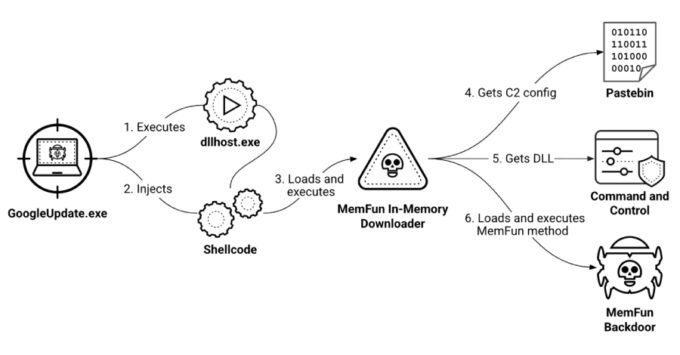
In a significant win for international law enforcement, a 29-year-old Lithuanian national has been extradited from Georgia to South Korea, facing charges for his alleged role in a vast malware distribution scheme. This individual is accused of infecting an astonishing 2.8 million systems globally with clipboard-stealing malware. The malicious software was cleverly disguised as KMSAuto, a tool commonly used for illicitly activating Windows and Office software, preying on users seeking free, albeit illegal, access.
South Korean authorities detailed the scope of the operation, stating, “From April 2020 to January 2023, the hacker distributed 2.8 million copies worldwide of malware disguised as an illegal Windows license activation program (KMSAuto).” The financial toll was substantial, with the hacker allegedly pilfering virtual assets worth approximately KRW 1.7 billion (around $1.2 million) across 8,400 transactions from users linked to 3,100 virtual asset addresses. The modus operandi involved using KMSAuto as a bait, tricking victims into downloading a malicious executable that functioned as a clipper malware, silently siphoning cryptocurrency during transactions.
Holiday Havoc: Coordinated ColdFusion Exploits Surge
A Christmas Spree Targeting Adobe ColdFusion Servers
The festive season of Christmas 2025 offered little cheer for many organizations, as a new “coordinated exploitation” campaign aggressively targeted Adobe ColdFusion servers. Cybersecurity firm GreyNoise observed this concentrated activity, noting, “The attack appears to be a single threat actor operating from Japan-based infrastructure (CTG Server Limited).” This specific source was responsible for approximately 98% of the observed attack traffic, systematically leveraging over 10 different ColdFusion Common Vulnerabilities and Exposures (CVEs) from 2023-2024.
Originating from eight distinct IP addresses, the campaign exploited a wide array of CVEs, including CVE-2023-26359, CVE-2023-38205, CVE-2023-44353, and several others, to target entities across the U.S., Spain, India, Canada, Chile, Germany, Pakistan, Cambodia, Ecuador, and France. The payloads deployed post-exploitation were diverse and potent, enabling direct code execution, credential harvesting (by accessing critical system files like “/etc/passwd”), and JNDI lookups, indicating a sophisticated and multi-faceted attack strategy.
Hidden Dangers: Pre-Installed Backdoors on Android Tablets
Keenadu: A Stealthy Threat Lurking in Hardware
Kaspersky, the renowned cybersecurity firm, has unveiled a concerning discovery: pre-installed malware found on specific models of Android-powered tablets. This insidious threat has been codenamed “Keenadu.” The Russian cybersecurity company revealed that Keenadu functions as a backdoor embedded within the libandroid_runtime.so library.
While Kaspersky has yet to release comprehensive technical details, the implications of such a pre-installed backdoor are significant. Backdoors of this nature grant remote adversaries extensive capabilities, including data exfiltration, arbitrary command execution, and various other forms of post-exploitation activities, potentially compromising user privacy and device integrity from the moment of purchase.
AI’s Frontier: The Banning of a Jailbreak Hub
Navigating Ethical AI and Prompt Injection Risks
In a move reflecting the ongoing challenges in AI safety and governance, Reddit has banned r/ChatGPTJailbreak, a community boasting over 229,000 users dedicated to circumventing the safety filters and guardrails implemented by developers of large language models (LLMs). Reddit justified the ban by citing a violation of “Rule 8,” which prohibits any activity that could disrupt the site or interfere with its normal use, including introducing malicious code or making the platform difficult for others to use.
This decision follows a WIRED report highlighting how some chatbot users were sharing instructions for generating non-consensual deepfakes using images of fully clothed women. Although the subreddit initially emerged as a ‘red teaming’ hub for discussing AI jailbreaks, the content shared on such forums carried inherent risks. Specifically, it had the potential to trigger indirect prompt injections, given that this data (along with all other content on the platform) contributes to services like Reddit Answers and serves as a real-time dataset for other models leveraging retrieval-augmented generation (RAG) techniques. The banning underscores the persistent struggle against prompt injections and jailbreaks that continue to plague AI systems, as both ethical researchers and malicious actors relentlessly explore ways to circumvent safeguards.
For more details, visit our website.
Source: Link