

Morocco’s Digital Leap: Over 35,000 Companies Formed Online Amid Sweeping Administrative Reforms
Rabat, Morocco – Morocco is rapidly cementing its position as a leader in digital governance, with recent figures revealing a remarkable surge in online business creation and the expansion of its digital public services. More than 35,000 companies have been successfully established online through the national digital platform, underscoring the profound impact of the kingdom’s administrative digitization drive.
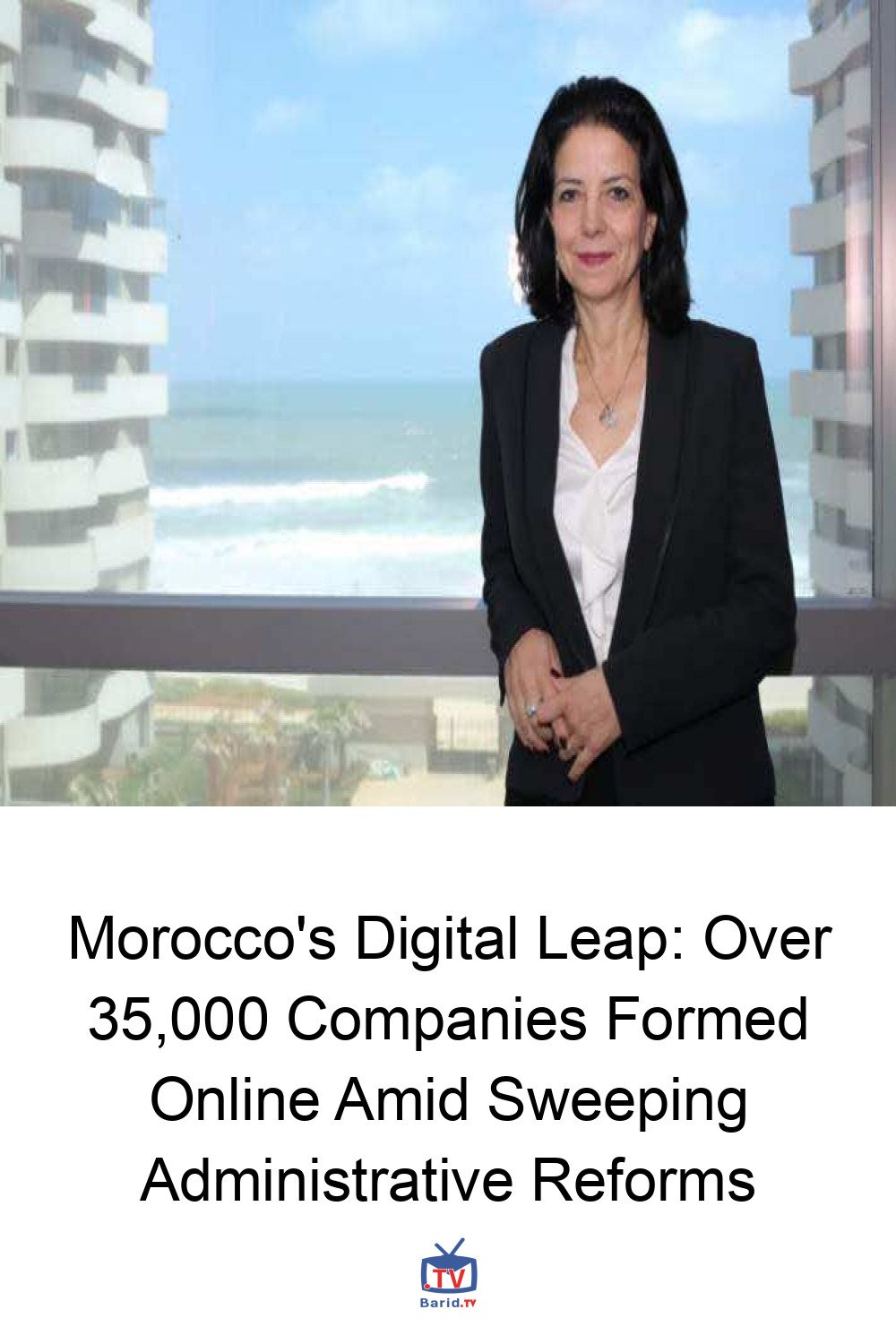
Amal El Fallah Seghrouchni, Minister Delegate in charge of Digital Transition and Administrative Reform, shared these impressive statistics during a recent parliamentary session. Her announcement highlighted Morocco‘s unwavering commitment to modernizing state services, making them more accessible and efficient for citizens and businesses alike.
Expanding the Digital Horizon: Over 600 Online Services
The national digital public services portal has become a cornerstone of this transformation, now boasting an impressive portfolio of over 600 online services. These services span a wide array of administrative needs, reflecting a comprehensive approach to digitalizing governmental interactions. The government is actively working in collaboration with relevant institutions to continuously adapt and expand these offerings, ensuring they meet the evolving demands of a digital-first society.
Pillars of Trust: Data Protection and Cybersecurity Compliance
Crucially, Morocco’s digital expansion is being built on a robust foundation of legal compliance and security. Minister Seghrouchni emphasized the government’s dedication to aligning digital public services with the stringent requirements of Law 09.08 on personal data protection and Law 05.20 related to cybersecurity. This commitment ensures that as services become more digital, the privacy and security of users remain paramount.
Currently, nearly half of the digital processes available – over 120 services – have already undergone formal legal alignment procedures, particularly concerning personal data management and system security. The ministry is steadfast in its pursuit of gradually extending this compliance process to encompass all digital public services, fostering an environment of trust and reliability.
The Idarati Portal: Unifying Data for Seamless Service Delivery
Further enhancing the digital ecosystem, significant progress is being made on the Idarati portal. A key project is underway to structure and unify data models, administrative procedures, and official decisions. The overarching goal is to establish a coherent and centralized database, which will serve as the backbone for more efficient and consistent public service delivery. This infrastructure promises to improve information access and significantly reduce fragmentation across administrative processes.
An exciting development within this framework is the planned deployment of an intelligent chatbot. Designed to leverage the portal’s extensive data, this chatbot will provide users with accurate and reliable responses, streamlining inquiries and support. A pilot project, already implemented this year, has successfully covered over 300 priority administrative procedures, creating a unified database that facilitates intelligent search functions, simplifies processes, and accelerates the broader digitization of public services.
Charting the Future: Maroc IA 2030 and the Jazari Institute
Looking ahead, Morocco is poised to make significant strides in artificial intelligence. The national artificial intelligence roadmap, ‘Maroc IA 2030,’ is slated for unveiling in January. This ambitious strategy will be anchored by the establishment of the Jazari Institute, a national network of centers of excellence. The institute will play a pivotal role in coordinating research, innovation, and the strategic integration of AI within public administration, positioning Morocco at the forefront of AI development in the region.
Reflecting its growing prowess in this field, Morocco has seen a remarkable 14-point improvement in its artificial intelligence readiness index for 2025. The country now ranks 87th globally and an impressive eighth across the Middle East and North Africa, signaling a bright future for its digital and AI ambitions.
For more details, visit our website.
Source: Link